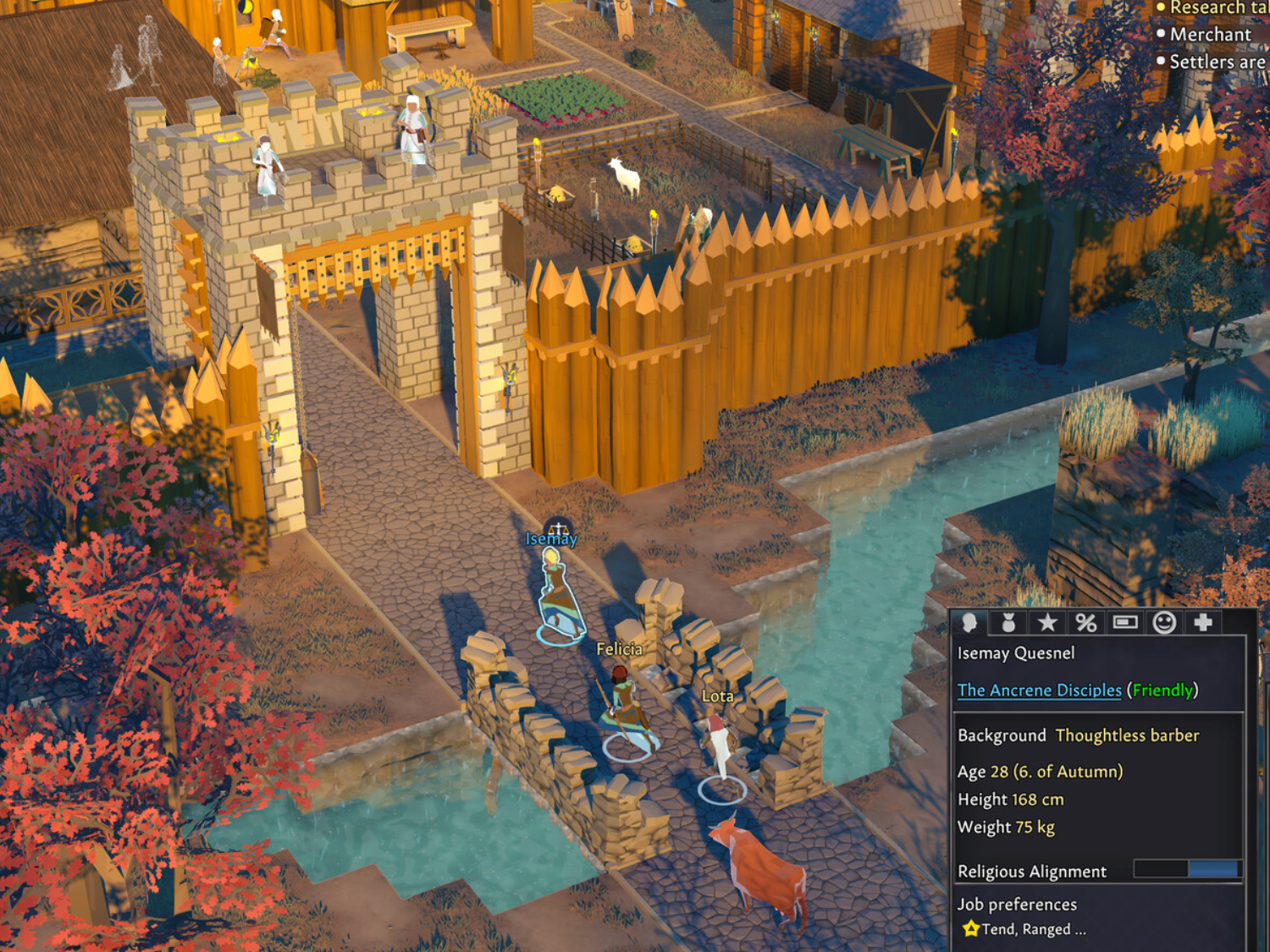
Going Medieval has officially left early access and launched in full 1.0 on March 17, 2026, giving fans of colony simulators a bigger, more structured reason to keep rebuilding. Developed by Foxy Voxel and published by Mythwright, the medieval survival sandbox spent four years in early access, sold more than one million copies, and now arrives with a major progression overhaul designed to make each campaign feel more purposeful from start to finish.
The full release is available on Steam, GOG, and the Epic Games Store. It was originally planned for March 12, but the team pushed it back by five days to avoid launching during an especially crowded week for city-builder and management games. That extra time appears to have paid off, because 1.0 isn’t a small patch—it fundamentally shifts the experience from an open-ended builder into a colony sim with clearer goals, long-term tracking, and real victory conditions.
Price-wise, Going Medieval retails for $29.99, with a 20% launch discount bringing it down to $23.99 until March 31. Community reception remains strong overall, holding a Very Positive lifetime rating around 90%, though recent reviews have dipped to roughly 76% as players adjust to new balance changes and systems introduced with 1.0.
A medieval colony simulator with a true endgame now
Set after a devastating 14th-century plague, Going Medieval drops you into the struggle of rebuilding civilization—one settler, one harvest, and one stone wall at a time. Its signature hook remains the multi-level voxel building system, which lets you design intricate fortifications, vertical towns, and layered interiors with a satisfying amount of creative freedom. What’s new is that the game finally gives those builds a clear sense of direction.
The 1.0 update introduces Renown and Global Stats, a background progression system that tracks your settlement across key pillars such as trade, military strength, and intellect. As you develop your town, those global measures rise. When you reach 100% in a given stat, you unlock the ability to pursue one of six Grand Objectives—essentially your campaign’s “win condition.” These endpoints include transforming your settlement into a world-renowned University or establishing it as a religious sanctuary, giving players a more definitive finish line than the early access version offered.
Bigger management options, smarter roles, and improved defenses
Beyond the new endgame structure, Going Medieval 1.0 expands the day-to-day colony management in meaningful ways:
Settler roles are now more specialized, allowing assignments such as Librarian, Broker, and Sergeant-at-arms. This helps shape how your colony functions and adds clearer identity to each playthrough.
Sieges and raids get more tactical tools. You can now build functional drawbridges and set rally points, letting you better control how settlers respond when bandits attack or when defenses need to hold.
New room types add deeper town planning choices. Training rooms, Treasuries, and Fellows’ libraries provide specific benefits, whether you’re boosting skills, organizing valuable resources, or reinforcing your settlement’s long-term development.
More control at the start of a run arrives through four starting scenarios: A New Life, Pioneer, Peaceful, and Lone Wolf. These options make it easier to tune difficulty and pacing depending on whether you want a relaxed builder, a survival challenge, or a solo-start experiment.
The interface and onboarding have also been refreshed. Players will notice a redesigned management panel, new thought icons for settlers, and an updated tutorial map aimed at helping newcomers get comfortable faster.
Performance notes and system details
Going Medieval requires 5 GB of storage, and the developer now recommends installing on an SSD to improve performance during map generation and mesh fusion. For handheld players, it’s currently marked as Playable on Steam Deck, and patch 1.0.49 introduced GPU optimizations such as occlusion culling, which can help improve efficiency and battery life.
Why Going Medieval 1.0 matters for colony sim fans
For many players, the biggest appeal is still the building loop—designing multi-floor compounds, optimizing layouts, and watching a simulated settlement develop through crises. But the new Grand Objectives bring something the game previously lacked: closure. With defined endgame paths and long-term stats that reflect your settlement’s identity, Going Medieval now feels less like an endless sandbox and more like a complete, replayable colony simulator with distinct outcomes.
If you’ve been waiting for a medieval alternative to the genre’s big sci-fi colony sims, the 1.0 release is the clearest sign yet that Going Medieval is ready for the long haul—especially with the launch discount available through the end of March.