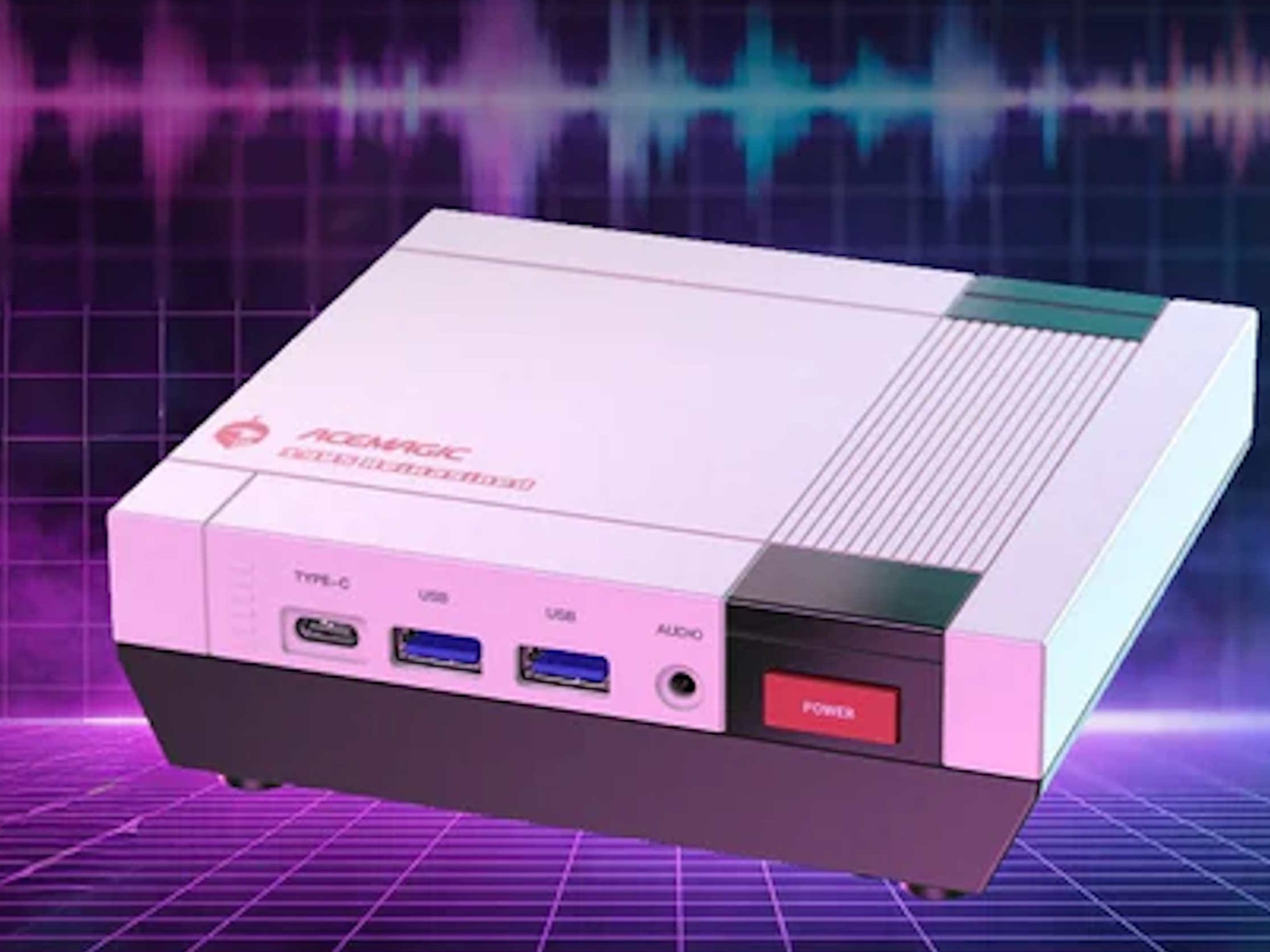
Acemagic is tapping into pure nostalgia with its upcoming Retro X5 mini PC, a compact desktop that looks strikingly similar to the classic Nintendo Entertainment System (NES). While the design is clearly inspired by the iconic console, the hardware inside is on a completely different level—making the Retro X5 an especially interesting option for anyone who loves retro gaming, emulation, and classic console libraries.
Under the hood, the Retro X5 is said to feature the AMD Ryzen AI 9 HX 370, a modern high-end processor built for serious performance. To put that into perspective, the original NES ran at roughly 1.8 MHz, while this Ryzen chip can boost up to 5.1 GHz and includes 12 CPU cores along with an onboard NPU (neural processing unit). In real-world terms, that means this mini PC should have far more power than what’s needed for most classic game emulation, plus enough headroom for enhanced features and a smoother overall experience.
Acemagic is also positioning the Retro X5 as a purpose-built retro gaming machine rather than just a tiny computer with a nostalgic shell. The company mentions a software package called RetroPlay Box, described as an all-in-one solution. The idea appears to be a streamlined, console-like interface that bundles emulators into a dedicated environment—similar to what many retro-focused gaming handhelds offer. In practice, users would simply load their ROMs onto the system and launch games through that customized interface, instead of spending time setting up everything from scratch.
One of the more intriguing angles is Acemagic’s plan to keep developing RetroPlay Box over time and introduce AI-powered features. These are expected to go beyond basic game recommendations. A notable possibility for retro enthusiasts is AI-based translation, which could help make older titles more accessible—especially games that were never officially localized outside their original regions. Another potential use case is gameplay assistance, though the exact direction hasn’t been fully detailed yet. What stands out is that these AI features are intended to run locally using the Ryzen AI 9 HX 370’s integrated NPU, meaning users wouldn’t necessarily have to depend on cloud services for AI capabilities.
At this stage, Acemagic hasn’t announced a release date, price, or complete specifications, so there are still plenty of unanswered questions. However, the published images do offer a quick look at front-facing connectivity: two USB Type-A ports, one USB Type-C port, and a 3.5mm headphone jack.
For retro gaming fans who want modern performance in a compact setup—especially those who enjoy the convenience of an emulator-focused interface—the Acemagic Retro X5 is shaping up to be a mini PC worth watching. If Acemagic follows through with strong software support and useful on-device AI tools, it could end up being more than just a novelty design and become a genuinely compelling emulation machine.