MSI WS300 AI Workstation Debuts With NVIDIA GB300, 748GB Coherent Memory, and Up to 20 Petaflops of AI Performance
MSI has introduced the XpertStation WS300, a high-end AI workstation built for serious local artificial intelligence workloads, large language models, research, and enterprise-level development. At the heart of the system is NVIDIA’s GB300 Grace Blackwell Ultra superchip, giving the workstation an enormous amount of computing power in a desktop-style machine.
The MSI WS300 is designed for users who want to run massive AI models locally without relying entirely on cloud infrastructure. With its combination of a 72-core Grace CPU, Blackwell Ultra GPU, 496GB of LPDDR5X system memory, and 252GB of HBM3e video memory, this workstation is positioned as a powerful option for AI developers, data scientists, research labs, and companies working with demanding machine learning workloads.
The GB300 Grace Blackwell Ultra chip combines an NVIDIA Grace CPU with 72 ARM-based Neoverse V2 cores and a Blackwell Ultra GPU. Together, the platform offers up to 748GB of coherent memory, allowing the CPU and GPU to work closely together on extremely large AI datasets and models.
One of the biggest highlights is the Blackwell Ultra GPU’s 252GB of HBM3e VRAM. This memory delivers up to 7.1TB/s of bandwidth, which is especially important for AI inference, model training, simulation, and other workloads that depend heavily on fast memory access. The Grace CPU is backed by 496GB of LPDDR5X RAM, giving the system even more room to handle large-scale computations.
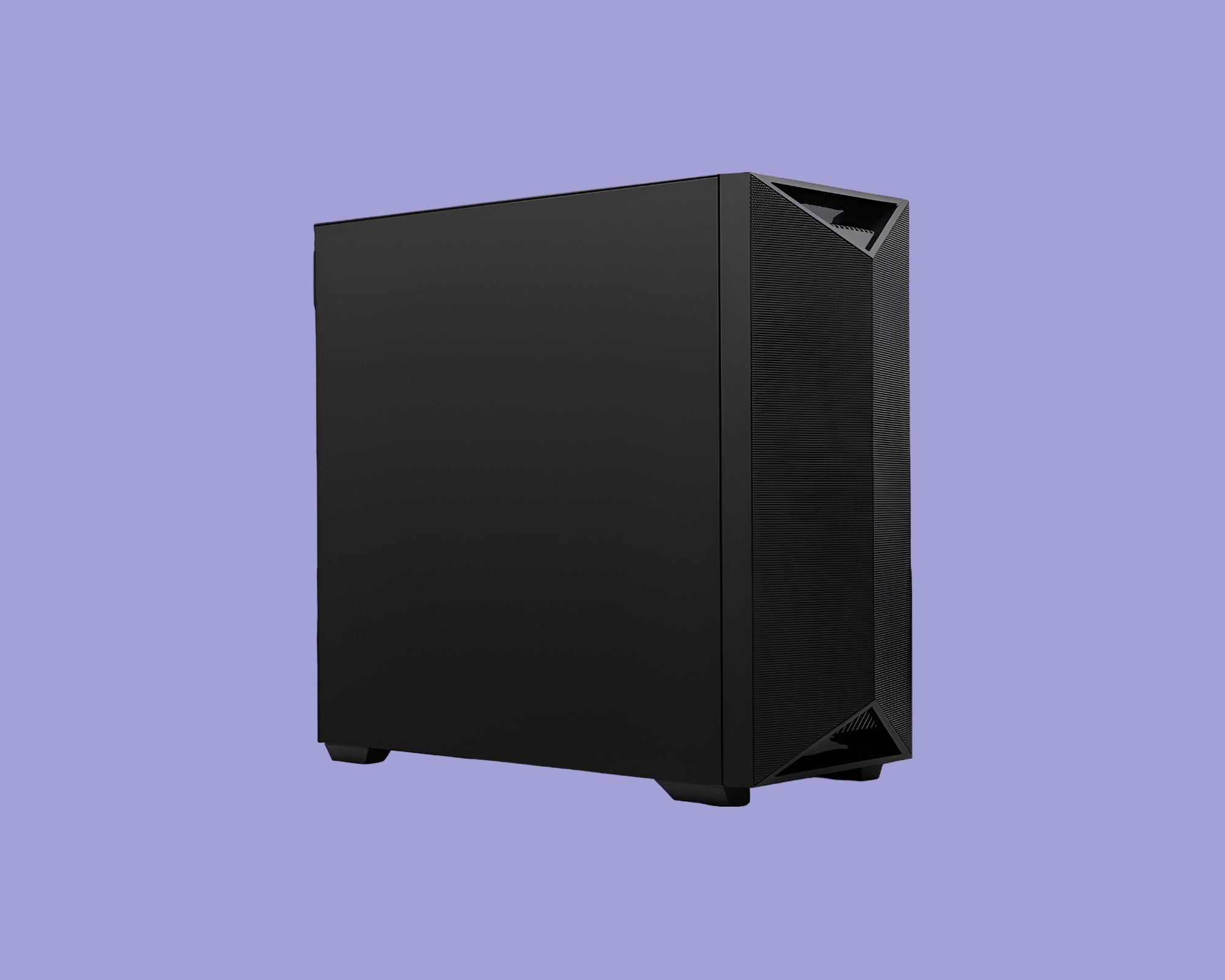
Despite its extreme specifications, the MSI WS300 looks fairly similar to a traditional workstation PC from the outside. Its understated design hides hardware that is far beyond what most desktop computers can offer.
For users who need even more graphics or compute performance, the workstation also includes PCIe expansion support. This means an additional NVIDIA RTX Pro Blackwell GPU can be installed, giving professionals another way to increase performance for rendering, AI development, scientific computing, or advanced visualization.
NVIDIA claims the GB300 platform can deliver up to 20 petaflops of AI compute performance using FP4 precision. That level of performance could allow the MSI WS300 to handle AI models with up to 1 trillion parameters without needing to split the workload across multiple systems. For organizations working on advanced generative AI, large language models, or complex enterprise AI applications, that could be a major advantage.
Networking is another key part of the system. The MSI WS300 supports NVIDIA ConnectX-8 SuperNIC, enabling networking speeds of up to 800Gbps. This is especially useful for companies or research teams that want to connect multiple workstations together to combine their computing power. In multi-system AI environments, fast networking can be just as important as raw processing performance.
For storage, the workstation includes dual M.2 slots. While MSI has not detailed all storage configurations, the inclusion of fast M.2 support suggests the system is built to handle high-speed SSDs suitable for large AI datasets, model files, and professional workloads.
MSI has not confirmed the official price of the WS300 yet. However, given the hardware inside, this AI workstation is expected to be extremely expensive. A price close to $100,000 would not be surprising, especially considering the GB300 superchip, massive memory configuration, and enterprise-grade networking capabilities.
The MSI WS300 is clearly not aimed at typical PC users or casual creators. Instead, it targets professionals and organizations that need maximum local AI performance in a workstation format. For developers working with large language models, advanced machine learning, generative AI, data analysis, and high-performance computing, the WS300 could become one of the most powerful workstation options available.
For users with smaller budgets who still want to experiment with local AI models, compact PCs powered by newer high-performance processors may be a more realistic starting point. However, for those who need workstation-class AI compute with massive memory capacity, the MSI WS300 stands out as a serious machine built for the next generation of artificial intelligence workloads.