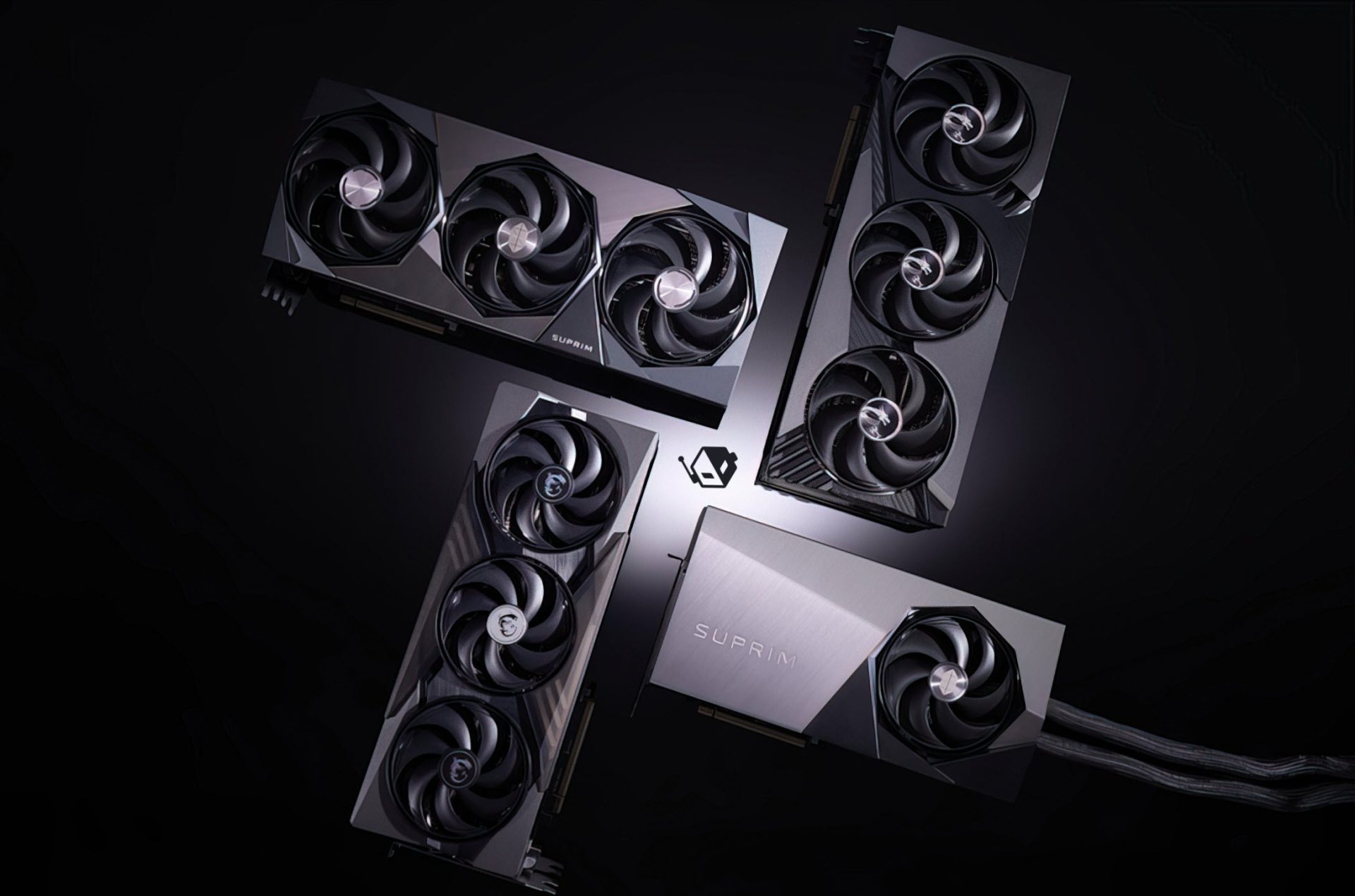
MSI graphics card prices are rising as DRAM shortage pressure hits NVIDIA and AMD GPUs
The graphics card market is facing another wave of price increases, and MSI has now joined other major add-in-board partners in raising GPU prices. The latest adjustments are being driven by ongoing DRAM shortages, which continue to affect graphics card production costs across multiple product generations.
The price hikes are currently being reported in China, but the impact may not stay limited to that region for long. As memory supply tightens and component costs rise, PC gamers and system builders in the United States, Europe, and other markets could also see higher graphics card prices in the months ahead.
MSI’s latest pricing update reportedly affects a wide range of graphics cards, including NVIDIA GeForce RTX 50 series, RTX 40 series, RTX 30 series, and even some older entry-level models. AMD Radeon graphics cards are also being affected by similar price pressure from manufacturers and distributors.
According to the reported August pricing adjustments, MSI graphics cards could see increases of around 20% or more, depending on the model. This follows similar moves from ASUS and Gigabyte, which have already informed distribution partners of broad GPU price increases for August compared to July.
The biggest jumps are being seen on higher-end NVIDIA graphics cards. MSI’s GeForce RTX 5080 models are said to be increasing by as much as 2,100 RMB, which is roughly over $300. The RTX 5070 Ti could rise by up to 1,350 RMB, or around $200. Mid-range and entry-level models are not being spared either, with the RTX 5060 Ti 8GB and RTX 5060 expected to climb by around $90 to $100, while the RTX 5050 may rise by about $80.
ASUS and Gigabyte are also applying broad increases across their GPU lineups. ASUS reportedly raised prices on all models, with increases around 20% in several cases. Gigabyte has implemented a similar pricing policy for August, also covering a wide range of graphics card models.
The reported GPU price increases include several notable examples. The ASUS RTX 5090 D V2 may increase by about 4,500 RMB, or roughly $667, while Gigabyte’s version could rise by around 4,000 RMB, or about $593. ASUS RTX 5080 and RTX 5070 Ti models may increase by 1,500 to 1,700 RMB, while Gigabyte’s versions may rise by 1,400 to 1,500 RMB. MSI’s RTX 5080 and RTX 5070 Ti cards are reportedly increasing by 1,350 to 2,100 RMB.
For mainstream buyers, the impact is still significant. MSI RTX 5070 and RTX 5060 Ti 16GB cards may rise by 1,000 to 1,400 RMB. ASUS RTX 5070 and RTX 5060 Ti 16GB models are expected to increase by around 1,000 RMB. Gigabyte RTX 5070 cards may rise by 1,000 to 1,050 RMB.
More affordable GPUs are also becoming more expensive. MSI RTX 5060 Ti 8GB and RTX 5060 models may increase by 600 to 650 RMB. ASUS RTX 5060 Ti 8GB cards could rise by 650 to 700 RMB, while ASUS RTX 5060 8GB models may increase by 600 to 680 RMB. Gigabyte RTX 5060 and RTX 5050 cards are reportedly increasing by 550 to 620 RMB. MSI’s RTX 5050 may rise by around 550 RMB.
Older graphics cards are not immune. ASUS RTX 3060 models may increase by about 950 RMB, while Gigabyte RTX 3060 12GB cards may rise by around 800 RMB. MSI RTX 3050 cards may see increases of roughly 370 RMB, while ASUS and Gigabyte RTX 3050 series models may rise by around 300 RMB.
AMD Radeon graphics cards are also part of the broader price movement. ASUS Radeon RX 9070 XT models may increase by around 1,150 RMB, while the Radeon RX 9060 XT 8GB could rise by 500 to 650 RMB. The Radeon RX 7650 GRE may increase by about 330 RMB. Gigabyte’s AMD graphics card lineup is reportedly seeing increases between 200 and 650 RMB, depending on the model.
The main cause behind these GPU price hikes is the continuing DRAM shortage. Graphics cards rely heavily on memory components, and when supply tightens, production costs rise quickly. Manufacturers then pass those costs down the supply chain, affecting distributors, retailers, and eventually consumers.
The concern for PC builders is that this may not be a short-term problem. Memory manufacturers have already warned that DRAM shortages could become more severe in the coming years. Analysts have also predicted sharp increases in DRAM prices, including a potential 50% jump in the third quarter of 2026 and another 40% rise in the fourth quarter of 2026.
This means GPU prices could remain unstable for a while, especially if demand stays strong and supply remains limited. Retailers may also contribute to the situation by holding back graphics card inventory and selling later at higher prices, a trend that has reportedly already started in some markets.
The price increases are especially frustrating because they affect both new and older graphics cards. Buyers hoping to save money by choosing previous-generation GPUs may still face inflated prices, as models like the RTX 3060, RTX 3050, and Radeon RX 7000 series are also being impacted.
For gamers planning a new PC build or an upgrade, the message is clear: graphics card prices are moving upward again. Waiting may not guarantee a better deal if DRAM costs continue to rise. On the other hand, buying during a price spike also carries risk, especially if regional availability changes or discounts appear later.
The broader PC market may also feel the pressure. Higher memory and GPU prices can reduce demand for desktops, gaming PCs, and DIY components. If graphics card costs continue climbing, PC shipments could decline further as consumers delay upgrades.
For now, the latest MSI GPU price increase is another sign that the graphics card market is entering a difficult period. With ASUS, Gigabyte, and other manufacturers making similar adjustments, the impact of DRAM shortages is becoming impossible for buyers to ignore.