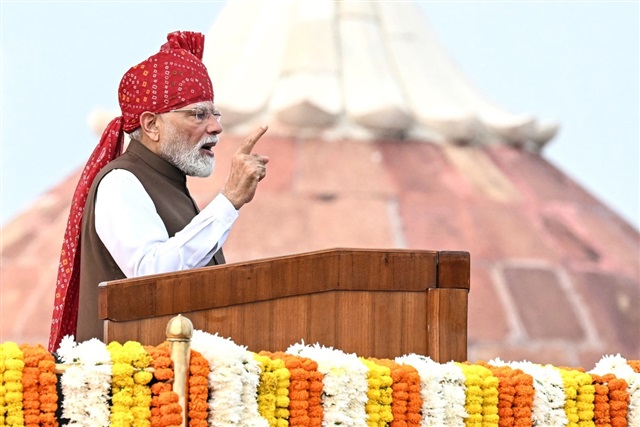
Prime Minister Narendra Modi used his Independence Day address from the Red Fort on August 15 to place India’s technology ambitions at the center of the country’s economic future. Speaking during India’s 80th Independence Day celebrations, Modi linked semiconductor manufacturing, artificial intelligence training, and trade policy to a broader push for self-reliance and long-term national growth.
A major focus of the speech was India’s plan to strengthen its semiconductor ecosystem. Modi emphasized the need for more chip manufacturing plants as the country works to reduce dependence on foreign supply chains and become a stronger player in the global electronics industry. Semiconductors are essential for smartphones, cars, defense systems, data centers, and advanced computing, making domestic chip production a key priority for India’s technology strategy.
The Prime Minister framed chip manufacturing not only as an industrial goal but also as a matter of economic security. By expanding semiconductor production, India aims to create high-value jobs, attract investment, support local electronics manufacturing, and build a more resilient supply chain. The push comes as countries around the world compete to secure chip capacity amid rising demand for artificial intelligence, electric vehicles, consumer electronics, and cloud infrastructure.
Modi also highlighted the importance of artificial intelligence skills, calling for large-scale AI training to prepare Indian citizens for the next phase of the digital economy. His message pointed to AI as a transformative force that could reshape industries, improve productivity, and open new opportunities for young people, workers, startups, and businesses.
Mass AI training could help India build a workforce capable of participating in emerging technology sectors, including automation, machine learning, robotics, software development, digital services, and advanced manufacturing. With one of the world’s largest young populations, India is positioning talent development as a major competitive advantage in the global AI race.
Trade policy was another important part of Modi’s message. He connected India’s technology goals with the need to support domestic industries and strengthen the country’s ability to compete internationally. The broader theme was “self-reliance,” a concept that has become central to India’s manufacturing and economic policy in recent years.
Rather than treating semiconductors, AI, and trade as separate issues, Modi presented them as connected pillars of a larger national strategy. More chip plants can support domestic manufacturing, AI training can prepare the workforce, and trade policy can help protect and promote Indian industry. Together, these areas form part of India’s effort to become a more powerful technology and manufacturing hub.
The speech also reflected India’s growing desire to move up the global value chain. For years, the country has been known for software services, IT talent, and digital platforms. Now, the government is pushing to expand into hardware manufacturing, chip production, advanced electronics, and next-generation technologies.
India’s semiconductor ambitions are especially significant because chips sit at the heart of modern innovation. As demand grows for AI-powered devices, electric vehicles, smart infrastructure, and high-performance computing, nations with stronger chip ecosystems are expected to gain strategic and economic advantages.
At the same time, India’s AI training plans could play a crucial role in making the technology more widely accessible. If implemented effectively, large-scale AI education could benefit students, small businesses, farmers, government services, and industries looking to improve efficiency. It could also help ensure that AI adoption is not limited to major corporations or urban technology centers.
Modi’s Independence Day address made clear that technology will remain a key part of India’s development roadmap. By focusing on semiconductor manufacturing, artificial intelligence skills, and trade resilience, the government is signaling that it wants India to be both a major consumer and a major producer of future technologies.
The message from the Red Fort was ultimately one of ambition: India wants to build more, train more, and depend less on outside supply chains. If the plans gain momentum, the country could strengthen its position in global technology markets while creating new opportunities for its workforce and industries.