Microsoft Project Solara Signals a New Kind of AI Device That Could Challenge the Smartphone
Microsoft has introduced Project Solara at Computex 2026, and it may be one of the company’s clearest signs yet that the next era of personal computing will not revolve around apps, home screens, and traditional smartphones.
Project Solara is described as a “chip-to-cloud” platform built around AI agents. Instead of opening individual apps and manually jumping between services, Microsoft imagines a device where artificial intelligence takes the lead, understands context, and completes tasks on behalf of the user.
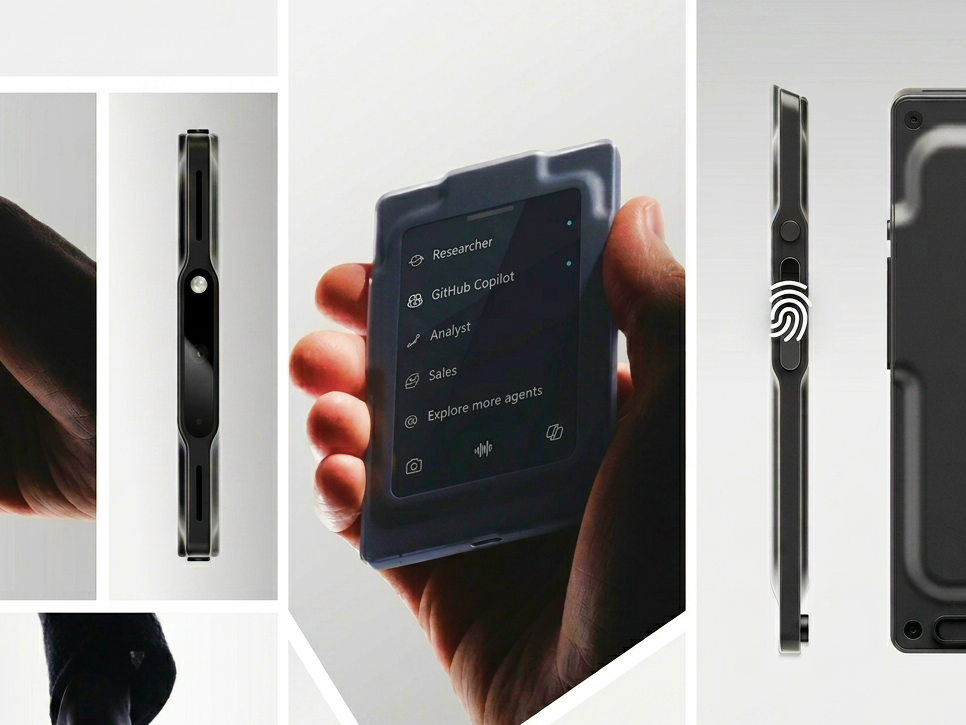
The most eye-catching part of the reveal is not the desk-based smart display concept, but a compact wearable smart badge. Microsoft is not calling it a smartphone, but its design and hardware suggest it could perform many of the same functions as today’s premium mobile devices. It has a touchscreen, cameras, microphones, wireless connectivity, biometric security, and an Android-based software foundation.
In other words, Project Solara could be Microsoft’s first serious step toward an AI-first mobile device.
The wearable badge is designed as a dedicated interface for AI agents. At first glance, it looks like a digital ID badge for workers, but Microsoft’s vision goes much further. The device is intended to serve frontline workers, office employees, field teams, and enterprise users who need quick access to information, communication, automation, and real-time assistance.
Rather than presenting users with a familiar grid of apps, the smart badge focuses on an agent-first interface. That means the user may not need to open a messaging app, a calendar app, a notes app, or a search app separately. Instead, an AI agent could understand the request and handle the workflow directly.
This is the key difference between a traditional smartphone and Microsoft’s Project Solara concept. Smartphones are still mostly app-first devices. Project Solara is being built around the idea that AI agents should become the main way people interact with technology.
The device reportedly runs on an Android-based operating system through Microsoft’s Device Ecosystem Platform. That choice is important because it gives Microsoft flexibility while avoiding the need to build an entirely new mobile operating system from scratch.
The hardware list also makes the badge sound more like a compact AI phone than a simple wearable accessory. Microsoft’s Project Solara badge concept includes a small touchscreen for AI interactions, a top-facing camera system for environmental awareness, a side-mounted fingerprint reader, privacy controls, volume buttons, a far-field microphone array, a speaker, and wireless connectivity such as WiFi, Bluetooth, GNSS, and 5G.
The device is also said to use Qualcomm wearable silicon, suggesting that Microsoft wants the smart badge to be powerful enough for always-connected AI tasks while remaining efficient enough for mobile use.
One of the most important features is the microphone system. Far-field microphones could allow the badge to hear commands clearly in busy environments such as hospitals, warehouses, hotels, shops, airports, and factories. Combined with cameras and location awareness, the device could give AI agents a better understanding of what is happening around the user.
That context is what could make Project Solara different from simply running an AI assistant on a smartphone. Microsoft appears to be designing the hardware and software together so the AI can become more proactive, more aware, and more useful in real-world work settings.
Microsoft is already testing the badge and the smart display internally with hundreds of employees. The company is also preparing enterprise pilot programs across several industries, including healthcare, retail, hospitality, financial services, legal services, industrial operations, and field services.
These industries are a logical starting point. A nurse could use an AI badge to pull up patient information, summarize instructions, or document tasks without constantly reaching for a phone or workstation. A retail employee could check inventory, answer customer questions, or translate conversations instantly. A field technician could receive step-by-step repair guidance while keeping both hands free.
For businesses, the appeal is clear: faster workflows, fewer app-switching distractions, and AI tools that are built directly into the workday.
Project Solara also arrives at a time when major technology companies are exploring what comes after the smartphone. The modern mobile experience has been dominated by app stores and touchscreens for more than a decade, but AI could change that. If AI agents can plan, search, write, summarize, schedule, communicate, and operate software on behalf of the user, the old app-based model may start to feel outdated.
This is where Microsoft’s strategy becomes especially interesting. The company is not simply building another mobile gadget. It is trying to create a platform for AI-first hardware. By making the interface more dynamic and agent-driven, Microsoft could reduce the need for developers to create separate native apps for every device type.
Instead, AI could generate or adapt the interface depending on the task, the screen size, the user’s role, and the situation. That would make it easier to build new device categories, from smart badges and displays to future wearables and compact AI computers.
The timing is also significant because OpenAI is widely rumored to be working on its own AI-focused device, possibly arriving in 2027. While details remain limited, the broader direction is becoming clear: the next major hardware race may be about who can build the best AI-native personal device.
Microsoft may be trying to get ahead by targeting enterprise customers first. That is a practical move. Businesses are often willing to test specialized hardware if it improves productivity, security, or customer service. If Project Solara proves useful in professional environments, consumer versions or related products could follow later.
The big question is whether devices like the Project Solara badge can truly replace smartphones. For now, that seems unlikely in the short term. Smartphones are deeply embedded in daily life, with massive app ecosystems, powerful cameras, payment systems, entertainment services, and social platforms.
But Project Solara does not need to replace the smartphone immediately to matter. It only needs to show that some tasks are better handled by AI-first hardware than by a phone full of apps.
If Microsoft can prove that a wearable AI badge is faster, simpler, and more helpful in real workplaces, it could open the door to a new category of devices. Over time, these devices could become more capable, more personal, and more appealing to everyday users.
The Project Solara reveal suggests that Microsoft sees the future of computing moving away from tapping icons and toward speaking, asking, delegating, and letting AI agents handle complex tasks. The smart badge may look small, but the idea behind it is big: a world where your device is less of an app launcher and more of an intelligent assistant that understands your surroundings.
Whether Project Solara becomes a mainstream product or remains an enterprise-focused experiment, it highlights a major shift in the tech industry. The next battle may not be about who has the biggest phone screen or the fastest app store. It may be about who can build the most useful AI companion for your pocket, your desk, or your workplace.