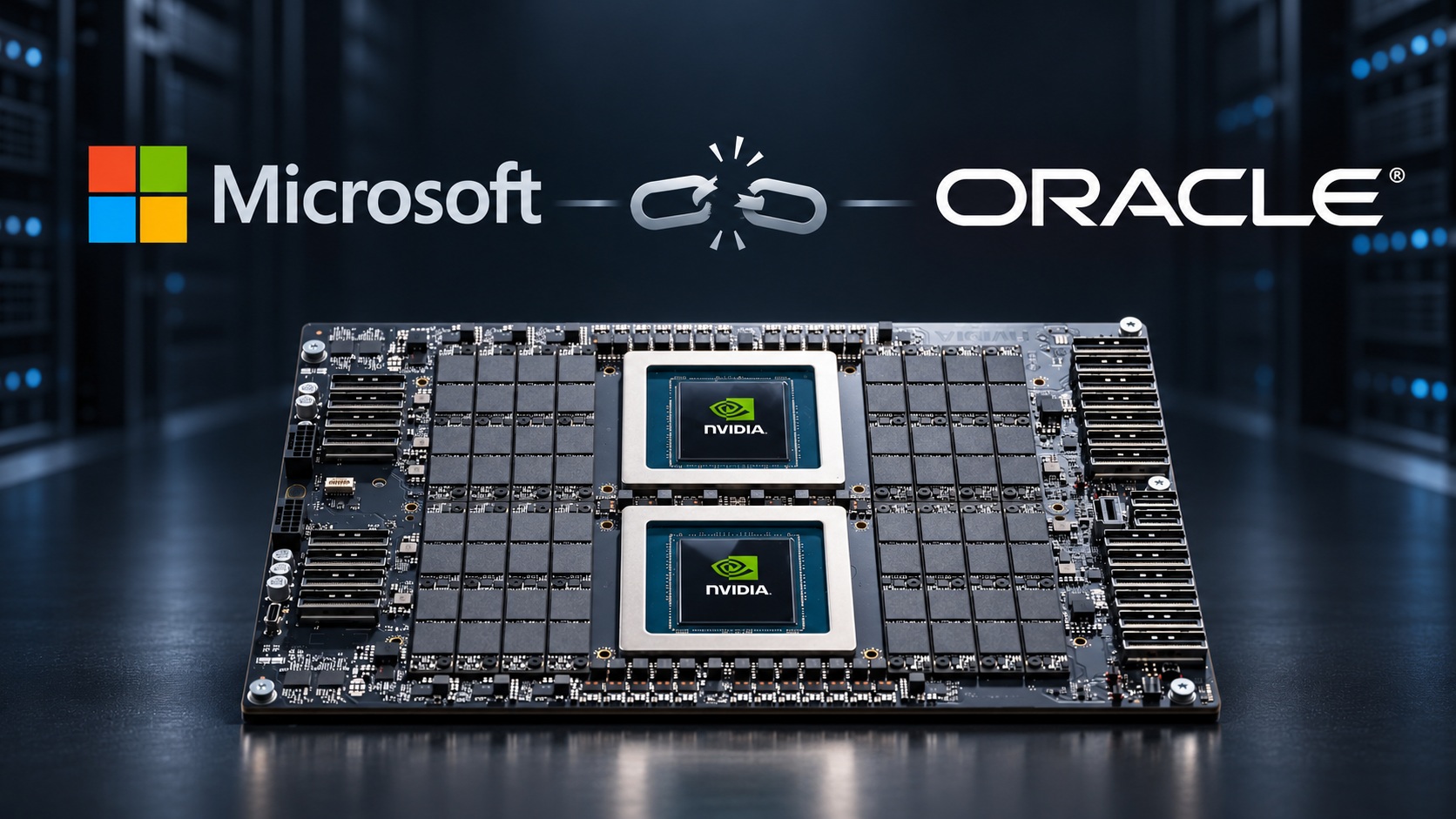
Microsoft Reportedly Scales Back Oracle AI Cloud Deal as Older NVIDIA GPUs Fall Short
Microsoft is reportedly winding down part of its AI computing arrangement with Oracle after deciding that the older NVIDIA GPUs used in the rented cloud infrastructure no longer match its current artificial intelligence needs.
The move highlights a growing issue across the AI industry: companies are spending massive amounts on data centers and accelerators, but the hardware can become outdated quickly as newer, more powerful chips arrive.
Microsoft had been using Oracle Cloud Infrastructure alongside Azure to support AI inference for Bing’s conversational search features. The deal was first announced in late 2023, at a time when demand for AI chips was extremely high and even the largest cloud providers were competing for limited GPU capacity.
At that point, renting additional infrastructure from another major cloud company made practical sense. AI services were expanding rapidly, and securing enough computing power was a priority. But the AI hardware landscape has changed quickly since then.
Microsoft’s AI requirements have evolved, and the older NVIDIA accelerators reportedly used in Oracle’s systems are no longer suitable for the company’s latest workloads. The exact GPU models involved have not been publicly confirmed, and the value of the agreement has not been disclosed.
Oracle says older AI GPUs still have strong demand
Oracle has pushed back against the idea that previous-generation GPUs are losing commercial value. The company maintains that demand for its cloud infrastructure remains high, even for older accelerators.
Oracle has said that GPU capacity coming up for renewal in its fiscal first quarter was renewed or resold at a 20% premium compared with earlier contract prices. The company also reported GPU utilization of about 97.9%, suggesting that most of its available AI hardware continues to be actively used.
That means Microsoft’s decision may not reflect weak demand for older GPUs overall. Instead, it may show that different AI customers now have very different requirements. Some advanced workloads may need the latest accelerators, while other businesses can still make effective use of earlier hardware for inference, training, analytics, and enterprise AI applications.
Older NVIDIA A100 accelerators, for example, remain widely used across the industry despite newer chips being available. Many companies still see value in renting or deploying established AI GPUs, especially when the newest models are expensive, supply-constrained, or unnecessary for their workloads.
AI data center economics face fresh scrutiny
Microsoft’s reported move raises a larger question for the tech sector: can AI infrastructure investments pay off before the hardware becomes outdated?
AI data centers require huge spending on GPUs, networking equipment, power systems, cooling, real estate, and long-term energy access. But the pace of AI chip development is extremely fast. A GPU that was considered cutting-edge a few years ago may no longer be ideal for the most demanding models today.
This creates a challenge for cloud providers and AI infrastructure companies. They must invest aggressively to meet current demand, but they also risk owning expensive hardware that may lose appeal as customers shift to newer platforms.
Oracle is one of the companies investing heavily in this space. Its cloud infrastructure revenue has been growing rapidly, helped by rising demand for AI computing. However, the company has also been spending heavily to expand capacity, which has placed pressure on free cash flow.
Despite that, Oracle continues to push forward with major cloud expansion plans. The company is preparing to deploy next-generation AI accelerators from several major chipmakers, including NVIDIA, AMD, Intel, and others. This suggests Oracle is not stepping back from the AI infrastructure race, even as Microsoft reduces reliance on one older rental agreement.
Microsoft and Oracle still have broader cloud ties
It is important to note that Microsoft’s reported decision does not mean the two companies are ending their wider partnership. Microsoft and Oracle still work together across other cloud services, including database-related offerings that connect Oracle technology with Azure.
The change appears to be limited to a specific AI computing rental arrangement involving older GPU infrastructure.
For Microsoft, the shift reflects the need to match AI workloads with the right hardware as its products and models become more demanding. For Oracle, the situation demonstrates both the opportunity and risk of the AI infrastructure boom.
The bigger picture is clear: AI computing remains in extremely high demand, but not all GPU capacity is equal. As newer accelerators arrive, cloud providers will need to carefully manage the balance between using existing hardware, upgrading to next-generation systems, and keeping their massive infrastructure investments profitable.
The AI race is no longer just about who can build the biggest data centers. It is also about who can keep those data centers technologically relevant long enough to justify the cost.