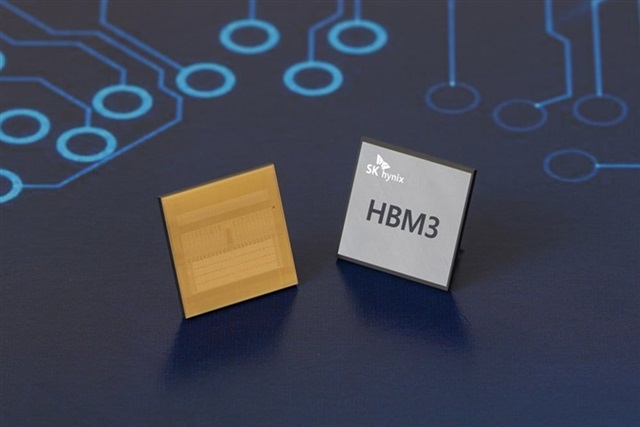
Meta and Nvidia are reportedly moving toward a major shift in how AI hardware is built: placing GPU compute cores directly into the base die of high-bandwidth memory (HBM). If this approach reaches production, it could redefine the traditional separation between “memory” and “processor,” creating faster, tighter, and more power-efficient hardware designed specifically for modern AI workloads.
Today’s AI systems constantly shuttle massive volumes of data between GPUs and memory. Even with advanced packaging and fast memory standards, that back-and-forth still introduces latency, consumes power, and limits how efficiently models can be trained or served at scale. By integrating GPU compute elements into the HBM base die—the foundational silicon layer in an HBM stack—Meta and Nvidia aim to bring computation closer to where data lives. The result could be quicker access to data, reduced energy spent on data movement, and better overall throughput for AI tasks.
This concept also highlights a broader industry trend: the line between memory and logic is starting to blur. Instead of treating memory as a passive component that simply stores information, next-generation designs increasingly explore “compute-near-memory” or “compute-in-memory” ideas. Embedding compute resources within or alongside advanced memory stacks could help AI accelerators handle larger models and higher inference demand without relying solely on brute-force increases in GPU count.
For AI data centers, the potential benefits could be significant. Higher performance per watt is becoming just as important as raw speed, especially as power availability and cooling capacity become key constraints. A tighter integration of compute and HBM could help deliver more work within the same power envelope, which is a major priority for large-scale AI operators.
While the idea is promising, it also comes with engineering and manufacturing challenges. Integrating logic into an HBM base die adds complexity to packaging, thermal management, yields, and supply chain coordination. However, if the technical hurdles are solved, this kind of design could become a cornerstone of future AI chips—particularly for companies pushing the limits of training and inference performance.
If Meta and Nvidia proceed with this strategy, it signals a clear direction for the future of AI infrastructure: more integration, shorter data paths, and hardware architectures built around the realities of AI computation rather than traditional system boundaries.