Meshtastic explained: how off-grid messaging works without mobile coverage or monthly fees
Staying connected without mobile service, Wi-Fi, or subscription costs sounds almost too good to be true, but that is exactly the idea behind Meshtastic. This open-source communication system uses LoRa radio technology to send short messages between compatible devices, making it especially useful for hiking, camping, emergency preparedness, outdoor events, remote work sites, and areas where traditional networks are unreliable.
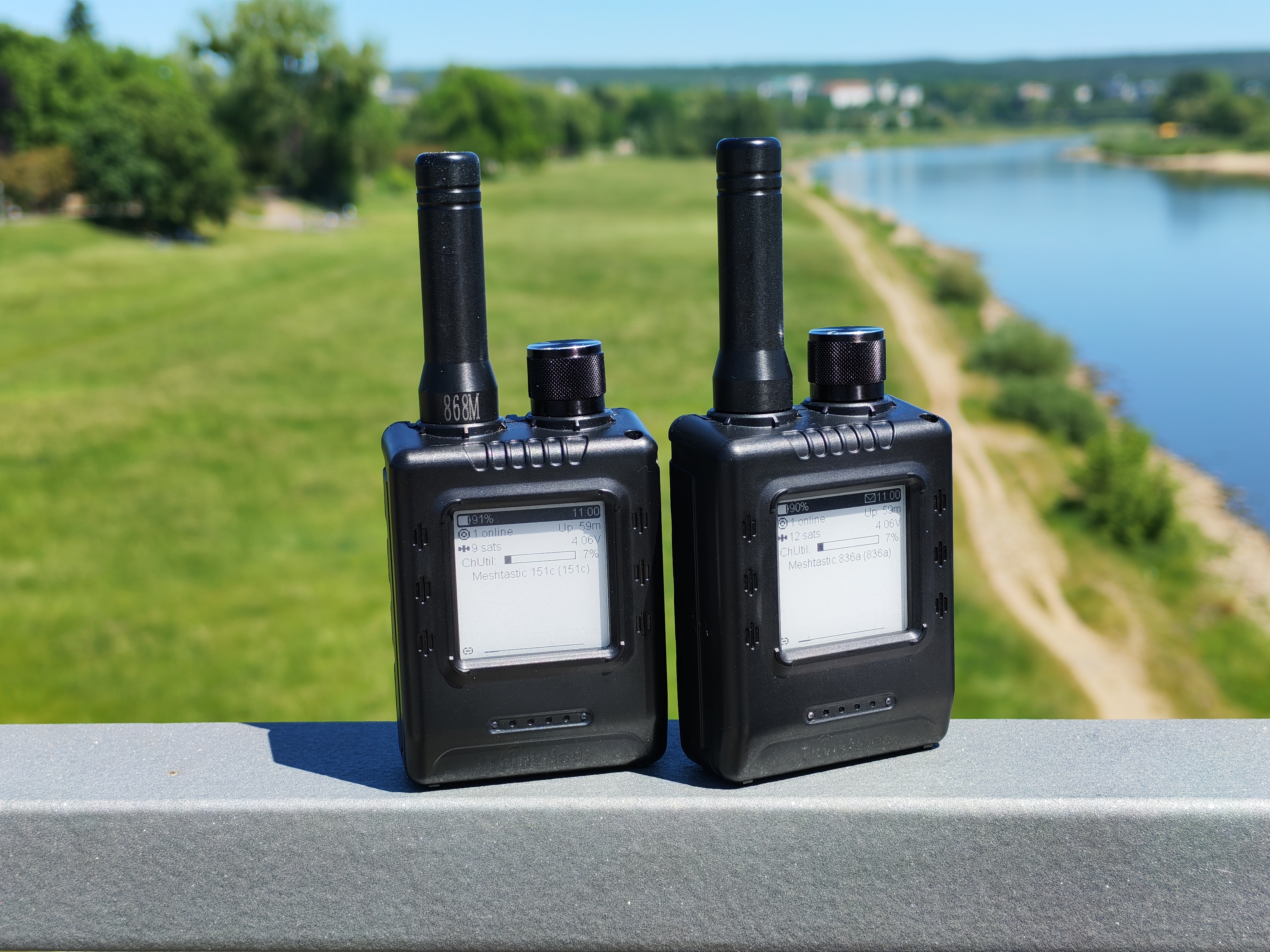
To better understand how Meshtastic works in real life, we looked at the ThinkNode M1, a portable device designed for LoRa and Meshtastic communication. It is one of many compatible handheld systems available on the market, and it shows how simple off-grid messaging can be when paired with a smartphone.
The basic concept is straightforward. A Meshtastic device can communicate directly with other Meshtastic devices nearby. When more devices are added, they can form a mesh network. In this type of network, messages can hop from one device to another, extending communication beyond the range of a single unit. This is where Meshtastic becomes especially interesting: every compatible device can help pass messages along, creating a decentralized communication system that does not depend on mobile towers or internet access.
The ThinkNode M1 includes an e-ink display, a GNSS module for location tracking, a rotary dial used for power and brightness control, two physical buttons, and a switch for the GNSS connection. Since it runs on battery power, it is designed for portable use in outdoor or emergency situations.
A smartphone can connect to the ThinkNode M1 via Bluetooth. Once paired, the device works like an external LoRa modem, while the Meshtastic app handles setup, configuration, and messaging. This means users can type and send messages from their phone, even when they have no mobile signal. Incoming messages can also trigger smartphone notifications, making the experience feel closer to a regular messaging app.
The Meshtastic app is one of the main reasons the system is approachable. It allows users to configure settings, manage channels, send text messages, and view device information. It can also display location data when GNSS is enabled. In practice, the ThinkNode M1 was able to record its own position without problems, share that position with the mesh network, and show location history for a device.
The e-ink screen is another practical feature. It remains easy to read in bright sunlight, which is important for outdoor use. However, e-ink technology has its limitations. The display can feel slow, and partial refreshes may occasionally leave overlapping image content on the screen. This is not unusual for e-ink panels, and the device eventually performs a full refresh to clear the display.
The physical controls are less impressive. Operation through the two buttons is not always intuitive, especially for new users. The rotary dial is helpful for turning the device on and adjusting brightness, but the overall button-based navigation may require some patience.
Range is one of the biggest questions people have about Meshtastic, and expectations should be realistic. While LoRa technology is known for long-distance communication, huge ranges are not guaranteed with just two handheld devices. Claims of extremely long distances usually depend on ideal conditions, elevated locations, clear line of sight, and additional relay devices.
In testing with two ThinkNode M1 units, using 868 MHz and the LONG-SLOW modem preset, the range reached about 1,600 feet near a river without line of sight. In dense inner-city environments, the practical range was closer to a few hundred yards. Buildings, terrain, interference, antenna placement, and device positioning all play a major role.
To achieve much longer communication distances, users need more devices in the network or dedicated repeaters placed in useful locations. These relay points help forward messages across the mesh, allowing the network to cover a wider area. This is the real strength of Meshtastic: it becomes more capable as more nodes join the network.
For anyone interested in off-grid communication, Meshtastic offers a compelling alternative to traditional mobile messaging. It is not meant to replace a smartphone network in everyday life, and it is not ideal for high-speed data or voice calls. Instead, it focuses on low-power, long-range text communication and location sharing, especially in places where other networks are unavailable.
The ThinkNode M1 provides a convenient example of how a Meshtastic device can work in practice. It is portable, battery-powered, readable in sunlight, and easy to pair with a smartphone. Its controls could be more intuitive, and range depends heavily on the environment, but the overall concept is impressive.
Meshtastic is best viewed as a practical tool for short text communication, group coordination, and location sharing when conventional networks fail or are unavailable. With the right setup, multiple devices, and well-placed relay nodes, it can become a useful off-grid messaging network for outdoor adventures, community preparedness, and remote communication.