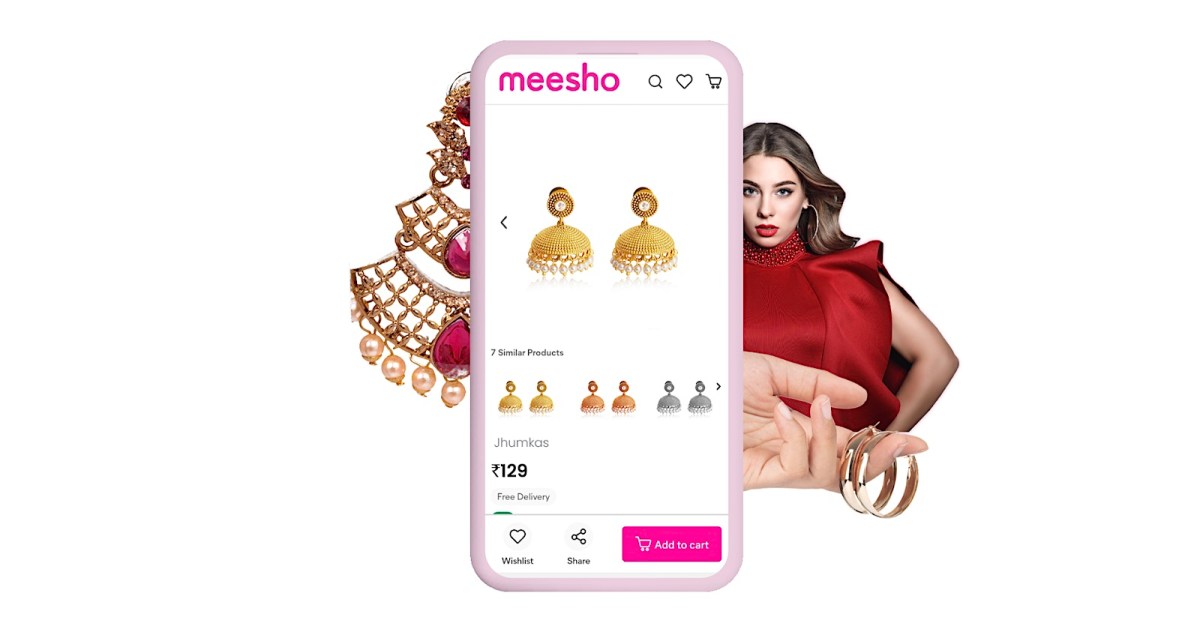
In a milestone achievement, Meesho has emerged as the first Indian horizontal e-commerce firm to achieve positive cash flow, showcasing a remarkable pivot in a market notorious for its slim profit margins. Backed by major investors like SoftBank and Prosus, Meesho has captivated the appetite of consumers in India’s smaller cities and towns.
For the financial year ending March 2024, Meesho reported an impressive operating cash flow of ₹232 crores ($27.6 million), coupled with a 33% boost in operating revenues, reaching ₹7,615 crores ($905.6 million). Remarkably, the company’s adjusted losses have plummeted by a staggering 97%, from ₹1,569 crores to merely ₹53 crores.
Meesho’s stellar growth continues to outpace the broader expansion of India’s e-commerce industry, which is anticipated to grow by 17% in 2024 before picking up speed to 20% in 2025, according to recent data. Analysts attribute this slower growth rate to decreasing consumption and a tapering apparel industry.
In contrast with its pace, another key player, Flipkart, has reported a 21% increase in revenue, reaching $2.12 billion, while its losses have decreased by 41% to $280.4 million. Simultaneously, the Indian commerce landscape is undergoing a transformation, driven by the rise of quick commerce firms in urban areas. Blinkit, a division of Zomato, has expanded its network of dark stores and broadened its product range significantly, introducing new features like installment payment options, quick returns, and split shipments to extend its market reach.
Quick commerce is becoming increasingly competitive, with major players such as BlinkIt, Zepto, Swiggy’s Instamart, and Tata’s BigBasket projected to achieve annual sales around $6 billion this year.
The struggle for market dominance is not just limited to revenue. Established names are increasingly striving to control the logistics aspect of their operations. Both Amazon and Flipkart now manage around 90% of their deliveries internally. Meanwhile, Meesho has launched Valmo, its proprietary logistics service, which currently handles about 35% of its orders to optimize shipping costs.
As the race to capture the next wave of online shoppers heats up, Meesho is making strides into the untapped potential of India’s hinterlands. The company reports that a substantial 45% of its customer base comes from tier 4 cities and beyond, boasting 145 million unique annual transacting users, equating to about 10% of India’s population.
In its own words, Meesho reflects on its deep penetration into underserved markets, stating, “We’re witnessing a significant influx of first-time e-commerce users, which underscores our success in reaching India’s overlooked regions. This points not only to the immense opportunity for e-commerce in India but also highlights our crucial role in making it accessible across all regions.”
Projections suggest around 120 million new online shoppers are expected to join the e-commerce market between 2024 and 2027, bringing the total user base to approximately 380 million. Notably, around 75% of these newcomers are anticipated to be from Tier-2/3 cities, indicating a burgeoning group of first-time online shoppers set to reshape the industry landscape.