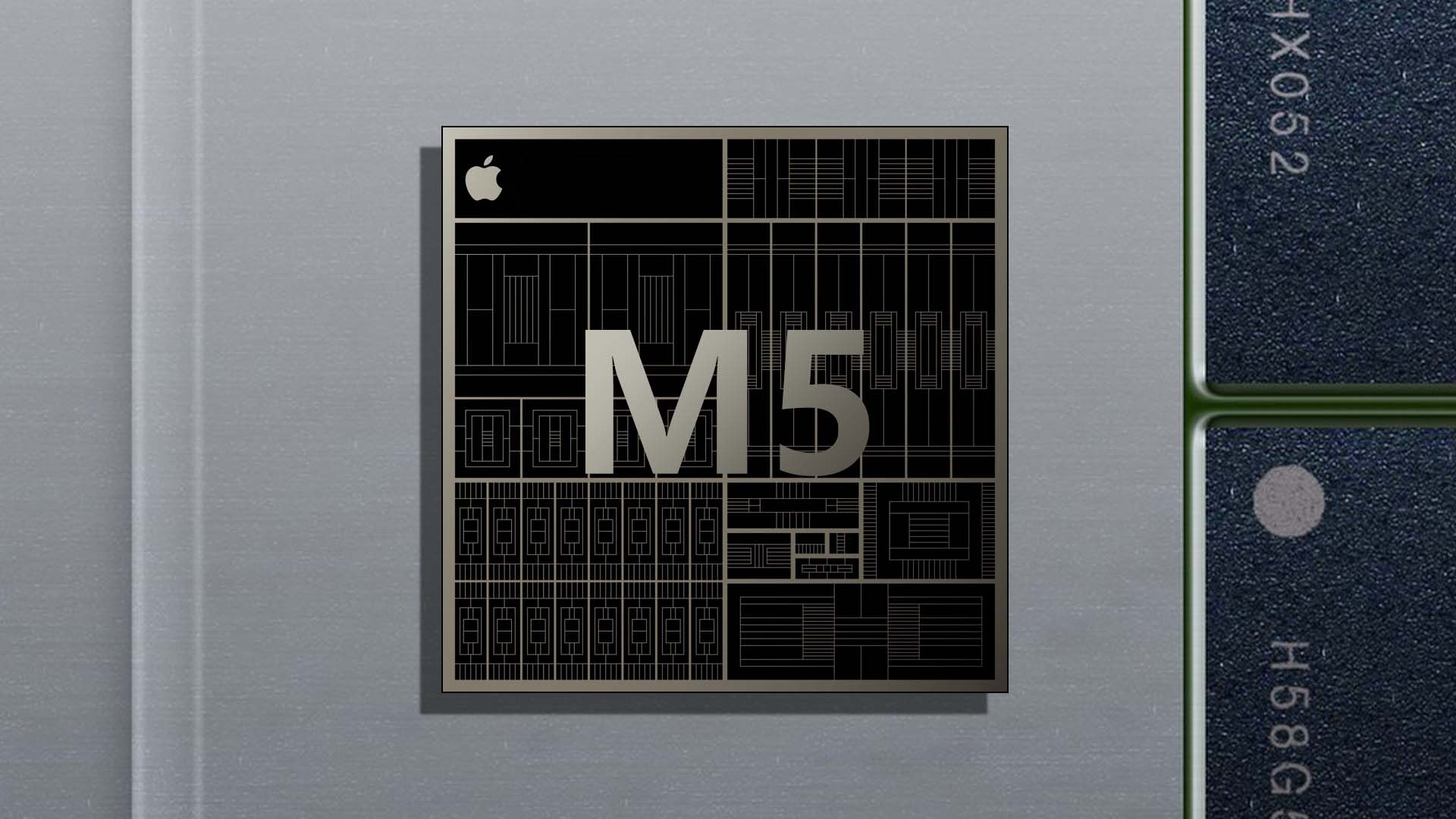
Apple is reportedly gearing up to unveil three new devices this week, and the spotlight is squarely on the M5 chip expected to power them. Early chatter around the iPad Pro offered only a glimpse into what’s changed generation-to-generation, leaving the M5’s core details largely under wraps. Many assumed Apple would move the M5 to TSMC’s newer 3nm N3P process, the same node believed to be used for the A19 and A19 Pro. A new report, however, claims the M5 could instead stick with the older 3nm N3E technology—just like the M4.
Why would Apple choose N3E over N3P? Cost could be a factor. TSMC has reportedly raised prices across its 3nm lineup, with N3E wafers said to cost around $25,000 and N3P wafers around $27,000 apiece. If the higher-end M5 Pro and M5 Max variants aren’t due until early 2026, Apple may decide the incremental gains of N3P aren’t worth the immediate expense, especially when the company has little direct competition at the same performance tier in laptop-class ARM silicon. On paper, a cost-optimized strategy for the initial M5 wave doesn’t sound far-fetched.
But there’s a compelling counterargument: this could simply be a typo or miscommunication about the M5’s lithography. Apple’s track record strongly leans toward adopting cutting-edge manufacturing early—even when rivals hold back. Consider the A17 Pro as well as the M3, M3 Pro, and M3 Max, all built on TSMC’s advanced 3nm N3B process at a time when competitors like Qualcomm and MediaTek launched their flagship mobile chips, including Snapdragon 8 Gen 3 and Dimensity 9300, on the more mature 4nm N4P node. The estimated tape-out costs for the M3 family alone hit the billion-dollar mark, underscoring Apple’s willingness to spend heavily to secure process leadership.
There’s also the ecosystem angle. If the A19 and A19 Pro are already moving to N3P, it would be unusual for the M5 to lag a full generation behind. Major industry players—Qualcomm and MediaTek included—are reported to be shifting their next-gen silicon to N3P, and even names like Snapdragon X2 Elite Extreme and Snapdragon X2 Elite are associated with the same technology. In that context, an M5 on N3E would look out of step with broader market momentum and with Apple’s own silicon strategy.
Looking further ahead, the roadmap appears even more aggressive. Reports suggest the M6, expected late next year, could be Apple’s first 2nm SoC for MacBooks. If that timeline holds, the M5 would serve as a crucial bridge generation, making the choice of node even more consequential for performance-per-watt, thermals, and long-term platform support.
So where does this leave the M5? Two scenarios seem plausible. Either Apple prioritizes cost and supply stability in the near term by opting for N3E—especially for the first wave of devices—before moving upscale with M5 Pro and M5 Max. Or, more likely given Apple’s history, the M5 launches on N3P to align with the A19 series and maintain a consistent edge in performance and efficiency.
Until Apple makes it official, treat the N3E rumor with caution. Based on past behavior and current industry trends, an N3P-based M5 feels like the safer bet. Either way, this week’s announcements should make clear how Apple plans to position its next-generation silicon—and how quickly it intends to push toward that rumored 2nm future with M6.