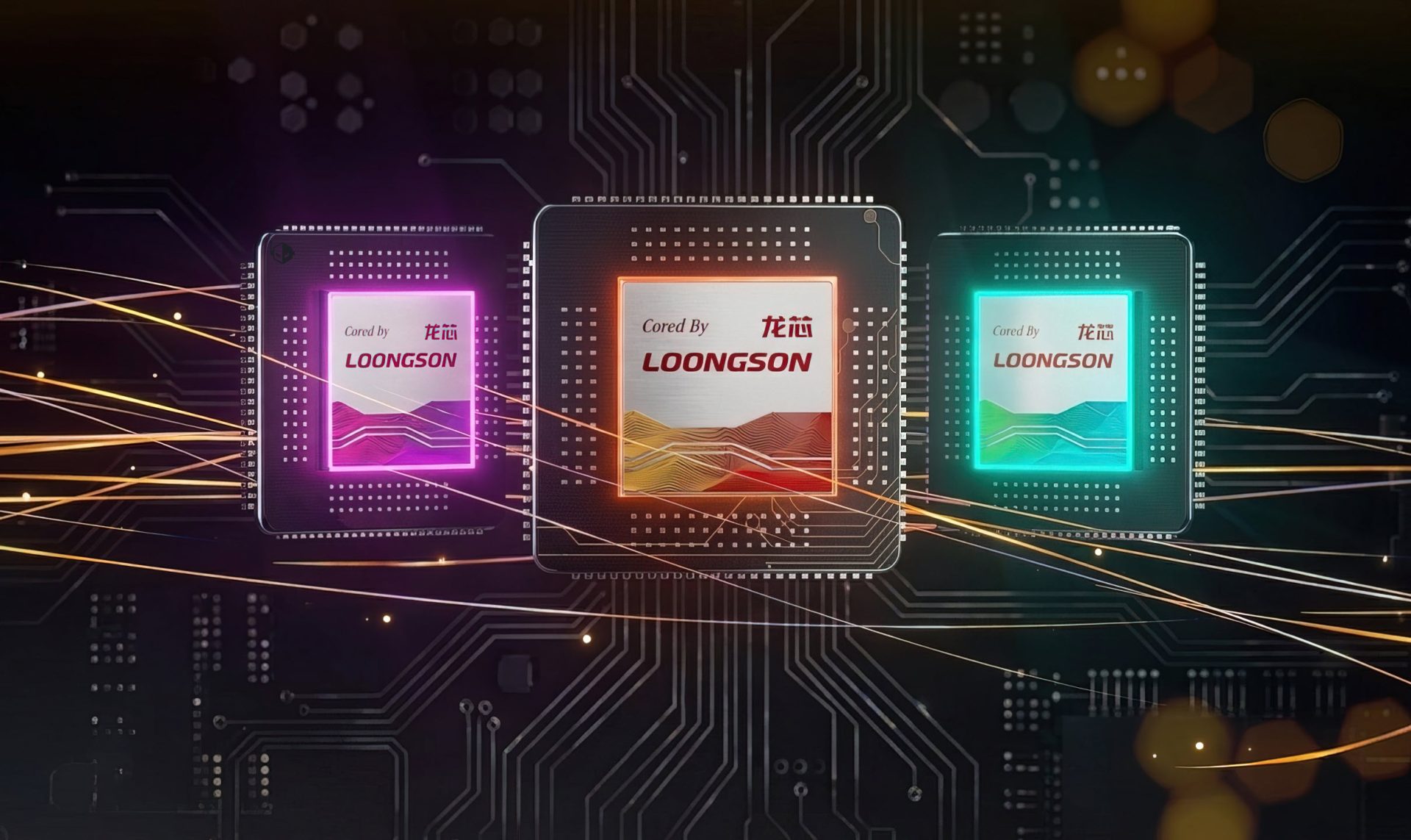
Loongson is pressing ahead with its long-term goal of building a stronger homegrown computing stack for China, and its newest roadmap update offers a clearer picture of what’s coming next. The company’s upcoming 3B6600 CPU and 9A1000 GPU are designed primarily for mainstream domestic PCs and broad deployment, not to chase the cutting edge. That said, both products are now facing a longer wait, with availability pushed to next year, and performance targets that line up more closely with older, proven hardware from earlier eras of AMD and Intel.
Even so, Loongson’s progress remains notable because the company is developing modern x86 alternatives under significant technology and supply-chain constraints. For many buyers in China’s domestic PC ecosystem, the priority is reliable, locally sourced platforms that can scale across offices, education, and government deployments—areas where Loongson continues to focus.
Loongson 3B6600 CPU: mainstream chip with integrated graphics and a sizable uplift over 3A6000
Loongson’s next mainstream processor is the 3B6600, aimed at desktops and laptops. It’s expected to feature LA864 CPU cores paired with LG200 GPU cores, positioning it as an all-in-one platform with integrated graphics.
Compared to the earlier 3A6000, Loongson says the 3B6600 delivers around a 30% performance improvement at the same clock speeds in pre-silicon testing. Internal estimates also suggest the 8-core 3B6600 could land around 60–80 points in SPEC CPU2006 single-core testing. In practical terms, that points to performance territory similar to Intel’s 12th Gen Core processors (Alder Lake), which debuted in 2021.
Recent testing of the older 3B6000 (based on LA664) showed it trailing far behind today’s newest flagship chips from AMD and Intel, but looking more competitive when compared against older generations such as Intel 10th Gen and AMD Zen 2—especially in the kind of single-core workloads Loongson targets. If the claimed 30% gain holds up, the 3B6600 could narrow the gap further, potentially landing closer to Intel 12th Gen and AMD Zen 3 class performance in certain scenarios.
On the server side, Loongson is also continuing development of its 3C6000 series, with configurations scaling up to 64 cores. Beyond that, the next-generation 3D7000 lineup is planned to use chiplets, targeting 32+ core chiplets and total core counts exceeding 128 cores—signaling that Loongson wants to expand not only across consumer desktops but also deeper into data center and infrastructure deployments.
Loongson 9A1000 GPU: basic display and compute, with performance likened to Radeon RX 550
Loongson’s discrete GPU effort continues with the 9A1000, a product that’s positioned more for mass compatibility and baseline graphics needs than gaming performance. Loongson compares the 9A1000’s performance level to the Radeon RX 550, a mainstream graphics card released in 2017. That may sound modest, but it aligns with the product’s purpose: bringing dependable display output and basic acceleration to large volumes of mainstream PCs built around Loongson platforms.
Loongson claims the 9A1000 is designed with modern API compliance in mind and includes efficiency and design improvements such as a 25% increase in clock speed, a 20% reduction in core area, and a 70% reduction in power consumption. The company also says performance should be about 5x higher than its older 2K3000 solution, and it’s targeting up to 40 TOPS of AI compute—an interesting spec that suggests Loongson wants this GPU to contribute to lightweight AI workloads in addition to standard graphics duties. Driver support compatible with Windows is also part of the plan.
On timing, Loongson states the 9A1000 taped out in September 2025. The 3B6600 has reportedly completed design and is expected to tape out by Q3 2026. Engineering samples are planned for the second half of 2026, with both products expected to arrive next year.
What’s next: higher-performance GPUs, plus new bets on DRAM and Android ecosystem opportunities
Loongson’s longer-range GPU roadmap doesn’t stop at the 9A1000. The company says future products like the 9A2000 are intended to move upmarket into higher performance, and that design work is already underway.
Looking further out, Loongson discussed a 9A3000 GPU built on a sub-10nm process. That jump is more complex than a simple node shrink: it requires major investment in key building blocks such as custom PHYs, memory interfaces, and PCIe interfaces—areas that are difficult, expensive, and time-consuming to develop.
Perhaps the most intriguing angle, however, is Loongson’s interest in expanding beyond CPUs and GPUs. The company indicated it is exploring entry into the DRAM market and is researching memory opportunities. It also noted cooperation with domestic manufacturers to develop logic silicon wafers for HBM (high bandwidth memory) chips. If that effort matures, it opens the possibility that future Loongson accelerators and GPUs could integrate domestically developed HBM solutions—an important strategic move for supply-chain independence.
Finally, Loongson also says it is watching the Android ecosystem and looking for the right timing to enter the market. The company mentioned plans to leverage the open-source HarmonyOS ecosystem, hinting at a broader push into consumer and mobile-adjacent software platforms when conditions align.
Taken together, Loongson’s roadmap is less about beating the fastest global chips and more about building a complete, scalable, domestically controlled computing platform—CPU, GPU, memory ambitions, and ecosystem plans included. The near-term hardware may not redefine performance expectations, but it highlights how aggressively Loongson is working to expand China’s in-house options across PCs, servers, and future AI-focused systems.