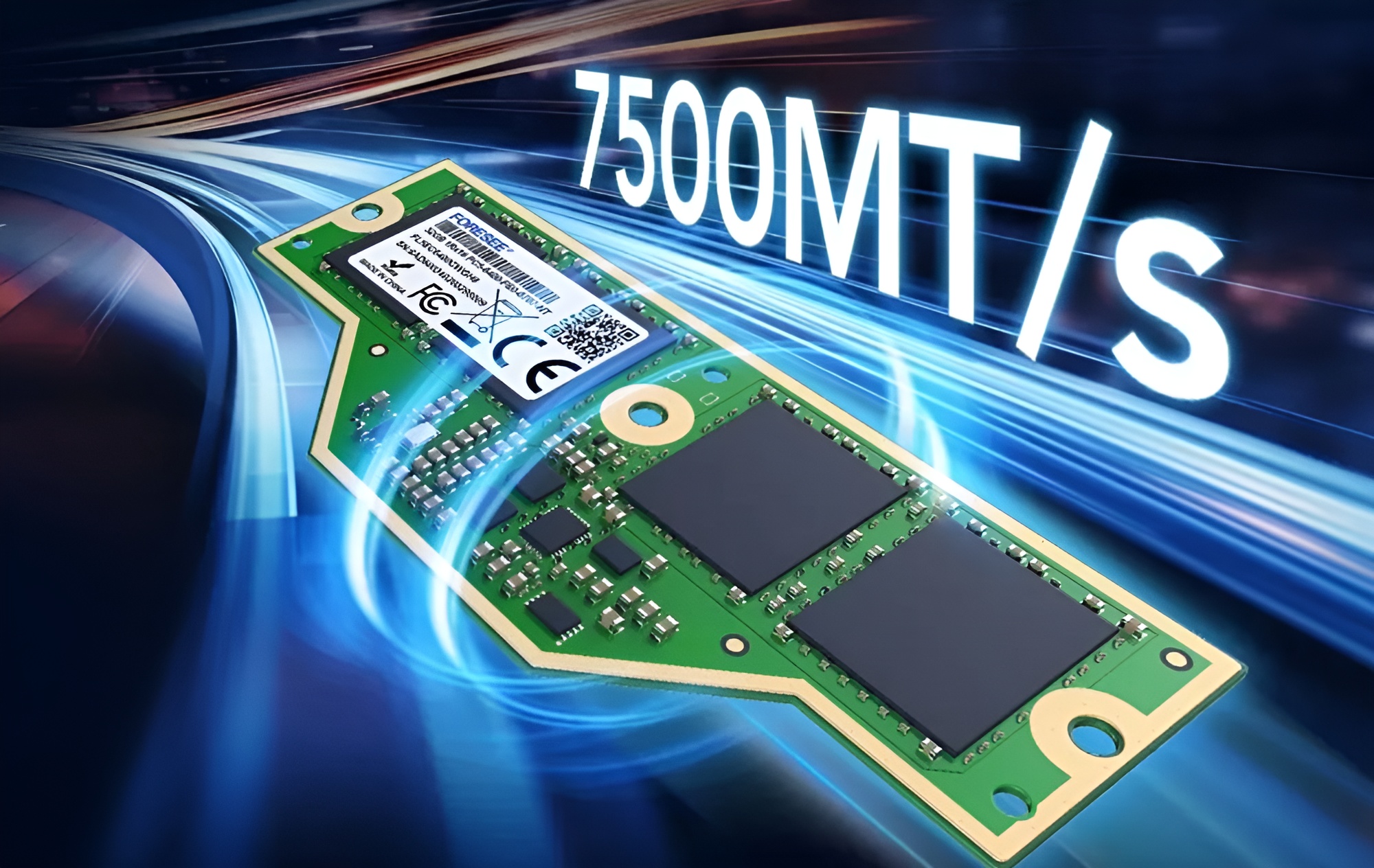
In the evolving landscape of computer memory technology, Longsys has made a notable stride by launching its “FORESEE” LPCAMM2 memory, tailored for devices that demand high efficiency and compact form factors. Lexar’s subsidiary Longsys is stepping into the future with this breakthrough, offering staggering speeds of up to 7500 MT/s and large capacities reaching 64 GB.
Compact and High-Performance: “FORESEE” LPCAMM2 Memory Details
The LPCAMM, or Low Power Compression Attached Memory Module, is emerging as a favorite standard for devices that are limited in power but require efficient memory solutions, such as laptops. The LPCAMM design outshines traditional SO-DIMMs by delivering commendable performance along with enhanced power savings.
Longsys’s latest memory innovation, the FORESEE LPCAMM2, harnesses LPDDR5 memory technology and is available in 16 GB, 32 GB, and 64 GB variants. A single module houses a 128-bit memory bus, ensuring top-notch performance that rivals other market solutions. Longsys’s offering is not just about speed; it’s geared for a broad spectrum of consumer applications, including laptops, and ventures into artificial intelligence (AI) and high-performance computing (HPC) sectors.
Efficiency at the Forefront: The Advantages of Longsys’s Memory Solution
Longsys highlights that its memory solution occupies 60% less space compared to traditional SO-DIMMs, a critical feature for modern, slim devices. The compact dual-channel structure significantly contributes to this space-saving design. In terms of power efficiency, the LPCAMM2 boasts a power-to-performance ratio that is 70% better than competitors, emphasizing its suitability for widespread adoption.
By 2027, Longsys anticipates the LPCAMM standard will encompass 30% of the laptop DRAM market segment, a testament to its potential for expanding horizons within the technology sector.
The Future of Low-Power Memory Technology
Previous offerings, like those from Micron, have demonstrated the industry’s interest in LPCAMM technology. Now, with Longsys joining the race, the anticipation grows for the market’s acceptance of this innovative memory standard. LPCAMM2 stands as a prime candidate for domination in low-intensity computing devices because manufacturers increasingly prioritize resources, seeking out solutions that offer both power efficiency and high performance.
This new shift in memory standards points towards a more energy-conscious future, where computing power is not compromised by the footprint of the devices that harness it. Longsys’s foresight with the “FORESEE” LPCAMM2 could lead an impactful transition in the way we think about and utilize memory in the ever-advancing world of technology.