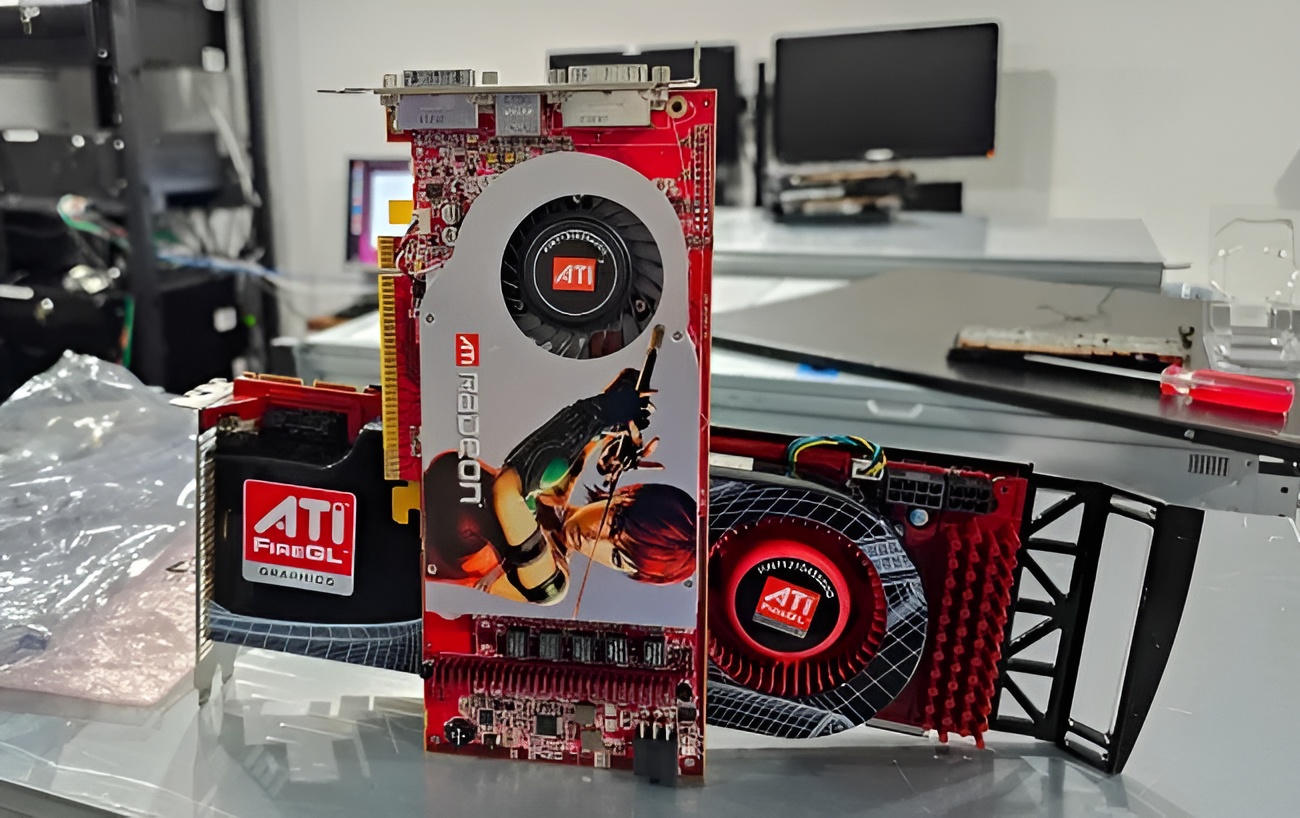
Linux’s long-standing reputation for keeping older hardware alive just got another proof point. Even ATI’s two-decade-old Radeon R300 series is picking up new features, thanks to the relentless efforts of open-source developers.
In the upcoming Mesa 25.3 release, these vintage GPUs gain two memory-focused OpenGL extensions: GL_ATI_meminfo and GL_NVX_gpu_memory_info. These extensions expose more detailed information about graphics memory, helping applications and users monitor VRAM usage and make better decisions about how that limited memory is allocated. That’s particularly relevant for the R300 era, where cards commonly shipped with as little as 64 MB of VRAM—tiny by today’s standards, but still very much usable for lightweight desktops, retro gaming, and specialized workloads. The patch set was contributed by developer Brais Solla.
What makes this noteworthy isn’t just the feature set, but the philosophy behind it. Windows effectively closed the chapter on these ATI Radeon GPUs back in 2009. Linux, by contrast, continues to invest in compatibility and polish for legacy graphics hardware. Beyond Mesa, work is ongoing in the Radeon DRM driver to ensure these cards remain functional and stable on modern Linux distributions.
Why it matters:
– It extends the practical life of legacy machines, cutting e-waste and costs.
– It improves visibility into memory behavior on low-VRAM GPUs, aiding stability and performance tuning.
– It benefits retro computing enthusiasts, tinkerers, and educational environments where older ATI Radeon cards still see use.
It’s a small update with big symbolism: in the Linux ecosystem, even a 64 MB VRAM relic can get thoughtful, modern support—courtesy of a community that values longevity just as much as cutting-edge performance.