LG Display’s FLiPP OLED Technology Promises Brighter, Longer-Lasting, and More Efficient Screens
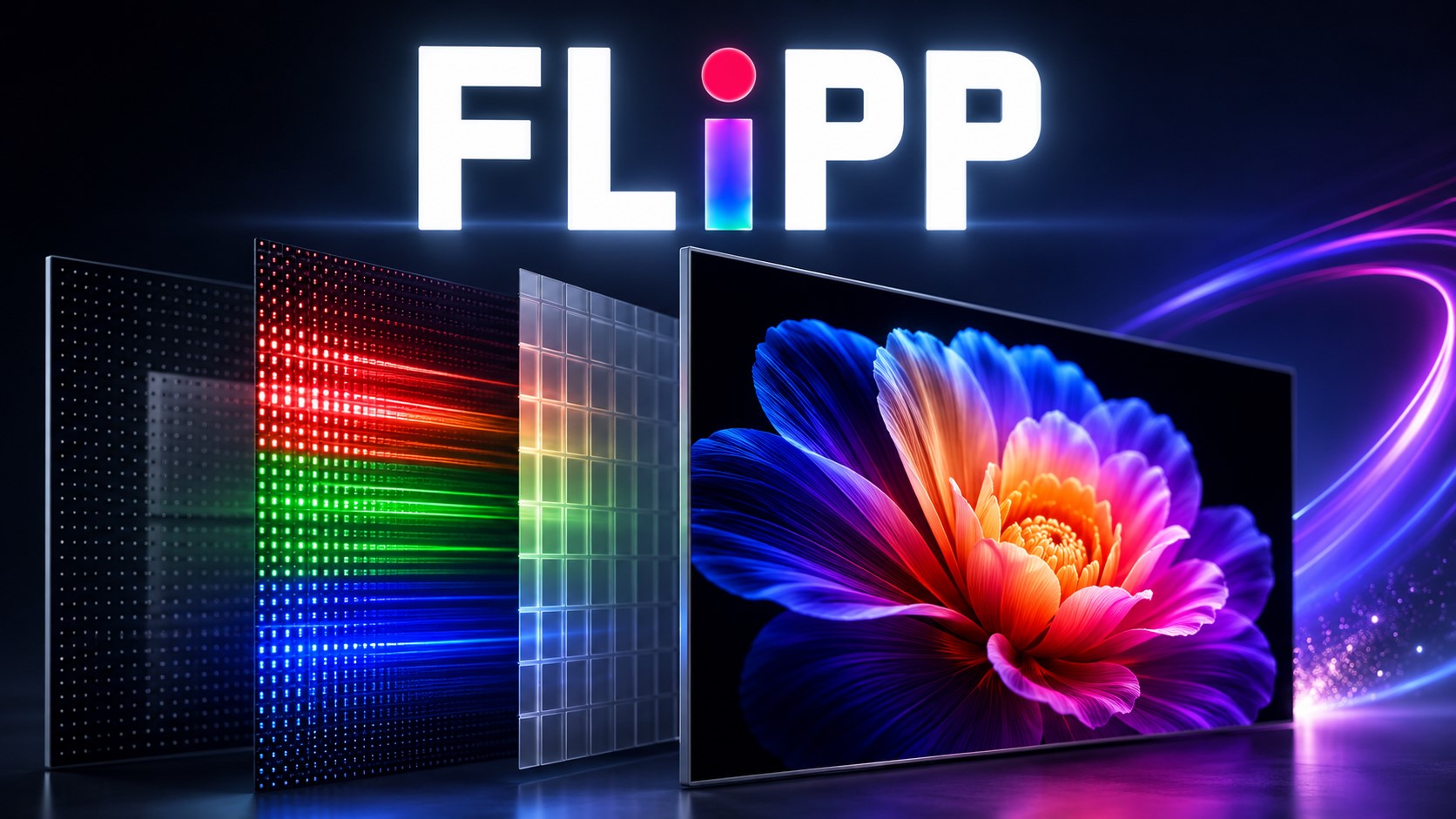
LG Display has introduced a new OLED manufacturing method called FLiPP, short for FMM-Less Innovative Pixel Patterning. The technology is designed to improve how RGB OLED panels are produced, offering higher brightness, better power efficiency, longer panel life, and greater flexibility in manufacturing.
Traditional OLED production often relies on FMM, or Fine Metal Mask, technology. This process uses extremely thin metal masks to deposit red, green, and blue organic materials onto a panel. While widely used, the method has several limitations, especially as display makers push toward larger screens, higher resolutions, and more efficient production.
FLiPP takes a different approach. Instead of using fine metal masks, LG Display’s new process uses photolithography-based pixel patterning. In simple terms, the red, green, and blue OLED materials are coated in sequence, carefully positioned, and then shaped using precision ultraviolet light to remove unwanted areas. This allows the pixels to be patterned more accurately without relying on large metal masks.
One of the biggest problems with conventional fine metal masks is that they can sag under their own weight, particularly when used for larger panels. Even a slight deformation can create alignment issues, which may lead to color mixing or production defects. Manufacturers also need different masks for different screen sizes and resolutions, making the process more complex and expensive.
LG Display says FLiPP can solve many of these issues by eliminating the need for fine metal masks altogether. Because the technology does not depend on large metal plates, it can be used more easily on bigger mother-glass substrates. This could make OLED production more flexible and potentially more cost-effective, especially for large displays and future high-resolution panels.
The performance improvements are also significant. According to LG Display, FLiPP can increase the aperture ratio of OLED pixels by around 55% compared with panels made using the conventional FMM process under the same conditions. A higher aperture ratio means more of each pixel area can emit light, which directly improves brightness and efficiency.
As a result, FLiPP OLED panels are said to deliver up to 1.6 times higher brightness than comparable FMM-based OLED panels. The technology may also extend panel lifespan by up to 2.4 times, which is an important improvement for users concerned about OLED durability over years of use.
Power consumption is another key benefit. LG Display claims FLiPP can reduce energy use by around 13% compared with traditional FMM OLED manufacturing. For smartphones, tablets, laptops, monitors, and TVs, lower power consumption can mean longer battery life, reduced heat, and improved overall efficiency.
The combination of higher brightness, longer lifespan, and reduced energy use could make FLiPP an important step forward for OLED display technology. Brighter OLED panels are especially valuable for HDR content, outdoor visibility, premium televisions, gaming monitors, and professional displays where color accuracy and luminance are critical.
Manufacturing flexibility may be just as important as the visual improvements. Since FLiPP is not limited by the size restrictions of fine metal masks, it could help display makers produce RGB OLED panels across a wider range of screen sizes and resolutions. This opens the door to more advanced OLED displays for consumer electronics, automotive screens, IT devices, and large-format panels.
LG Display is presenting FLiPP at IMID 2026 in Busan, highlighting the technology as a potential next-generation OLED manufacturing solution. However, the company has not yet announced any commercial products using FLiPP, and there is currently no confirmed timeline for when consumers will see displays based on this technology.
For now, FLiPP remains a promising development rather than a product-ready feature. Still, if LG Display can bring the technology to mass production, it could help shape the future of OLED screens by making them brighter, more durable, more efficient, and easier to manufacture at scale.