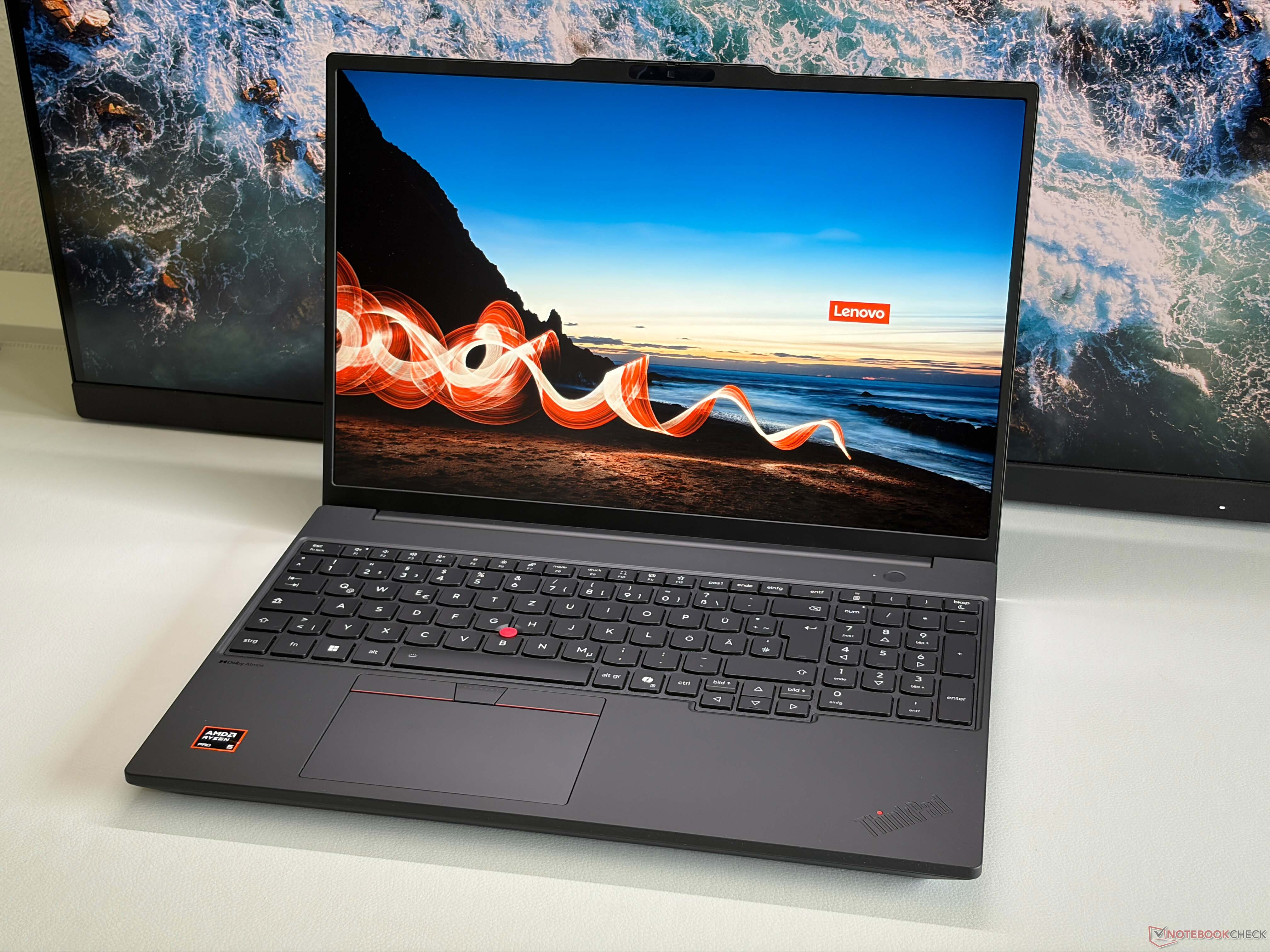
Lenovo ThinkPad T16 Gen 5 Hands-On: Smaller Battery, Easier Access, and Key AMD Memory Choices
Lenovo’s latest ThinkPad T16 Gen 5 is shaping up to be an interesting business laptop refresh, especially for users who care about repairability, memory upgrades, and long-term practicality. At first glance, the design remains familiar, but a closer look inside reveals some important changes that could influence buying decisions.
One of the biggest differences is the battery. Lenovo has equipped the ThinkPad T16 Gen 5 with a 65 Wh battery, which is noticeably smaller than the previous 80 Wh option. That reduction immediately raises questions about real-world battery life, especially for professionals who rely on their laptops for full workdays away from a charger.
The good news is that battery access appears to be much simpler this time. Similar to the smaller ThinkPad T14 Gen 7, the battery can now be removed without taking out extra screws. This is a welcome improvement for maintenance, repairs, and potential future replacements. For business users and IT departments, easier battery removal can make servicing the device faster and less frustrating.
However, the smaller battery capacity is still a surprising decision. There appears to be unused internal space, so Lenovo may have had room to include a larger battery. Whether this design choice has a major effect on endurance will depend on power efficiency, display configuration, processor behavior, and software optimization. Battery life testing will be especially important for anyone considering this laptop as a daily productivity machine.
Another key area to watch is memory configuration. Lenovo is taking a different approach depending on the processor platform. The Intel versions of the new ThinkPad T-series use LPCAMM2 memory modules, while the AMD models continue to rely on standard SO-DIMM memory.
For many buyers, that could be an advantage. SO-DIMM RAM is widely available, familiar, and easier to upgrade. It may also be more cost-effective depending on memory prices at the time of purchase. Users who want more flexibility may appreciate the AMD model for this reason.
The AMD version being tested includes the Ryzen 5 PRO 215 processor with Radeon 740M integrated graphics. A major question is whether adding a second memory module will deliver a meaningful performance improvement. Since integrated graphics rely heavily on system memory bandwidth, dual-channel memory could potentially help the Radeon 740M perform better in graphics-heavy tasks, light gaming, multitasking, and creative workloads.
There is also the software angle to consider. Depending on memory pricing and performance behavior, switching to Linux may be an interesting alternative for some users. Linux can be lighter on system resources and may provide a smoother experience on certain hardware configurations, particularly for developers, technical users, and those who prefer open-source operating systems.
The ThinkPad T16 Gen 5 appears to be a practical business laptop with several thoughtful serviceability improvements, but the smaller 65 Wh battery may become one of its most debated changes. The AMD model’s use of SO-DIMM memory could make it appealing to buyers who value upgrade options, while the Ryzen 5 PRO 215 and Radeon 740M combination will need closer testing to determine its true performance potential.
For now, the biggest questions are clear: How much battery life has been lost with the smaller pack? Does dual-channel memory significantly improve the AMD model? And is Linux a better fit for users looking to maximize efficiency and value?
Those answers will determine whether the Lenovo ThinkPad T16 Gen 5 is simply a modest refresh or one of the more practical business laptops in its class.