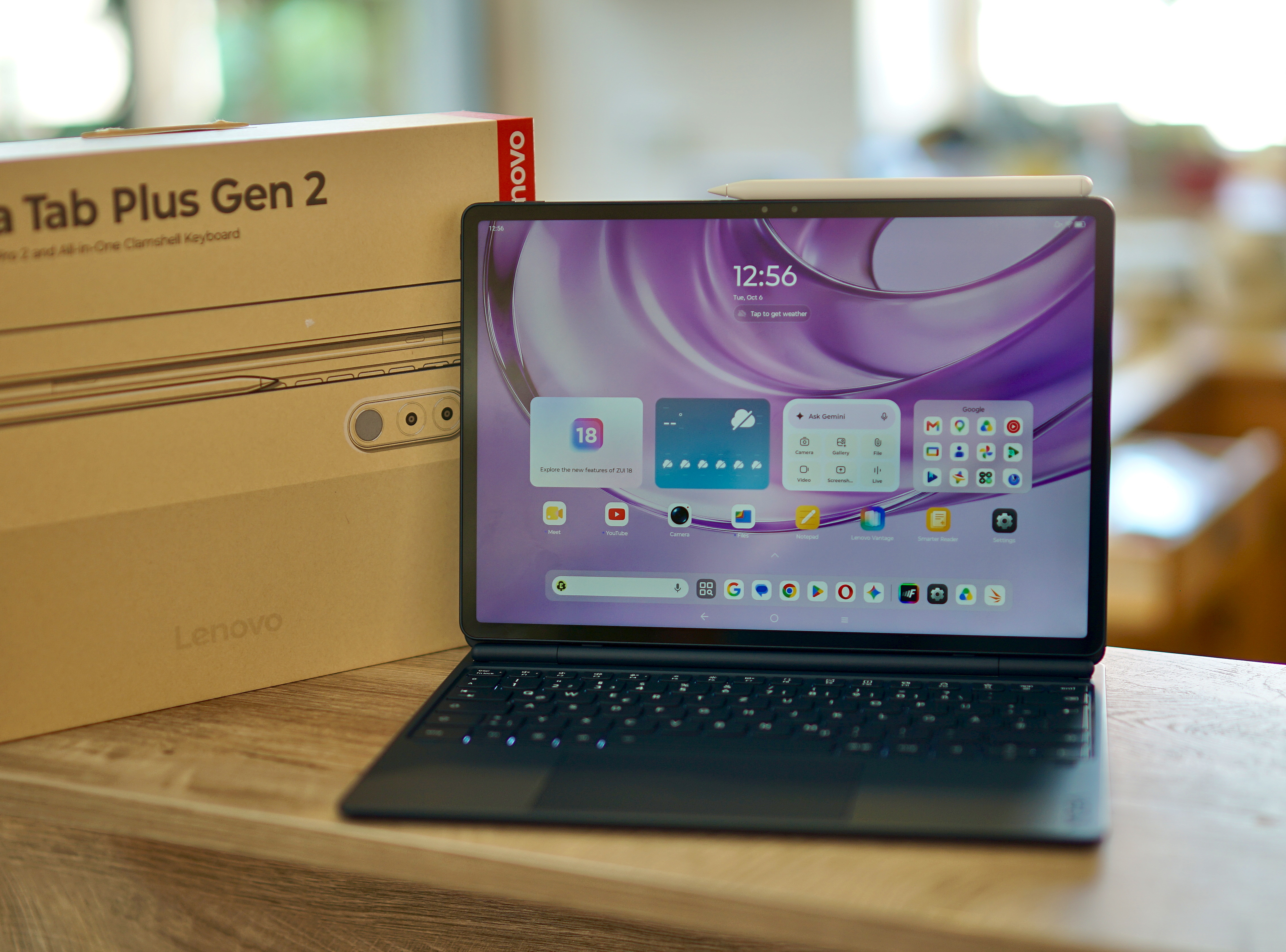
Lenovo Yoga Tab Plus Gen 2 brings back a feature premium tablets forgot
At a time when memory prices are rising and device makers are becoming more selective with storage options, Lenovo has taken an unusual approach with its new premium tablet. The Lenovo Yoga Tab Plus Gen 2 arrives as a flagship Android tablet with powerful hardware, a large 13-inch display, and a feature that has almost disappeared from high-end tablets: a microSD card slot.
That single addition could make the Yoga Tab Plus Gen 2 stand out in a crowded premium tablet market.
Modern tablets often rely on fixed internal storage, pushing buyers toward more expensive models if they need extra space. Lenovo has gone in a different direction. Instead of offering huge internal storage capacities at steep price jumps, the company gives users 256 GB of built-in storage and the option to expand it with a microSD card.
For many users, 256 GB may be enough. Photos, videos, documents, and backups are increasingly stored in cloud services, reducing the need for massive local storage. But large-screen tablets are also popular among creators, photographers, video editors, students, and professionals who work with large files. For them, storage flexibility still matters.
The Lenovo Yoga Tab Plus Gen 2 is available with either 12 GB or 16 GB of RAM, giving it the memory needed for multitasking, productivity apps, media editing, and entertainment. However, its internal storage is limited to 256 GB, which may look modest compared with some rival premium tablets that offer much higher capacities.
That is where the microSD card slot becomes important.
With microSD support, users can expand storage by up to 2 TB. This makes it easier to carry large media libraries, offline videos, work files, camera footage, and project folders without relying entirely on cloud storage. It also allows simple file transfers between cameras, laptops, phones, and tablets. For photographers and videographers, being able to remove a card from a camera and insert it into a tablet can be a major convenience.
Still, there is one important limitation: speed.
The microSD card reader in the Yoga Tab Plus Gen 2 is much slower than the tablet’s internal storage. Test results showed read speeds of around 90 MB/s, with write speeds even lower. By comparison, the internal storage is dramatically faster, especially for sequential read and write tasks.
That means the microSD slot is best suited for storing and moving files rather than running demanding apps or editing very large projects directly from the card. If you are working with high-resolution video, heavy image libraries, or large creative files, the internal storage will deliver a much smoother experience.
Even so, the return of expandable storage on a flagship tablet is a welcome move. Many premium tablets have abandoned microSD support entirely, leaving users with no choice but to pay more upfront for larger storage configurations. Lenovo’s approach gives buyers more control and flexibility.
The Yoga Tab Plus Gen 2 is especially appealing for users who already own microSD cards, regularly transfer files from cameras, or simply want extra storage without depending on cloud subscriptions. It may not replace fast internal storage, but it adds a practical feature that many tablet owners still value.
In a market where high-end tablets often look very similar, the Lenovo Yoga Tab Plus Gen 2 offers something refreshingly practical. Its expandable storage, strong RAM options, and large display make it a compelling choice for productivity, media consumption, and creative workflows.
For anyone searching for a flagship Android tablet with microSD card support, the Lenovo Yoga Tab Plus Gen 2 is one of the rare premium options worth considering.