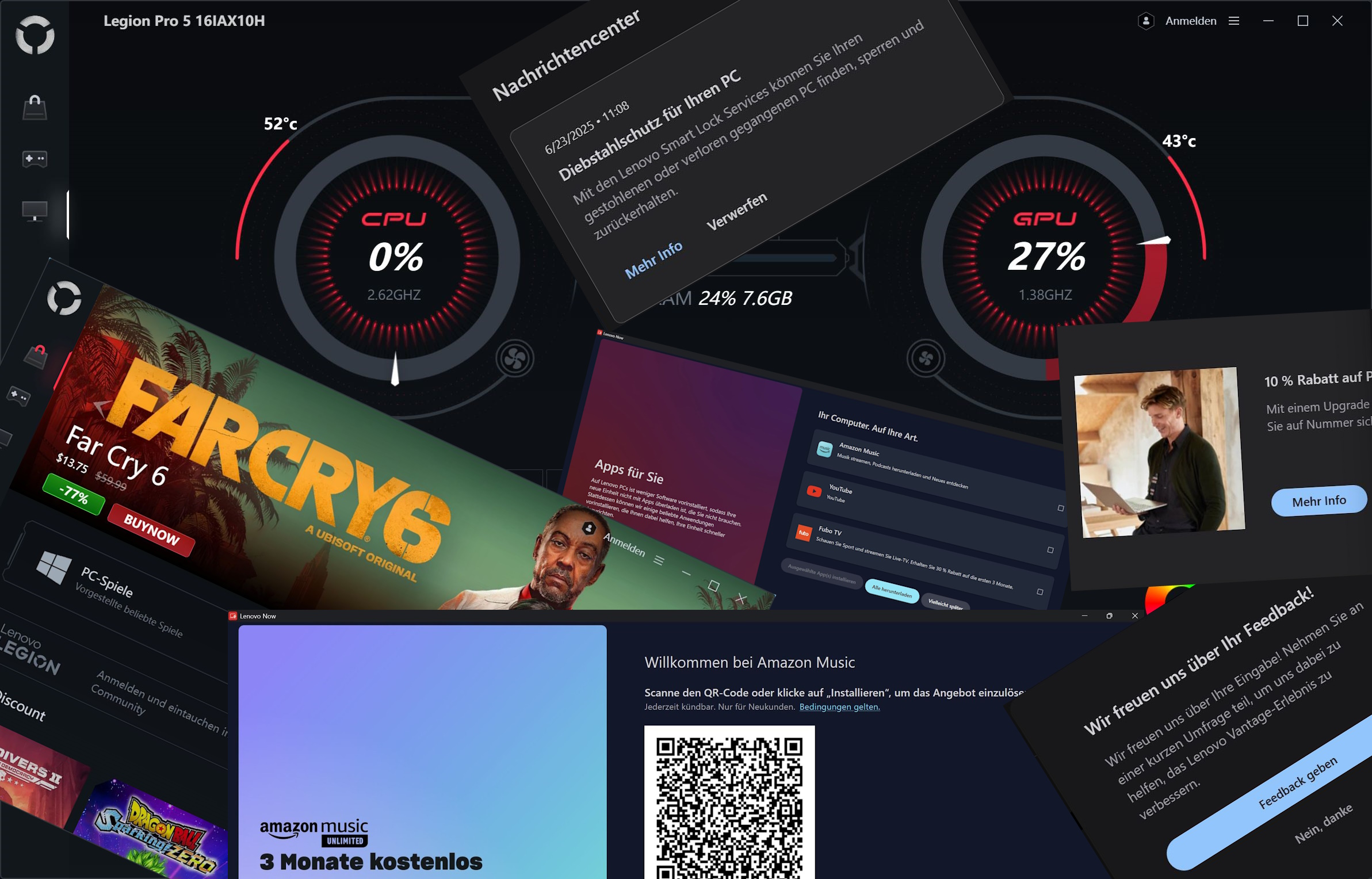
Recently, a trend has been observed where laptop manufacturers, particularly Lenovo, are incorporating advertisements directly into their devices. This isn’t due to Microsoft Windows, but rather the manufacturers’ own software. These proprietary solutions are becoming more common and serve multiple purposes beyond their basic functions.
Lenovo, among others, has been notably aggressive with its advertisements, pre-installed trial software, and expanding proprietary applications. These tactics, driven by the potential revenue from user data and ads, are likely to be adopted by other manufacturers unless regulations intervene. Additionally, the rise of AI is leading to an influx of various proprietary software, some of which may be less useful.
In the early days of gaming laptops, users relied on Windows settings for power and performance adjustments. Manufacturers later developed their own software, offering performance modes like silent or turbo. These control centers have become essential for fully utilizing gaming laptops, replacing the standardized settings once available.
While these control centers offer users enhanced control, they also allow manufacturers to monitor customer behavior, creating opportunities to increase revenue through advertising. This is an enticing prospect for companies, making it challenging to resist the allure of such practices.