Korea’s AI Ambitions Gain Momentum as President Lee Meets NVIDIA CEO Jensen Huang in Silicon Valley
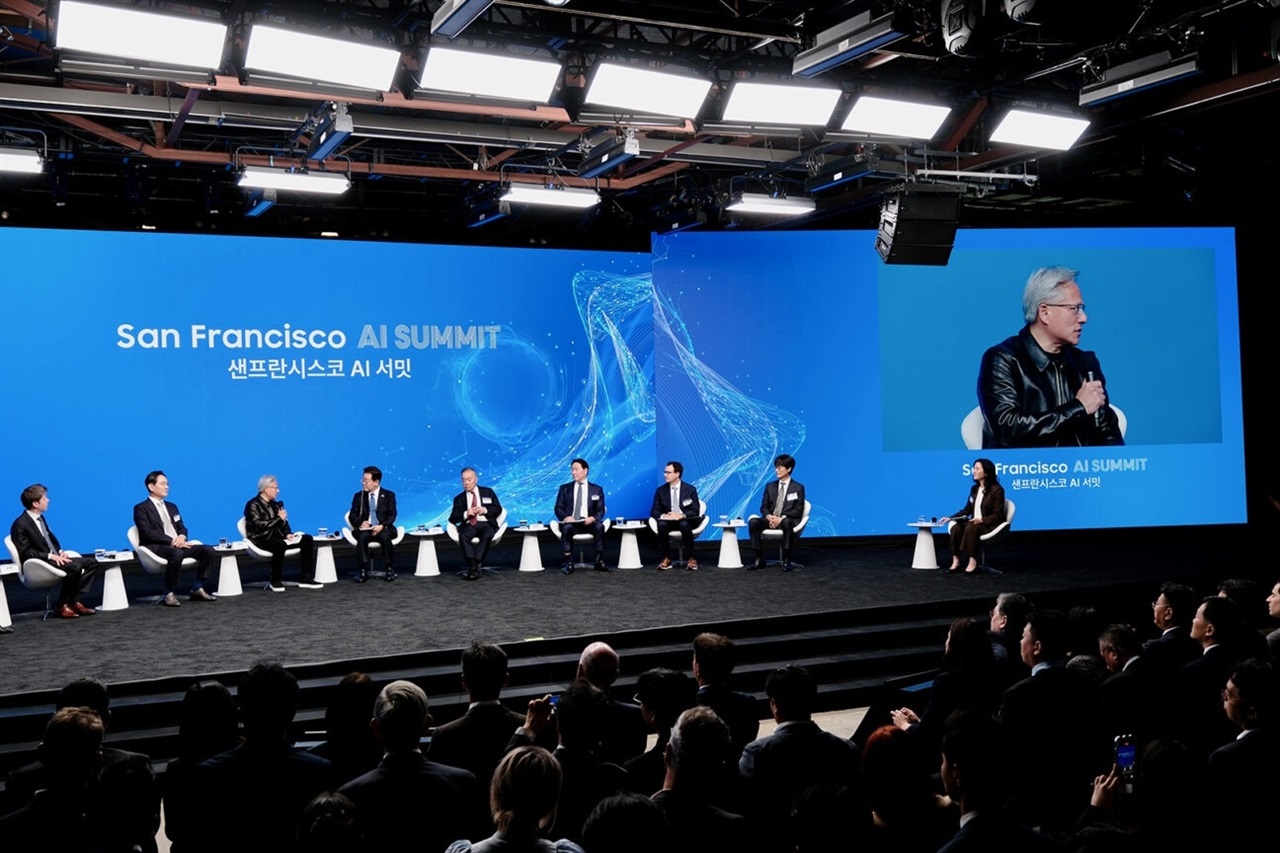
South Korea’s push to become a global artificial intelligence powerhouse took center stage this week as President Lee Jae-myung met with NVIDIA founder and CEO Jensen Huang in Silicon Valley. The high-profile gathering brought together some of Korea’s most influential business leaders, signaling the country’s determination to play a bigger role in the future of AI, semiconductors, advanced computing, and next-generation mobility.
The meeting highlighted the growing importance of cooperation between Korea’s technology giants and NVIDIA, one of the most important companies driving the global AI boom. As demand for AI chips, high-performance memory, cloud infrastructure, autonomous vehicles, and robotics continues to rise, South Korea is positioning itself as a key partner in building the digital economy of the future.
Korea’s delegation included leaders from major industries that are deeply connected to the AI revolution. Companies such as Samsung, SK, and Hyundai are already central to global supply chains, from memory chips and electronics to electric vehicles and smart manufacturing. Their presence alongside President Lee and Jensen Huang underlined a shared message: Korea wants to move beyond being a manufacturing leader and become a central force in AI innovation.
NVIDIA’s role in this shift is difficult to overstate. The company’s graphics processing units and AI computing platforms are now essential to data centers, generative AI systems, supercomputers, robotics, healthcare research, and autonomous driving technologies. For South Korea, strengthening ties with NVIDIA could help accelerate domestic AI development and boost the competitiveness of Korean companies in global markets.
The meeting also reflects a broader trend in which governments are working more closely with private technology companies to secure a place in the AI race. Artificial intelligence is no longer just a software trend. It depends on hardware, energy, data centers, chips, research talent, and industrial partnerships. South Korea already has many of these strengths, particularly in semiconductors and advanced manufacturing.
Samsung remains one of the world’s largest chipmakers and electronics brands, while SK plays a major role in high-bandwidth memory, a critical component for AI accelerators. Hyundai is investing heavily in electric vehicles, autonomous driving, robotics, and smart mobility. Together, these companies represent the kind of industrial ecosystem that could make Korea a major hub for AI-powered technologies.
President Lee’s visit to Silicon Valley was also symbolic. By meeting Jensen Huang in the heart of the global tech industry, Korea is sending a clear signal that it wants to deepen international collaboration while building its own AI capabilities at home. The country is expected to continue investing in AI infrastructure, semiconductor research, data centers, and workforce development as competition intensifies among major economies.
For NVIDIA, closer cooperation with Korean companies also makes strategic sense. AI systems require enormous amounts of memory, reliable chip production, and advanced integration across multiple industries. Korea’s technology sector can support NVIDIA’s expanding ecosystem while also benefiting from access to cutting-edge AI platforms and expertise.
The collaboration could have an impact far beyond consumer electronics. AI is expected to transform factories, vehicles, hospitals, finance, energy systems, logistics, and entertainment. Korean companies already operate at scale in many of these sectors, giving them a strong foundation to apply AI across real-world industries.
While no single meeting can define the future of global technology, this gathering shows how quickly AI is reshaping alliances between governments and corporations. South Korea’s leadership clearly sees artificial intelligence as a national priority, and its biggest companies appear ready to move aggressively into the next phase of digital transformation.
The meeting between President Lee Jae-myung, Jensen Huang, and Korea’s top business leaders may be remembered as an important moment in the country’s AI strategy. With its strength in semiconductors, manufacturing, mobility, and consumer technology, South Korea is well placed to become one of the most important players in the global AI economy.
As the race for artificial intelligence leadership accelerates, Korea’s message from Silicon Valley was clear: it does not intend to watch from the sidelines. It plans to help build the future.