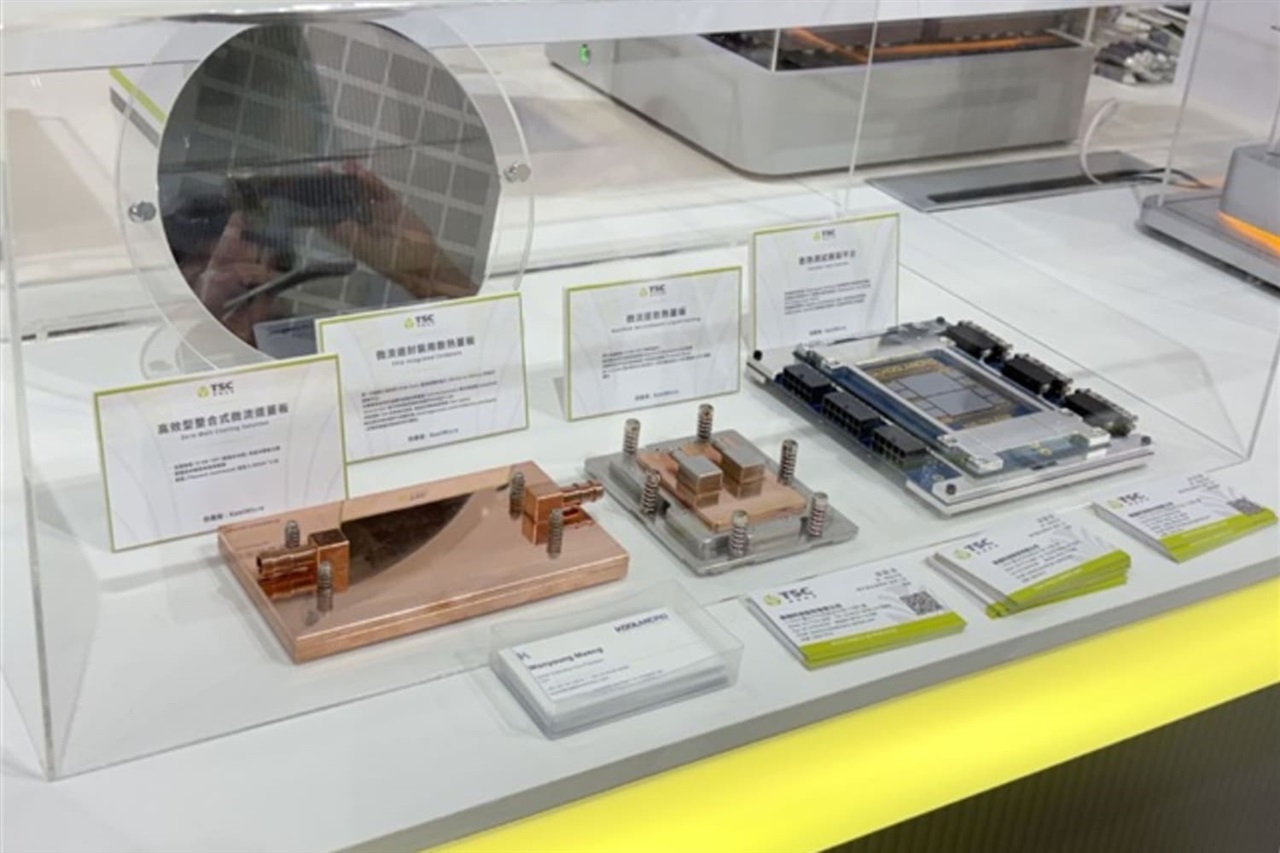
Generative AI Chips Push Cooling Demands Into the Kilowatt Era
The rapid rise of generative AI is transforming the way advanced chips are designed, packaged, and cooled. As AI accelerators become more powerful, they are also consuming far more electricity and producing significantly more heat than previous generations of processors. What was once a thermal challenge measured in several hundred watts is now moving into the kilowatt-scale range.
This shift is creating a major turning point for AI chip packaging and thermal management. Traditional cooling methods are no longer enough for the newest high-performance AI hardware, especially as data centers race to support larger language models, faster training workloads, and more demanding inference tasks.
According to heat sink specialist Jentech Precision, the industry is moving beyond conventional package lid designs that rely mainly on solid-state heat conduction. These older approaches were suitable for earlier chip generations, but generative AI processors are creating heat densities that require more advanced solutions.
One major area of development is phase-change heat spreading. This approach uses materials or structures that can absorb and transfer heat more efficiently by changing phase, helping move thermal energy away from the chip more effectively. As AI chips generate increasingly concentrated heat, phase-change technologies may play a larger role in keeping processors stable under heavy workloads.
Another key direction is microchannel liquid cooling. Instead of relying only on air cooling or standard heat sinks, microchannel designs allow liquid to flow through extremely small channels close to the heat source. This can dramatically improve heat removal, making it a strong candidate for next-generation AI accelerators and high-density server environments.
The growing demand for advanced cooling is also pushing chip packaging toward TIM-less architectures. TIM, or thermal interface material, is commonly used between components to improve heat transfer. However, as power levels rise, even small thermal resistance can become a problem. TIM-less designs aim to reduce or eliminate these barriers, allowing heat to move more directly and efficiently from the chip package to the cooling system.
The move toward kilowatt-scale AI packaging highlights how closely performance, power consumption, and thermal engineering are now connected. In the past, chip innovation was often discussed mainly in terms of transistor density, process nodes, and compute performance. Today, cooling technology is becoming just as important.
For data centers, this evolution could reshape infrastructure planning. More powerful AI hardware requires stronger cooling systems, better energy efficiency, and improved rack-level thermal design. As AI workloads continue to expand, operators will need to balance performance gains with power usage and heat management.
For chipmakers and packaging suppliers, the challenge is clear: future AI processors will need cooling solutions built directly into the design strategy from the beginning. Advanced packaging, heat spreading, liquid cooling, and low-resistance thermal paths will all become essential to maintaining performance and reliability.
Generative AI is not only changing software and computing demand; it is also redefining hardware engineering. As AI chips enter the kilowatt era, thermal management is becoming one of the most important battlegrounds in the race for faster, more efficient, and more reliable artificial intelligence systems.