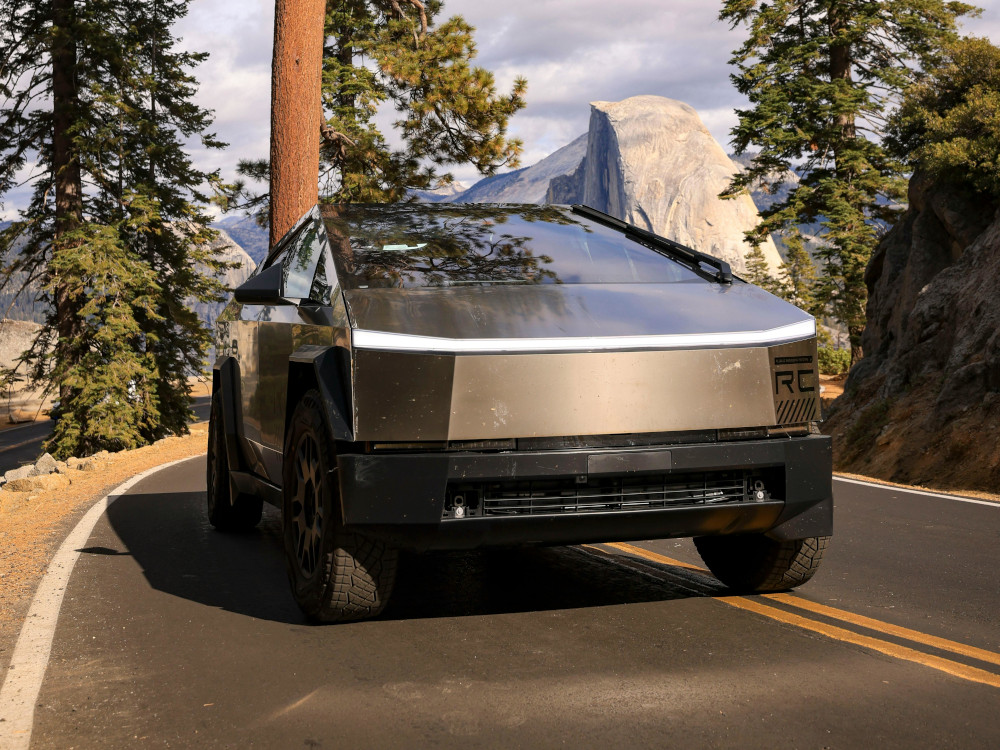
The Tesla Cybertruck has turned heads with its futuristic design and bold technical specifications, but when it comes to practicality, there appears to be room for improvement. Following a road test conducted by the German Redaktionsnetzwerk Deutschland (RND), a newfound viewpoint has emerged – one that’s critical and seeks tangible real-world functionality over innovation for innovation’s sake.
The Cybertruck’s appearance is nothing short of striking: an automotive triangle on wheels, constructed with unusual materials and a design that challenges convention. Yet, this eccentric flair seems to overshadow the vehicle’s practicability. For instance, the interior, while boasting Tesla’s iconic expansive display, lacks storage compartments and practical amenities, starkly contrasting with established utility vehicles like the Ford F-150, which has been fine-tuned over the years for optimal functionality and comfort.
Beyond the aesthetics, when focusing on the Cybertruck’s performance, its 845 horsepower engine is undeniably impressive, and accelerates with the kind of ferocity one might expect from such impressive figures. The Ford F-150, by comparison, also boasts a remarkable 750 horsepower, albeit controllable, which reflects a more sensible approach to on-road driving.
Despite the allure of the Cybertruck’s performance, practicality must prevail, especially when considering varied terrain. A test on less-than-optimal asphalt revealed shortcomings that cannot be ignored: the steering’s lack of feedback, a chassis that seemed improperly adjusted, and a rear axle that didn’t quite make the cut. These factors culminated in a clear assessment: while the Cybertruck is likely to turn heads, it is not designed for traditional rugged tasks such as off-roading, herding livestock, or transporting heavy materials.
In analyzing the Cybertruck, it’s important to consider what it signifies within the vehicle landscape. The design is a conversation starter, it challenges norms, and it brings futuristic ideas to pavement. However, the verdict seems to indicate that its form has outpaced its function to a degree. As such, it may be more suited for those seeking a statement piece rather than a utilitarian workhorse.
Reflecting on the technological advances and their impact on society is invaluable, particularly when new products promise to redefine industries. Whenever a vehicle – or any tech product – is introduced, it serves not just a functional purpose but also as a symbol of cultural and technological progression. With time and perhaps some adjustments, we may one day find vehicles like the Cybertruck adapting to meet both the awe-inspiring potential and the everyday demands of consumers.
For those intrigued by the Cybertruck, this insight could prove crucial. It’s an invitation to weigh the pros against the cons, the practicalities against the possibilities, and ultimately decide what value such a vehicle could bring into one’s life. Whether for work, play, or sheer aesthetic appeal, understanding the capabilities and limitations ensures that expectations align with reality.