Understanding the Durability of Tesla Cybertruck’s Off-Road Capabilities
The Tesla Cybertruck, a futuristic electric pickup truck, has been raising eyebrows ever since its bold introduction in late 2023. Off-roading enthusiasts and potential customers alike have been eagerly watching as the Cybertruck is put through its paces in various terrains and conditions. However, some incidents have surfaced, challenging the vehicle’s robustness and exposing potential vulnerabilities.
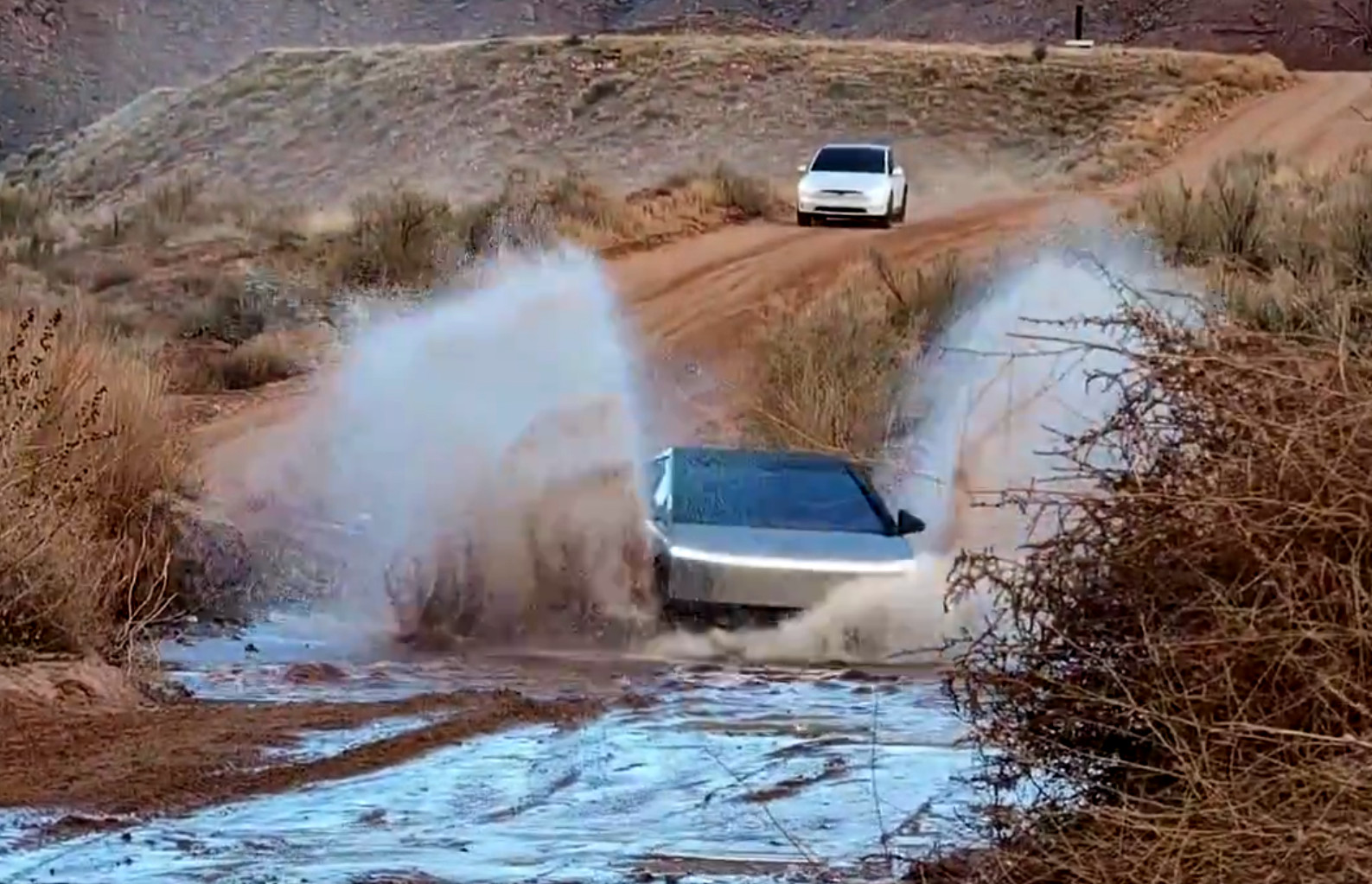
One incident in particular, captured and shared on a social media platform by a Cybertruck owner, has become a topic of discussion among the concerned community. In this event, the Cybertruck can be seen attempting to cross a stream. Despite what the owner described as a “not-unreasonable speed,” the pickup truck encountered an unexpected issue. Upon emerging from the water, alarming noises were heard from the vehicle, which were later identified as parts of the plastic lining from the front wheel well having dislodged during the crossing. Although the owner managed to patch things up as a trail-side repair, the occurrence raised concerns about the truck’s endurance, especially since this wasn’t the first instance where the Cybertruck’s fortitude was called into question.
Notably, Tesla has equipped the Cybertruck with a “Wade mode,” which is touted to enable the electric pickup to move through water levels not surpassing the top bumper for durations up to 30 minutes. Despite this notable feature, real-life testing by various owners and enthusiasts suggests this mode might not fully protect the vehicle from damage during such activities.
Other reported events include a YouTuber who damaged parts of his Cybertruck on a relatively minor hill, the vehicle experiencing a significant failure during an off-road racing event, and even a prototype bending an upper control arm during Tesla’s own test run. Some of these mishaps have been linked to third-party modifications, but collectively they prompt a bigger question about the Cybertruck’s true off-road proficiency.
Analyzing the design of the Cybertruck hints at possible reasons behind these off-road challenges. The vehicle’s air suspension and suspension design, which aim to strike a balance between cost and utility, may not entirely meet the stringent demands of rigorous off-road adventures. As it stands, the impression is mixed, and it seems the balance Tesla sought might have its compromises.
Despite these setbacks, the Cybertruck has garnered a significant following and continues to incite curiosity. For those interested in understanding the engineering and entrepreneurial journey behind Tesla and the Cybertruck, biographical literature on Elon Musk lays out an intriguing narrative. Moreover, scale models of the Cybertruck offer fans a tangible piece of this electric innovation to admire up close.
As the dialogue around the Cybertruck’s off-road aptitude progresses, it’s essential for prospective buyers and Tesla aficionados to keep an eye on successive models and updates that address these issues. Tesla’s commitment to innovation and improvement may very well see newer versions of the Cybertruck overcoming these initial hurdles, ultimately delivering the high-performance, resilient all-terrain electric vehicle that was promised.