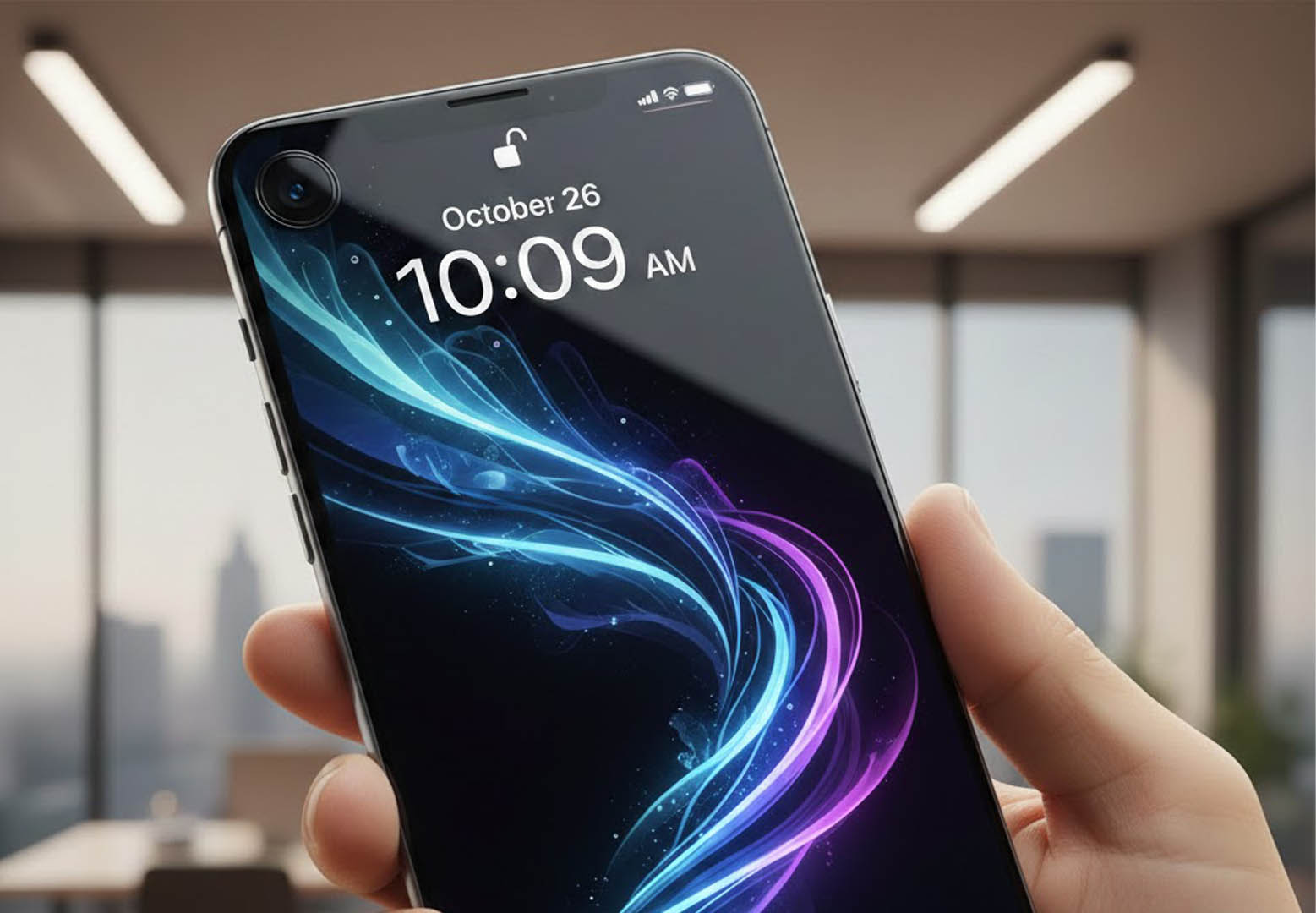
Apple’s iPhone 18 Pro and iPhone 18 Pro Max could be the first iPhones to finally ditch the familiar pill-shaped screen cutout, taking another big step toward Apple’s long-teased “full screen” iPhone vision. The latest rumor suggests Apple is testing a new display approach that keeps the front-facing camera visible via a single punch-hole, while shifting the Face ID hardware beneath the OLED panel.
If this happens, it would be a major design change. Plenty of Android phones already use punch-hole selfie cameras, but most don’t offer the same kind of advanced, secure facial recognition Apple delivers with its TrueDepth and Face ID system. That’s why the idea of moving Face ID components under the display is especially notable—it’s not just a cosmetic change, it’s an engineering challenge.
According to a new tip from Weibo leaker Smart Pikachu, one iPhone 18 Pro prototype currently being tested places the front camera in the upper-left corner of the screen rather than the center. That positioning would be a noticeable shift for iPhone users, and it echoes choices seen on some older flagship phones, where manufacturers opted for a corner punch-hole to maximize the look of an uninterrupted display.
Why would Apple choose the upper-left corner? The rumor doesn’t explain the reasoning, and there’s an important caveat: this is said to be only one prototype. Apple is known for testing multiple design variants internally, and there’s no confirmation this specific layout will reach mass production. Earlier assumptions leaned toward a centered selfie camera, partly because it would sit closer to the components traditionally associated with Face ID. If Apple is truly moving Face ID under the panel, though, those old layout constraints may no longer apply in the same way.
The same source also suggests Apple has been testing iPhone 18 production lines, implying the company may be closing in on final hardware decisions. One detail mentioned is the use of “micro-transparent glass” splicing, which could help the display pass enough light through to allow in-screen Face ID to function properly. The big unanswered question is performance—if Apple ships under-display Face ID, it will need to be fast, accurate, and secure enough to meet the expectations set by current iPhones.
Beyond the Pro models, the rumor mill points to an unusually busy iPhone roadmap. Apple is also said to be preparing its first foldable iPhone, often referred to as the iPhone Fold. Meanwhile, the standard iPhone 18 is expected to arrive alongside an iPhone 18e, potentially landing early next year. There’s even chatter about a rebrand to “iPhone 20,” though that detail remains speculative.
For now, the iPhone 18 Pro punch-hole design and under-display Face ID remain unconfirmed. Still, if Apple is genuinely testing these prototypes, it signals that the company is closer than ever to delivering the seamless, edge-to-edge iPhone screen it has been moving toward for years.


