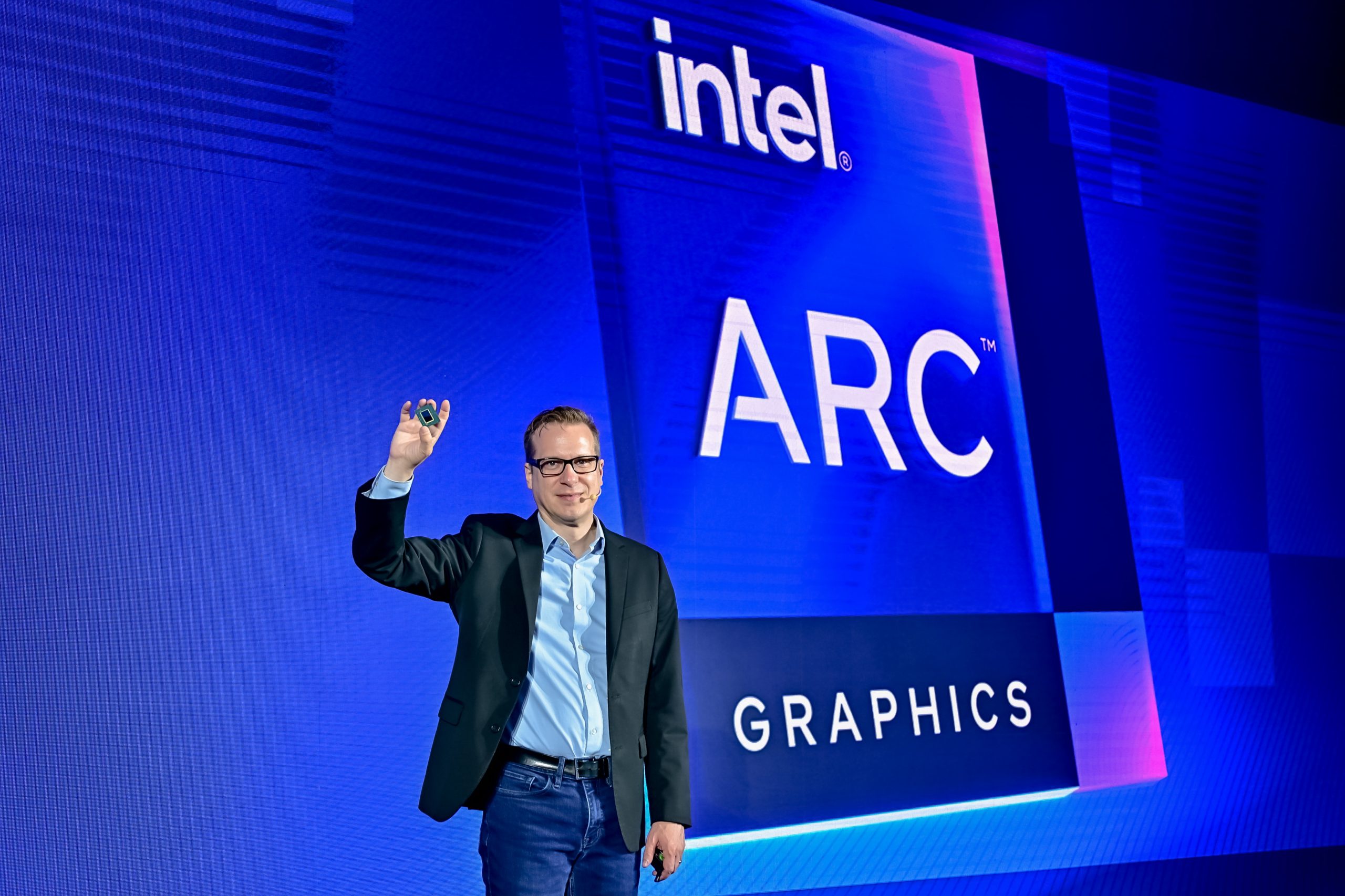
Intel’s innovative strides in the GPU market are entering a new domain as they introduce the Arc A760A GPU, tailored explicitly for automotive uses. This leap into the automotive AI field highlights Intel’s dedication to powering artificial intelligence across various industries, with their latest offering targeting the technological ecosystem within vehicles.
During a recent AI Cockpit Innovation Experience event held in China, Intel’s vice president and general manager of Intel Automotive, Jack Weast, emphasized the company’s ambition to integrate AI capabilities into devices of all kinds. The introduction of the Arc A760A positions Intel within the automotive sector, tapping into the rapidly developing electric vehicle market and its openness to advanced technologies.
The Arc A760A leverages the ACM-G10 GPU die with robust features designed to elevate the automotive experience. It boasts 28 Xe-Cores for graphics, 28 ray tracing cores for advanced lighting realism, and 448 Vector Engines for AI-driven calculations. With 16GB GDDR6 VRAM through a 256-bit memory bus and boost clock speeds up to 1953MHz, it’s poised to deliver high-end performance.
By merging hardware efficiency with an open-source Linux-based automotive operating system, Intel ensures that the A760A can seamlessly integrate with vehicles’ software. Its optimized drivers are designed to work in tandem with both discrete and integrated GPUs, delivering a versatile and cohesive performance boost.
Intel’s GPU Single Root Input/Output Virtualization (SR-IOV) technology claims to enhance performance by up to 40% when using a virtual machine. This improvement also comes with the benefits of heightened security and robust isolation, imperative for car systems.
The LLM frameworks, designed with the automotive industry in mind, benefit from Intel’s optimizations, enhancing customization opportunities and overall efficiency. Fostering better customer experiences, these frameworks signify a leap towards smarter AI car assistants, capable of processing real-time data for a myriad of advanced operations.
Visual capabilities haven’t been overlooked, with the Xe Display Engine supporting additional outputs and resolutions up to 4K – paramount for modern in-vehicle infotainment systems. Open-standard graphics APIs such as OpenGL and Vulkan offer the future-proofing edge with features including ray tracing for realistic in-car graphics.
Addressing the practicality for automotive applications, the A760A can manage up to 6 camera inputs, driving safety with potentially broader ADAS application, and can decode/encode various video formats, ensuring compatibility and flexibility in media handling.
Intel’s integration of such advanced technologies into the automotive sphere aligns with the vision of Software Defined Vehicles, a platform that suggests manufacturers could streamline their systems across multiple vehicle models and trims. Intel’s approach could potentially revolutionize how carmakers approach the integration of technology into their designs.
With a planned launch in the first quarter of 2025, the Arc A760A is set to precede Intel’s Battlemage lineup of mainstream desktop GPUs. The company’s timeline indicates a strategic preparation to align with the ever-evolving electric vehicle industry in China – an ideal proving ground for these cutting-edge technologies.
As cars increasingly become sophisticated devices swathed in digital interfaces and demanding more advanced computing capabilities, GPUs like the Arc A760A are pivotal to this evolution. From AI assistance to high-end graphic displays and autonomous driving features, the promise of Intel’s new automotive GPU suggests a future where the line between personal computing and automotive technology blurs into a seamless, interconnected experience.


