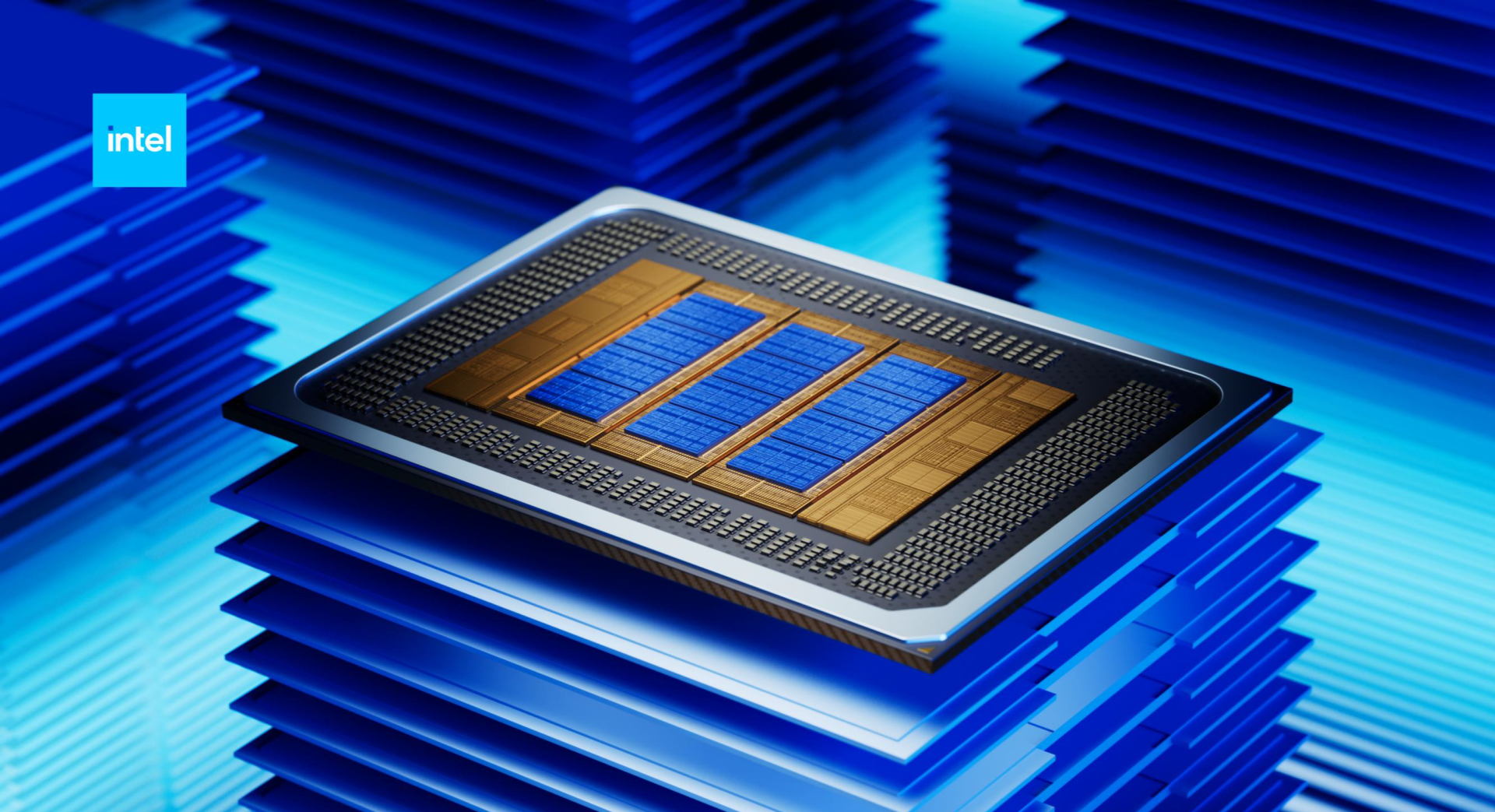
Intel Clearwater Forest Xeon 6+ CPUs enter full production ahead of launch
Intel has confirmed that its next-generation Clearwater Forest “Xeon 6+” processors are now in full production, putting the company’s major 18A data center chip on track for release later this year.
Clearwater Forest is one of Intel’s most important upcoming server CPU families because it brings the company’s advanced Intel 18A process technology to the data center market. While Panther Lake and Wildcat Lake are aimed at consumer and client PCs, Clearwater Forest is designed for high-efficiency enterprise workloads, with a strong focus on 6G infrastructure, edge AI, cloud computing, and dense server deployments.
Intel revealed the production status during its latest oneAPI Toolkit briefing. The company confirmed that oneAPI 2026.0 includes full support for Clearwater Forest processors, along with support for other upcoming Intel platforms such as Crescent Island, Nova Lake, and Diamond Rapids.
The oneAPI Toolkit is Intel’s cross-platform developer suite that includes compilers, performance libraries, AI frameworks, and analysis tools. Its purpose is to help developers optimize software across Intel hardware, including Xeon CPUs, Core Ultra processors, Arc graphics, and future GPU products. Full software support arriving alongside production is a key step toward making Clearwater Forest ready for enterprise adoption.
Clearwater Forest is expected to combine several major Intel technologies in one server platform. These include RibbonFET transistor design, PowerVia backside power delivery, Foveros Direct 3D packaging, and EMIB 2.5D interconnect technology. Together, these technologies are intended to improve performance, efficiency, chip density, and scalability in demanding data center environments.
On the CPU architecture side, Intel Xeon 6+ Clearwater Forest processors will use the new Darkmont E-core design. The flagship configurations are expected to feature up to 288 cores spread across 12 compute chiplets. The processors will also include a large cache setup, with up to 576 MB of on-package L3 cache and 288 MB of L2 cache.
These chips are expected to scale up to a 450W TDP and use the LGA 7529 socket. Intel plans support for both 1-socket and 2-socket server configurations, giving data center customers flexibility depending on workload and deployment needs.
Memory and I/O capabilities are also a major part of the Clearwater Forest platform. The CPUs are expected to support up to 12-channel DDR5 memory with speeds reaching 8000 MT/s. The platform will also offer up to six UPI 2.0 links at up to 24 GT/s per lane, up to 96 PCIe 5.0 lanes, and up to 64 CXL 2.0 lanes. These features are aimed at high-bandwidth, high-throughput systems that need fast memory access and strong expansion options.
Intel has already highlighted performance and efficiency results from testing with Ericsson. In those tests, a single Xeon 6990E+ Clearwater Forest processor with 288 cores delivered a 38% reduction in runtime rack power, more than 60% higher performance per watt, and 30% better overall performance compared with a dual-socket Xeon 6780E Sierra Forest platform with the same 288-core count.
Those figures suggest that Clearwater Forest could be a major step forward for operators looking to reduce power consumption while increasing compute density. This is especially important for telecom, AI inference, edge deployments, and hyperscale data centers, where energy efficiency is becoming just as important as raw performance.
Intel is also preparing its Diamond Rapids P-core Xeon family for future high-performance server platforms. Early variants are expected to offer up to 256 cores, while denser compute versions may scale as high as 512 cores with 16-channel memory support.
Dell has already announced upcoming PowerEdge R9810 and R9820 servers designed around Intel Diamond Rapids CPUs. These systems are expected to deliver memory bandwidth of up to 12,800 MT/s, doubling the 6,400 MT/s capability of previous-generation PowerEdge platforms. Dell’s next-generation servers are also expected to offer increased cache capacity, expanded PCIe support, and up to 50% more CPU cores compared with the prior generation.
While Clearwater Forest is positioned as Intel’s next major efficiency-focused Xeon platform, Diamond Rapids is expected to target high-performance workloads with larger P-core configurations. Diamond Rapids-based platforms are currently expected around 2027.
For now, Intel’s confirmation that Clearwater Forest Xeon 6+ processors are in full production marks an important milestone for its 18A roadmap. With up to 288 E-cores, advanced packaging, strong DDR5 and CXL support, and a focus on performance-per-watt gains, Clearwater Forest could become a key product for next-generation data centers, edge AI systems, and 6G infrastructure.