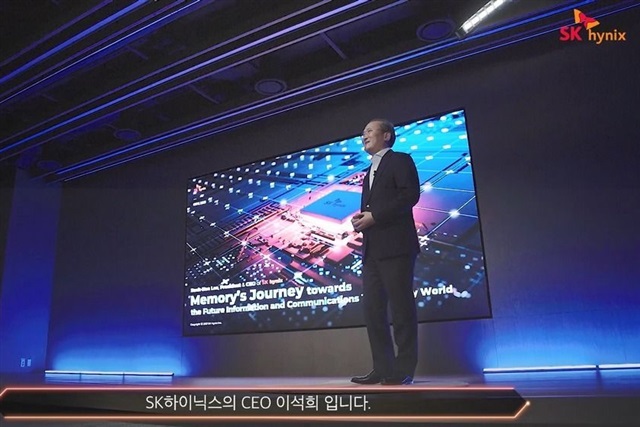
Former SK Hynix CEO Lee Seok-Hee Returns to Intel to Strengthen Foundry and Advanced Packaging Strategy
Intel is making another major move to reinforce its foundry ambitions, bringing former SK Hynix CEO Lee Seok-Hee back to the company as executive vice president of its foundry business. The appointment signals Intel’s continued commitment to advanced semiconductor packaging, a critical area as the chip industry races toward more powerful, efficient, and customized processors.
Lee Seok-Hee is widely recognized as a highly experienced semiconductor leader with deep expertise in memory technology, manufacturing, and global chip operations. His return to Intel comes at a time when the company is working to expand its role beyond traditional processor design and manufacturing, positioning itself as a stronger competitor in the global foundry market.
Advanced packaging has become one of the most important battlegrounds in the semiconductor industry. As chipmakers face the limits of traditional transistor scaling, companies are increasingly relying on sophisticated packaging methods to combine multiple chiplets, improve performance, reduce power consumption, and speed up product development. Intel has already been investing heavily in this area through technologies designed to connect different silicon components more efficiently.
By appointing Lee to a senior leadership role, Intel appears to be doubling down on this strategy. His experience leading one of the world’s top memory companies could prove valuable as Intel looks to improve manufacturing execution, strengthen customer confidence, and scale its foundry services for a wider range of clients.
Intel’s foundry business is central to the company’s long-term turnaround plan. The company wants to become a major manufacturing partner for other chip designers, competing in a market where reliability, process technology, packaging innovation, and supply chain strength are all essential. Bringing in a veteran executive with a strong track record in the semiconductor sector may help Intel sharpen its strategy and accelerate progress.
The move also highlights how important leadership has become in the global chip race. As demand grows for artificial intelligence processors, data center chips, automotive semiconductors, and high-performance computing hardware, chipmakers are under pressure to deliver more advanced solutions faster than ever. Advanced packaging is increasingly seen as a key way to meet those demands.
For Intel, Lee Seok-Hee’s return is more than a high-profile hiring decision. It is a clear message that the company sees advanced packaging and foundry services as major pillars of its future. If Intel can combine strong leadership, improved manufacturing execution, and competitive packaging technologies, it may be able to gain more traction in one of the most important sectors of the semiconductor market.
As competition intensifies across the global chip industry, Intel’s latest executive appointment could play an important role in shaping the next phase of its foundry strategy. Lee’s expertise may help the company strengthen its technology roadmap, attract more customers, and build momentum in advanced semiconductor manufacturing.