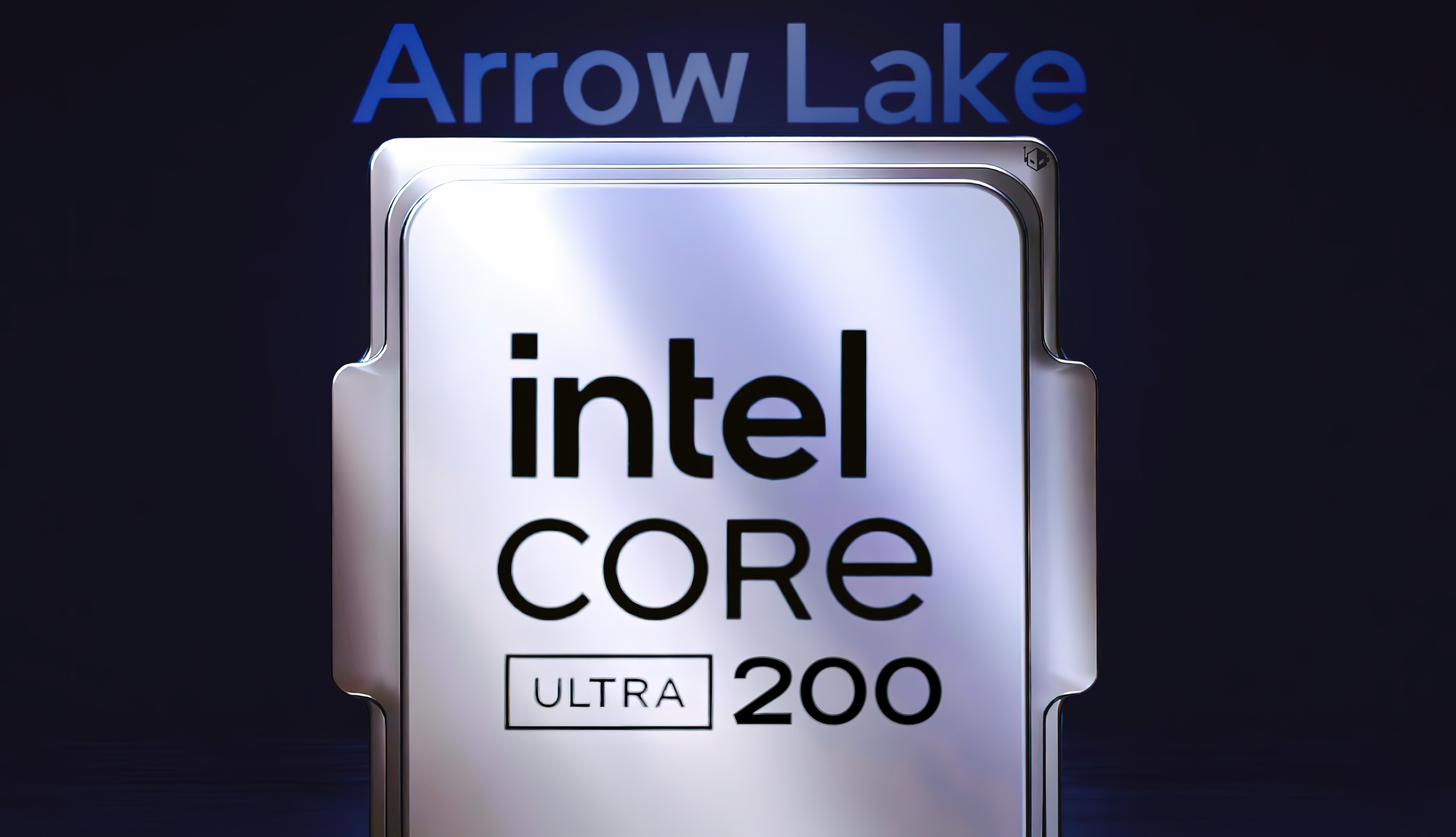
Intel’s forthcoming Arrow Lake-S Desktop CPUs are generating buzz as details emerge about their configurations. This next generation marks a significant evolution with new architecture and the LGA 1851 socket. The lineup includes CPUs with Lion Cove P-Cores and Skymont E-Cores.
Reports have identified two specific desktop CPUs from the Arrow Lake-S family: a 24-core model and a 20-core variant. The 24-core CPU boasts an 8 P-Core and 16 E-Core configuration with a 3 GHz clock speed, while the 20-core counterpart should likely feature an 8 P-Core and 12 E-Core setup with a 2.3 GHz clock speed.
One of the standout changes in these CPUs is the absence of Simultaneous Multithreading (SMT) or Hyper-Threading (HT) support, a feature typically found in Intel’s higher-end CPUs. Despite the benefits of SMT in multi-threaded tasks, Intel’s decision seems to reflect a strategic direction towards optimizing E-Core efficiency which can potentially compensate for the HT functionality. This shift suggests Intel is focused on delivering performance in a more energy-efficient manner.
Despite these advancements, the tech giant faces challenges with optimizing E-Cores in specific applications and games. While efforts like Application Performance Optimization (APO) have been introduced to improve performance, they currently benefit a limited number of games and are primarily available on the latest processors. Intel has recently started to extend APO support to earlier models; however, it remains to be seen how widely this support will be implemented.
Intel Arrow Lake-S Desktop CPUs will also come with integrated graphics powered by the Arc Xe-LPG “Alchemist” architecture, although exact details about the GPU capabilities are currently sparse. It is anticipated that these CPUs may be the first Intel desktop family to include a Neural Processing Unit (NPU), a feature that AMD has already incorporated into its own product lineup.
Looking forward, the Core Ultra 200 family, which includes the Arrow Lake chips, will aim to make an impact across both desktop and mobility platforms. Lunar Lake, part of this family, appears to be targeting mobile devices specifically. More information on these exciting developments is expected to be released around Computex 2024 by Intel’s CEO, Pat Gelsinger.
Intel’s processor generations have varied notably over the years, from Coffee Lake to the latest advancements encompassing up to 24 cores, with support for DDR5 memory, and embracing PCIe 5.0 technology. As the technology company moves toward its new Arrow Lake CPUs, users are eager to learn more about the performance improvements and new capabilities these chips will offer, along with how they will compare to previous generations in terms of power consumption and performance abilities.