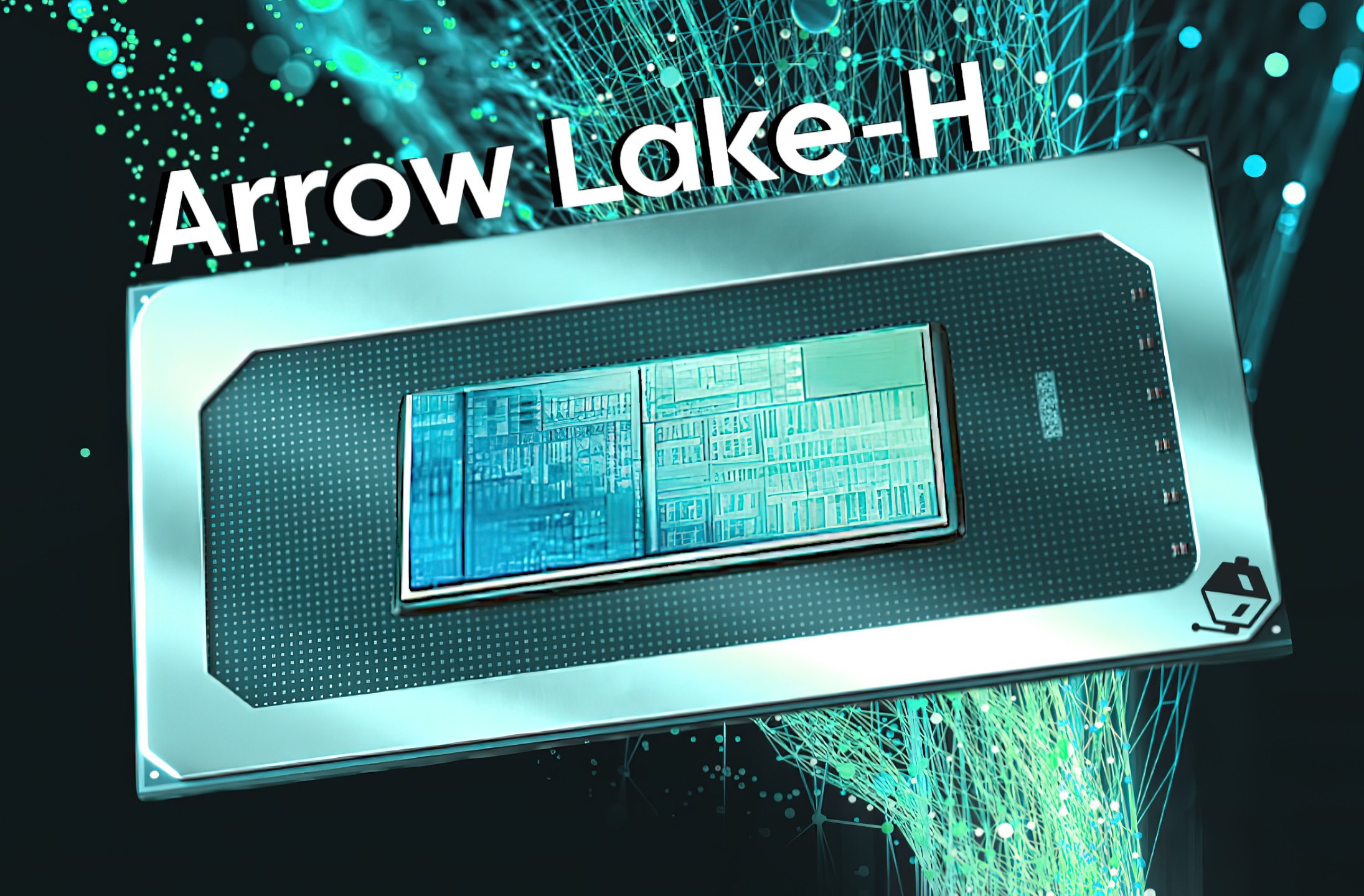
Intel’s forthcoming Arrow Lake-H CPUs for laptops are positioned to redefine what it means to be a “hybrid” processor. These processors are unique because they combine not just two but three different core architectures: Lion Cove P-cores, Skymont E-cores, and Crestmont LP-E cores, aimed at delivering a highly versatile and powerful computing experience.
The Arrow Lake-H series, also referred to as the Core Ultra 200 “Arrow Lake-H,” is part of a broader family meant to span both desktop and mobile platforms. Set to scale from robust desktop configurations to agile mobile designs, Intel is set to launch its desktop Arrow Lake-S CPUs in October, with the mobile variants expected to follow closely around CES 2025.
A peek into the architecture reveals that Arrow Lake-H processors contain a diverse mixture of core types. The main compute tile will feature the blend of Lion Cove P-cores and Skymont E-cores, while the System on Chip (SOC) tile will include Crestmont LP-E cores. This approach is a departure from Intel’s previous hybrid platforms that typically utilized a single type of Efficient (E) core.
The documentation related to CPUID.1AH.EAX[23:0] implies that each core architecture within Arrow Lake-H will be distinguishable by a unique native model ID. This means that, regardless of the core type, each core architecture will be identifiable, enabling more precise utilization and efficiency in tasks.
The blended core approach of the Arrow Lake-H CPUs is expected to enhance performance, especially on laptops designed for mainstream gaming. These laptops might feature up to six Lion Cove P-cores and eight Skymont E-cores, with an additional pair of Crestmont LP-E cores integrated for added efficiency.
In terms of naming, the Arrow Lake-H CPUs will be marketed under the Core Ultra 200H banner and will support Xe-LPG integrated graphics. Nevertheless, for a power-packed gaming experience, these CPUs are likely to be paired with external GPU solutions. One such anticipated pairing is with NVIDIA’s GeForce RTX 50 “Blackwell” laptop GPUs.
The broader Arrow Lake mobile lineup will also include Arrow Lake HX and Arrow Lake U variants. The HX models will mirror desktop configurations with 8 P-Cores and 16 E-cores, while the U-series will aim at power efficiency with a lower core count.
Before Arrow Lake-based laptops make their entry, the market will first welcome Intel’s Lunar Lake chips, setting the stage for the next generation of mobile computing power.
With the ongoing review and potential integration of this new technology into the Linux Kernel v6.12, consumers and tech enthusiasts can look forward to a significant evolution in laptop performance capabilities, particularly in the realm of gaming notebooks. Keep an eye out for further updates as Intel continues to pave the way for more advanced and hybrid computing solutions.


