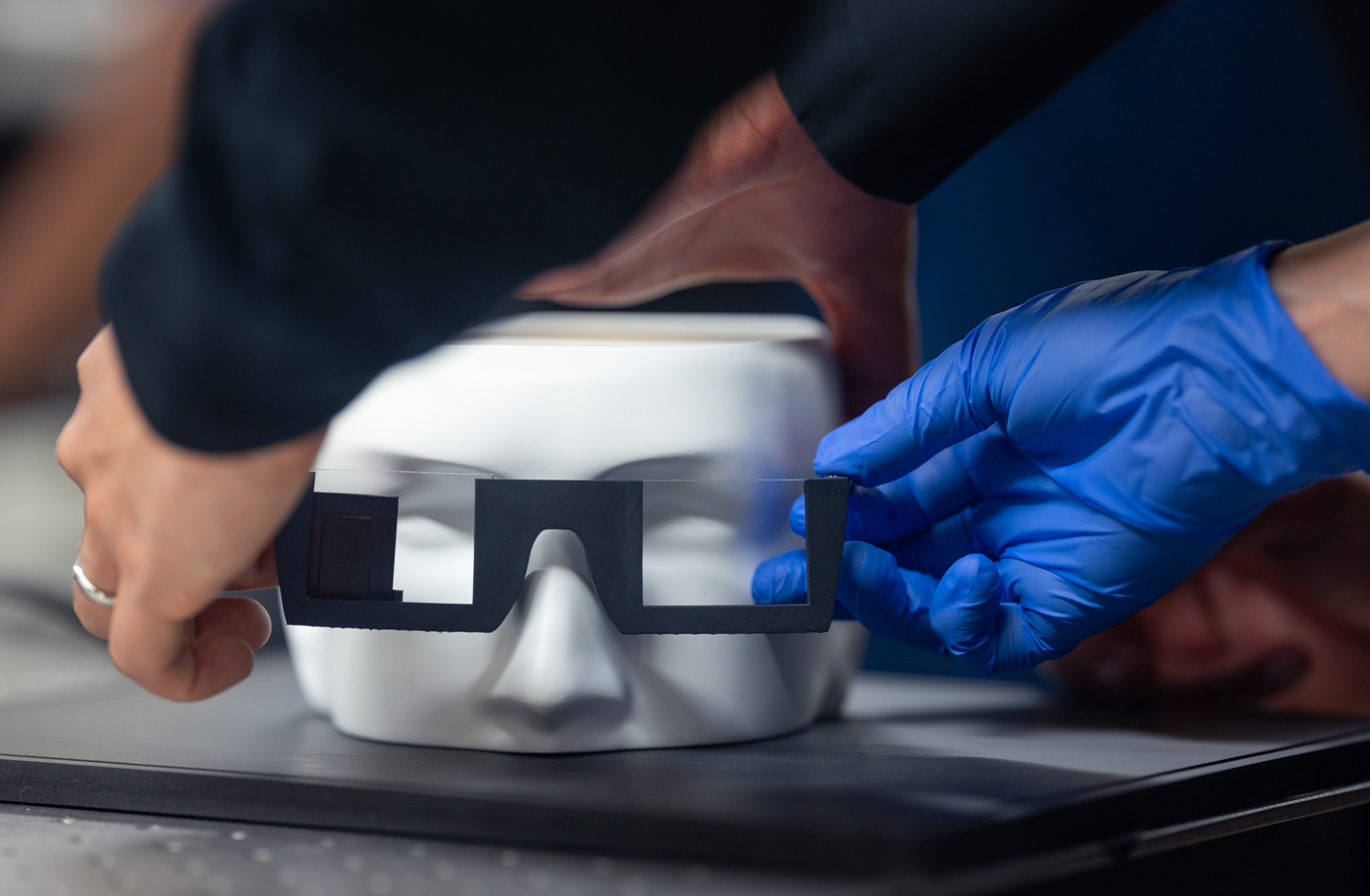
A breakthrough has been achieved by engineers at the Stanford Computational Imaging Lab, taking us a step closer to the next generation of augmented reality experiences. These experts have crafted a prototype for AR glasses that dramatically reduce weight and bulk compared to conventional models, owing to an advanced AI-equipped display that projects 3D images through a sleek optical setup.
Today’s virtual and augmented reality headsets tend to be rather cumbersome due to their reliance on lenses to project the images from micro LED or OLED displays into the user’s eyes. Designs such as those found in Google’s Cardboard or the more heft Apple Vision Pro headsets can weigh upwards of 21 ounces (600 grams), making them less than ideal for prolonged use.
Some slimmer designs circumvent this by using an optical waveguide that functions similarly to a periscope, channeling the display from the side of the head to the eyes. However, these designs typically limit the user’s view to two-dimensional images and text. Looking to address this limitation, the Stanford team have ingeniously integrated artificial intelligence with metasurface waveguides to facilitate the projection of a three-dimensional holographic image while keeping the headset light and compact.
The secret to this lightweight design lies in forgoing conventional bulky focusing lenses. Instead, minuscule metasurfaces are precisely etched into the waveguide to both “encode” and “decode” the light in such a way that it bends and aligns to form images. This process is akin to creating specific wave patterns in a pool that, upon reaching the opposite end, accurately reflects the initial action that disturbed the water’s surface.
Another major component is the employment of a waveguide propagation model that harnesses a deep-learning convolutional neural network with a modified UNet architecture. This network is trained to ensure light passing through the waveguide is exquisitely precise to create well-defined holographic imagery. The model corrects any minor aberrations caused by imperfections in the waveguide, similar to adjusting one’s aim based on the observed trajectory of an arrow.
Lastly, an AI neural network has been trained to generate holographic images using a phase-only SLM display module. With time and training on a powerful 48 GB Nvidia RTX A6000, the artificial intelligence became proficient in determining the phase patterns needed to create distinct images at varying focal distances.
The culmination of these technological advancements is an AR headset prototype that outperforms its contemporaries in providing higher-quality 3D images. Although still at the prototype stage, the promise of a lightweight, holographic AR experience is no longer just a figment of imagination but a forthcoming reality, thanks to these latest strides at Stanford.
For those looking forward to the augmented world, contemporary lightweight headsets already offer a taste of this promising technology, ensuring a more immersive and comfortable experience for enthusiasts and professionals alike. As the field continues to evolve, insights from endeavors like the Stanford AR glasses can inform both consumers and developers on the advancements in creating practical and enhanced AR solutions.


