Indiana Jones and the Great Circle Almost Had a GTA-Style Wanted System
MachineGames may be best known for the explosive, blood-soaked action of its Wolfenstein series, but Indiana Jones and the Great Circle demanded a very different kind of adventure. Instead of encouraging players to sprint through levels with guns blazing, the studio had to build a first-person Indiana Jones game that felt clever, physical, and true to the legendary archaeologist.
Design director Jens Andersson recently explained how challenging that shift was for the team. After years of making intense shooters packed with heavy weapons and relentless firefights, MachineGames suddenly had to create a more family-friendly adventure where guns existed, but were not supposed to be the main attraction.
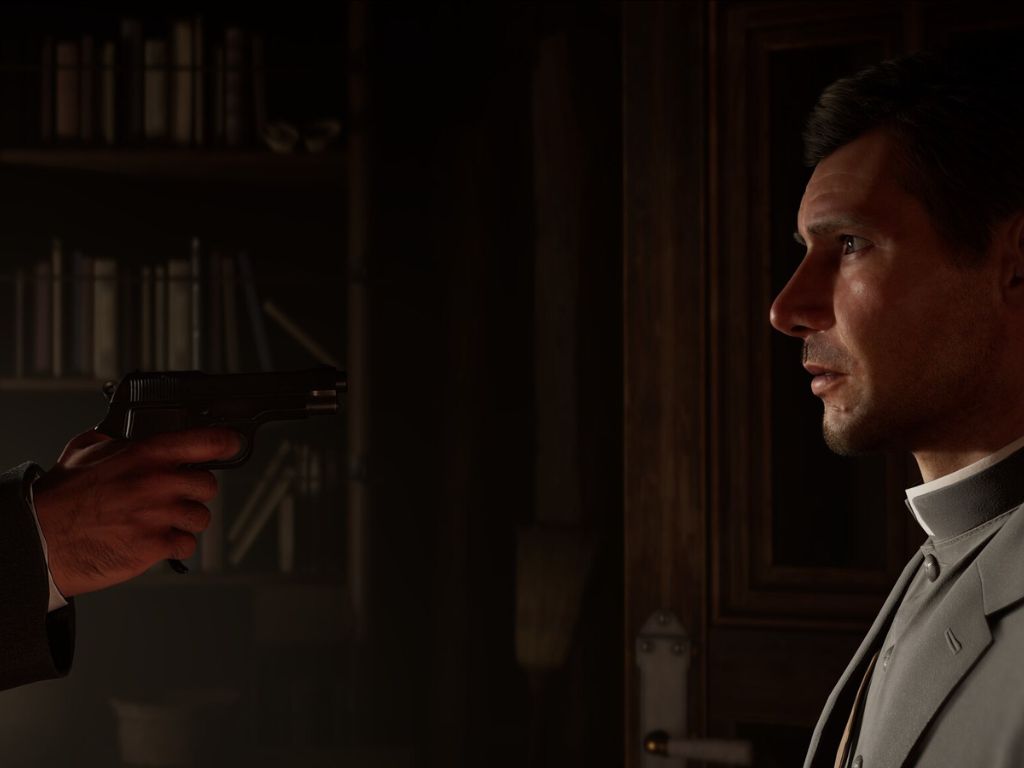
The biggest design problem was easy to predict. If a player knocked out a guard, picked up the guard’s gun, and then used it to clear an entire area, the game could quickly stop feeling like Indiana Jones. That was exactly what the studio wanted to avoid.
Indiana Jones and the Great Circle, which launched for Xbox Series X/S and PC on December 9, 2024, instead pushes players toward stealth, brawling, improvisation, and environmental creativity. Indy can use firearms, but the game is built to make players think twice before relying on them.
Andersson has previously said that an Indiana Jones game could never truly be a shooter, because that is not who the character is. Indiana Jones does get into dangerous situations, and he is certainly capable of using a gun when necessary, but he is not a hero who solves every problem with a trigger pull. He is more likely to punch a guard, grab a nearby object, sneak through a restricted area, or barely escape disaster through a mix of luck and quick thinking.
That created a tricky balancing act for MachineGames. The studio did not want guns to become the best answer to every encounter, but it also could not make them feel weak or poorly designed. The team has deep experience with first-person combat, and many players expected a certain level of quality from the studio’s gunplay. According to Andersson, the weapons still had to feel satisfying and believable. A headshot, for example, still needed to be deadly.
So the question became: how do you include powerful firearms in an Indiana Jones game without letting them dominate the experience?
One idea the team considered was a GTA-style wanted system. In that version, using guns could have escalated the danger by drawing more attention and bringing in reinforcements, similar to how chaos in Grand Theft Auto increases the response from law enforcement. The concept would have punished noisy, aggressive play by making the situation worse for the player.
However, that system did not make it into the finished game. It was one of several ideas explored as MachineGames searched for the right way to discourage players from turning Indiana Jones and the Great Circle into a traditional shooter.
In the end, the solution was not simply to punish gun use. The studio found a better answer by making melee combat and improvised weapons more entertaining.
That is where the game’s breakable weapon system became essential. Players can pick up a wide range of objects and use them in fights, from practical tools to wonderfully strange items. Pans, wrenches, brooms, musical instruments, and even a fly swatter can become temporary weapons in Indy’s hands. Because these objects break after repeated use, players are constantly encouraged to grab whatever is nearby and adapt to the moment.
This design gives combat a spontaneous, playful energy. It also fits Indiana Jones perfectly. A fight in an Indiana Jones story should feel messy, desperate, and occasionally funny. Indy is not supposed to move through enemies like a super soldier. He is supposed to survive by improvising.
Andersson admitted that the breakable weapon system arrived late in development and was somewhat controversial at first. But once the team saw how well it worked, it became a key part of the game’s identity. The more unusual the item, the more memorable the encounter could become.
The result is a first-person adventure where players may technically have access to guns, but often choose to swing a nearby object instead. Even when firearms might be more efficient, the melee system gives players a reason to experiment. That is a major achievement for a studio so closely associated with high-speed shooter design.
Indiana Jones and the Great Circle walks a careful line between action, stealth, exploration, and slapstick-style physical comedy. It does not turn Indy into a cartoon character, but it does understand that his best moments often come from chaotic, improvised situations. A fistfight with a guard, a desperate swing with a violin, or a quick escape after a failed stealth attempt can feel more authentic to the character than simply firing a weapon from cover.
Now that Indiana Jones and the Great Circle is out, MachineGames is returning to one of its most famous franchises. Xbox has confirmed that Wolfenstein 3 is officially in development at the studio, with Brian Bloom and Debra Wilson returning as BJ Blazkowicz and Grace Walker. No release date, platforms, or gameplay footage have been revealed yet, and more details are expected when the team is ready to share them.
The next Wolfenstein will mark the first mainline entry in the series since 2017’s Wolfenstein II: The New Colossus. After proving it could step away from pure shooter design and deliver a very different kind of first-person experience, MachineGames is now heading back to the explosive world that helped define its reputation.