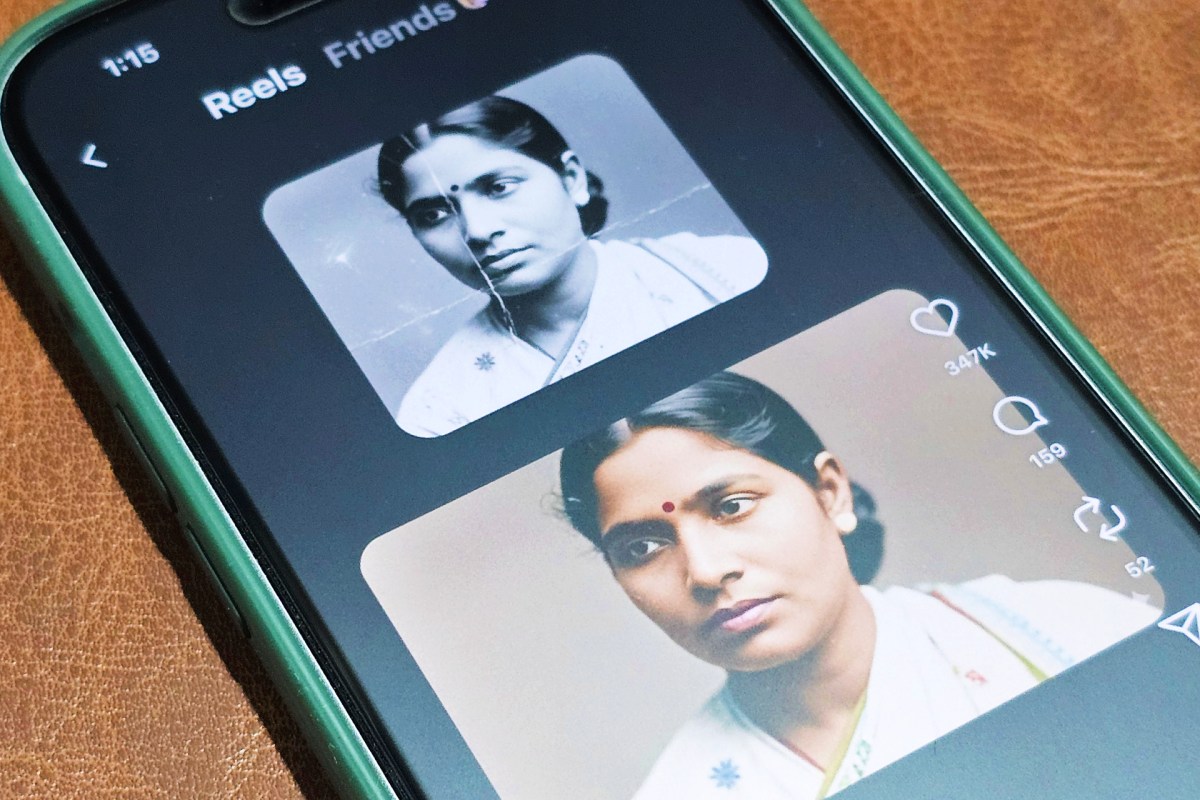
India has fallen hard for Google’s Nano Banana image-generation model—officially called Gemini 2.5 Flash Image—and the results are as vibrant as they are viral. Since the model’s launch last month, the Gemini app has surged up the free app charts on both the App Store and Google Play in India, riding a wave of uniquely local creativity that’s turning AI into a cultural moment.
What’s different about India’s love affair with Nano Banana is not just the volume of use, but how people are using it. According to David Sharon, multimodal generation lead for Gemini Apps at Google DeepMind, India is the No. 1 country for Nano Banana usage right now. And it’s easy to see why. Users across the country are leaning into trends that feel deeply rooted in local culture while also tapping into global aesthetics.
One of the biggest hits is a flood of retro portraits inspired by ’90s Bollywood, with users imagining themselves as film stars from that era—think iconic hair, makeup, and fashion from a golden age of Hindi cinema. A spin on that is the AI saree trend, where people generate vintage-style portraits wearing traditional attire. There’s also a wanderlust-meets-fantasy trend, with users placing their selfies against famous global backdrops like classic British telephone booths and landmark skylines.
The experimentation doesn’t stop there. Indians are using Nano Banana to:
– Transform everyday objects into stylized art
– Create time-travel effects and meet their younger selves
– Reimagine themselves as retro postage stamps
– Produce dramatic black-and-white portraits
And while not all of these ideas started in India, the country has helped supercharge them. The figurine trend—miniature, toy-like versions of users often staged in front of computer screens—first surfaced in Southeast Asia and went global after catching on in India.
Video creativity is spiking too. Many users are turning to Google’s Veo 3 video-generation model in the Gemini app to build short, stylized clips from old family photos, breathing new life into images of grandparents and great-grandparents.
This surge in creativity has translated into real traction. Gemini has held top positions on app store charts in India and climbed in global rankings as well. India’s massive smartphone base and enormous online population make it a natural leader in adoption, and recent updates to Nano Banana appear to have sparked a fresh wave of installs. While India leads in downloads, it doesn’t yet lead in consumer spending within the app; however, user spending in the country is growing quickly from a smaller base.
With all this momentum come important questions about privacy and safety. As users upload personal photos for transformations, Google says it’s focused on fulfilling requests while improving safeguards. “When a user asks us to fulfill their query, we do our best to fulfill that query. We don’t try to assume what the user’s intent is,” Sharon said, adding that the team has worked to be “bold and fulfil your request” while continuing to learn from feedback.
To help users and platforms identify AI-generated visuals, Google applies a visible, diamond-shaped watermark to images created by Nano Banana and embeds a hidden marker using its SynthID tool. SynthID lets Google detect and flag content made with its models. The company is also testing a broader detection platform with researchers and other experts, and plans to release a consumer-facing version so anyone can check whether an image is AI-generated.
“This is still day one, and we’re still learning, and we’re learning together,” Sharon said. “There are things that we might need to improve on in the future, and it’s really your feedback from users, press, academia, and experts that helps us improve.”
From nostalgic Bollywood makeovers to miniature figurine replicas and family-history videos, India is shaping what AI-powered creativity looks like at scale. And as Gemini 2.5 Flash Image continues to evolve, expect the country to remain at the heart of the next big trend.


