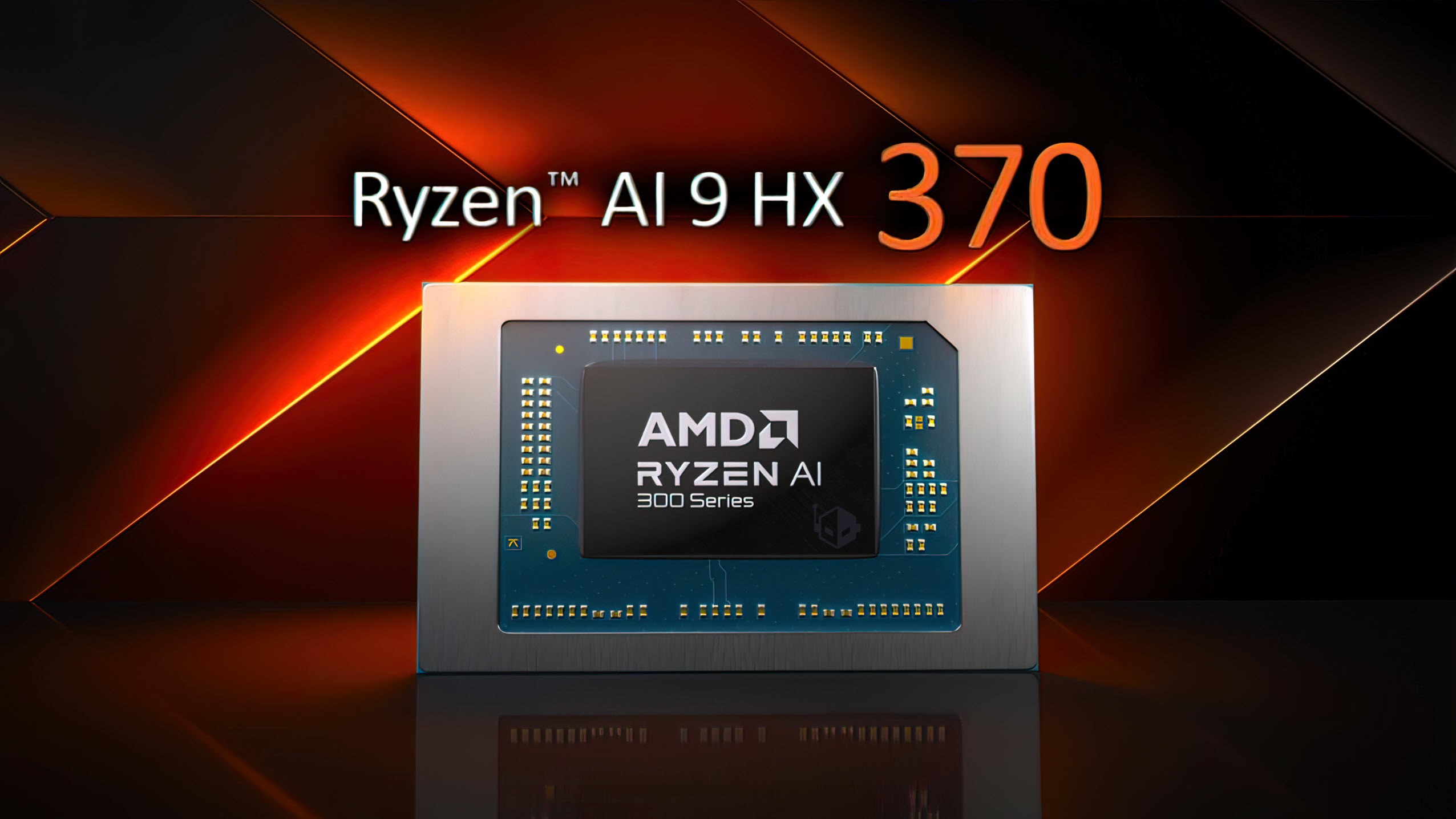
The AMD Ryzen AI 9 HX 370 APU, also dubbed “Strix”, is turning heads with its exceptional performance in recent Cinebench and 3DMark benchmarks. This chip is set to be the cornerstone of the next-generation portable computing, promising substantial leaps over its predecessors.
Specifications and Design Integrations
Encased within GPD’s innovative DUO laptop, which features a dual 13.3″ display setup and a convertible tablet design, the Ryzen AI 9 HX 370 emerges as the most potent APU of the Strix Point lineage to date. This processor is built on the Zen 4 core architecture, flaunting 12 cores, 24 threads, and a whopping 36 MB of combined cache. With clock speed ranging from 2 GHz base to an impressive turbo of 5.1 GHz and a flexible TDP ranging from 15-54W, it exhibits flexibility and power.
Graphics and AI Learning Capabilities
Included with the APU is the Radeon 890M iGPU, based on the RDNA 3.5 graphics architecture. It comes with 16 compute units with clock speeds of 2900 MHz. Not to be overlooked, the inclusion of a sophisticated XDNA 2 “Ryzen AI” NPU endows the APU with up to 50 AI TOPS and 80 platform TOPs, forecasting advancements in AI-driven tasks.
Benchmarking reveals that the Ryzen AI 9 HX 370 garnered 124 points in Cinebench 2024 single-core, and a multi-core score of 1525 points. This single-core score matches that of the desktop-class Ryzen 9 7950X, while the multi-core performance surpasses that of the 16-core Ryzen 9 5950X.
When juxtaposed with other chips, the Ryzen AI 9 HX 370 presents a promising alternative to the Ryzen 9 7900X, offering competitive performance at a significantly lower power consumption, ideal for devices with thermal constraints.
Advancements in Graphics Performance
Graphics testing further illustrates the prowess of this APU. In the 3DMark Time Spy benchmark, the Radeon 890M iGPU excelled with a score of 4221. This figure denotes a 51% increase over its predecessor, the Radeon 780M, at the same power level, and even outpaces the 780M at an enhanced TDP.
When compared to prevalent discrete graphics solutions, the Radeon 890M holds its own, outperforming the RTX 2050 and closely rivaling the RTX 3050 with a 50W rating. This is a strong indication that AMD’s improved RDNA architecture can deliver robust gaming experiences in compact and handheld devices.
Looking Ahead to Real-World Utilization
The performance data for the Ryzen AI 9 HX 370 positions it as a promising offering for the forthcoming wave of laptops, Mini PCs, and handheld devices. The industry eagerly anticipates the opportunity to put this APU through its paces in real-world scenarios once these products hit the market later in the year.
These advancements in APU technology highlight the ongoing push towards more powerful, efficient, and versatile processors suitable for a variety of platforms, catalyzing the evolution of portable computing towards a future where it can match and potentially even surpass traditional desktop performance.