Hyundai Motor, HD Hyundai Robotics, and Doosan Robotics put South Korea’s automation ambitions in the spotlight as FIX 2026 opened in Daegu on October 21, 2026. The event brought together advanced mobility systems, smart manufacturing solutions, and next-generation industrial robots designed to reshape how factories, warehouses, and logistics networks operate.
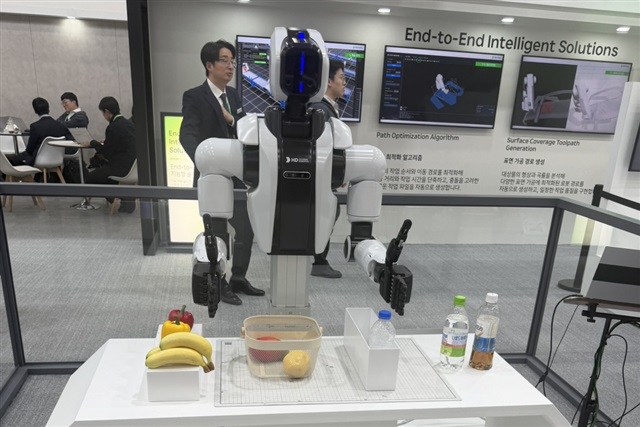
One of the key attractions at the exhibition was HD Hyundai Robotics’ intelligent dual-arm manipulator, a robotic system built to handle complex industrial tasks with improved precision and flexibility. Displayed on the show floor in Daegu, the robot highlighted the company’s push toward machines that can support human workers in demanding production environments, from assembly lines to material handling operations.
Hyundai Motor also showcased autonomous driving technologies, underlining how self-driving systems are becoming increasingly important beyond passenger vehicles. Autonomous mobility is now being developed for industrial sites, smart cities, delivery services, and large-scale logistics operations where efficiency, safety, and reliability are essential.
Doosan Robotics added to the momentum with its own robotics technologies, reflecting the growing role of collaborative robots in modern workplaces. These robots are designed to work alongside people, helping businesses automate repetitive or physically intensive tasks while maintaining adaptability in fast-changing production settings.
FIX 2026 has become a major platform for companies focused on artificial intelligence, robotics, autonomous mobility, and smart industry solutions. This year’s event emphasized how automation is moving from concept to real-world deployment, especially in sectors facing labor shortages, rising production costs, and increasing demand for faster delivery and higher precision.
The technologies displayed by Hyundai Motor, HD Hyundai Robotics, and Doosan Robotics show how South Korean companies are strengthening their position in the global robotics and automation market. Their latest systems point toward a future where autonomous vehicles, robotic arms, and AI-powered machines work together across factories, ports, warehouses, and urban infrastructure.
As industries continue to adopt smart automation, events like FIX 2026 offer a preview of how next-generation robotics could transform everyday business operations. From safer manufacturing floors to more efficient logistics chains, the innovations unveiled in Daegu suggest that intelligent machines will play an increasingly central role in the future of work.