Electric car manufacturers are racing to unveil competitors as the release of the Tesla Model Y Juniper refresh draws near. Among the recent buzz are several electric SUVs vying to steal the spotlight from Tesla’s best-seller. Notably, the Onvo L60 has emerged as a significant contender, boasting superior specs at a more attractive price point. Created by NIO’s midrange brand, Onvo has leveraged NIO’s extensive experience in electric vehicles, setting a high bar for other newcomers.
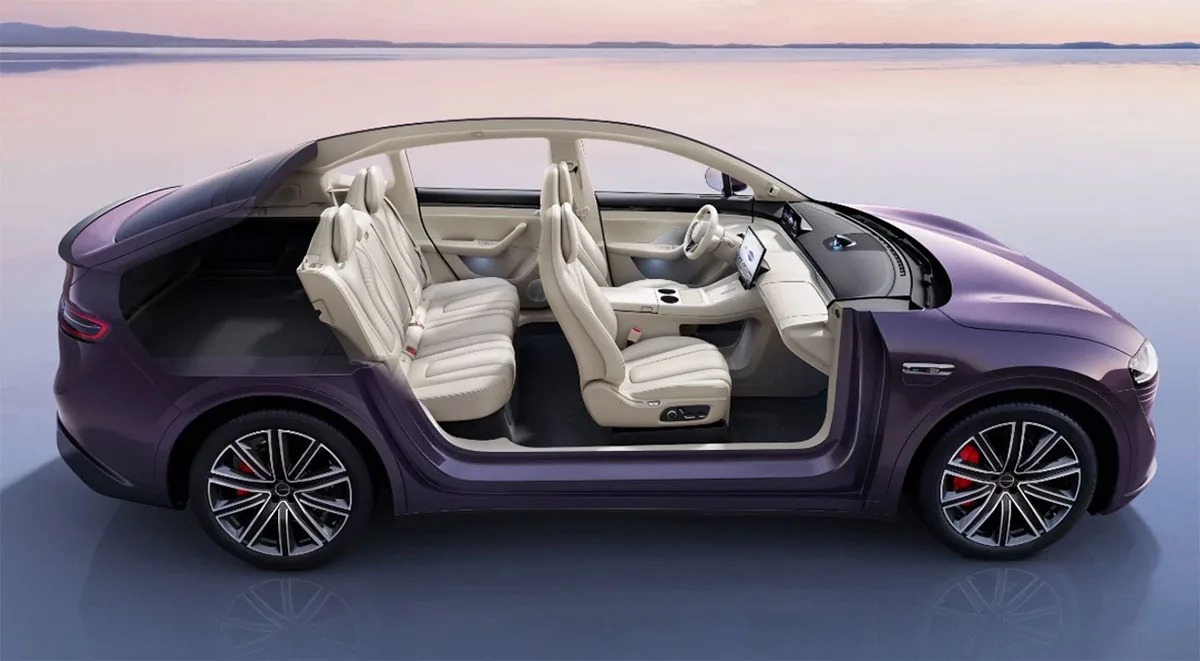
Huawei, a giant in telecommunications and consumer electronics, is one such entrant ready to challenge Tesla with its new offering, the Luxeed R7. Developed in collaboration with Chery, one of China’s largest automakers, the Luxeed R7 aims to compete directly with the Model Y Juniper.
The Luxeed R7 features a coupe-style SUV design and includes an 800V powertrain, a notable advantage over the current Model Y. It’s worth mentioning, however, that the upcoming Juniper facelift will also incorporate an 800V architecture alongside several other enhancements in design and performance.
Despite its ambitious design, the Luxeed R7’s specs are somewhat modest. It offers two battery options: an 82 kWh and a 100 kWh, with only the highest trim providing a dual-motor all-wheel-drive setup. In terms of acceleration, it matches or falls slightly behind Tesla’s performance.
While Huawei’s SUV does promise a slightly longer range per charge than the current Model Y, this advantage may diminish when the Juniper update is launched early next year. Luxeed R7 introduces some luxury features, such as a mini fridge in the center console and heated, vented massage seats, reminiscent of what NIO’s Onvo L60 offers.
Huawei is capitalizing on its software expertise to provide an advanced self-driving experience. The Luxeed R7 is equipped with the Qiankun ADS 3.0 driver-assist system, featuring LiDAR and comprehensive AI capabilities similar to Tesla’s Full Self-Driving (FSD) system. This system is approved for use on highways and city roads.
One stumbling block for Huawei is the pricing of the Luxeed R7, which starts at approximately $36,940, slightly higher than Tesla’s Model Y base model. Here’s a breakdown of the prices:
Even with these prices, Huawei’s CEO Richard Yu has acknowledged that the company will incur losses of about $4,267 per vehicle. Nevertheless, Yu is optimistic that as production scales up, economies of scale will lead to profitability.
This scenario is not uncommon for industry newcomers, with one notable exception being Xiaomi. Known for its consumer electronics, Xiaomi quickly scaled the production of its SU7 electric car, achieving profitability. Xiaomi is also planning to introduce a Model Y Juniper competitor next year, coinciding with Tesla’s facelift release.
As the market prepares for the Tesla Model Y Juniper’s arrival, competition among electric SUVs is intensifying. With established players and newcomers alike striving to outdo one another, consumers can expect a broader selection of advanced and affordable electric vehicles in the near future.