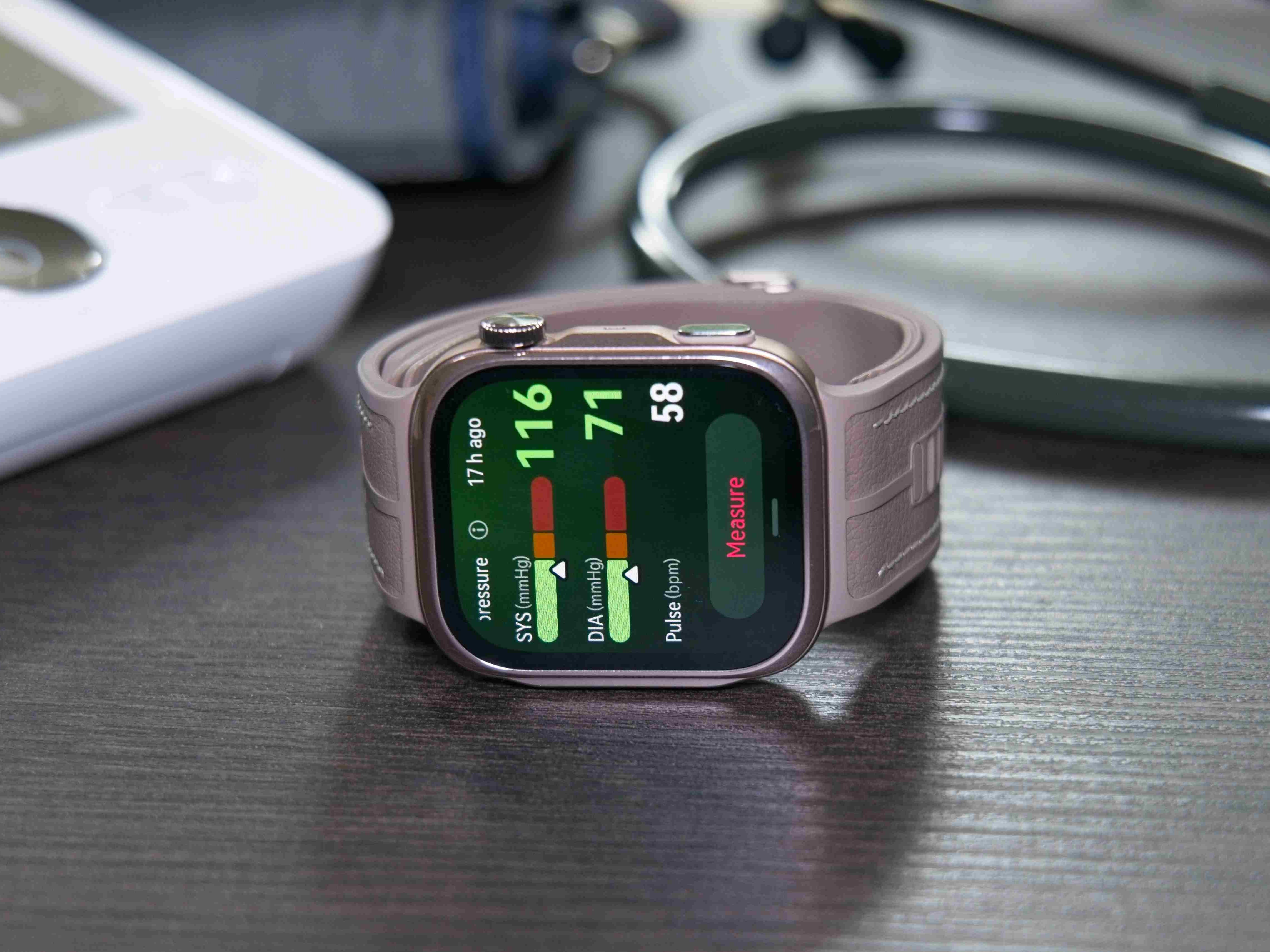
Huawei Watch D3 Hands-On: A Smartwatch With Serious Blood Pressure Tracking Ambitions
The Huawei Watch D3 stands out from typical smartwatches by focusing on one of the most important health metrics: blood pressure. While many wearables track steps, heart rate, sleep, and workouts, accurate blood pressure monitoring remains much harder to achieve from the wrist. Huawei’s latest health-focused wearable attempts to close that gap with a built-in system designed to deliver convenient wrist-based readings.
Before going any further, it is important to clarify one key point: the true clinical accuracy of the Huawei Watch D3 cannot be fully confirmed outside a controlled laboratory environment. Blood pressure readings can vary depending on posture, strap fit, arm position, stress level, movement, and even the time of day. Because of that, this kind of hands-on comparison should not be treated as a formal medical validation.
That said, early comparative testing produced promising results.
In a practical test, the Huawei Watch D3 was compared with an Omron RS4 wrist blood pressure monitor. Measurements were taken in alternating order, with three readings recorded on each device. Across the test runs, the Watch D3 delivered an average blood pressure reading of 118/74 mmHg.
When compared with the Omron RS4, the smartwatch’s average systolic reading was only around 0.5% lower. In real-world terms, that is an extremely small difference and falls within the kind of variation expected during repeated blood pressure checks.
The systolic value, which is the upper number in a blood pressure reading, is often considered especially important when assessing cardiovascular risk. In this area, the Huawei Watch D3 performed very closely to the dedicated wrist monitor used for comparison.
The diastolic reading, or lower number, showed a larger difference. The Watch D3 overestimated diastolic pressure by roughly 11% in this test. While that is worth noting, blood pressure readings are naturally sensitive to testing conditions, and a small change in wrist angle, cuff tightness, or body position can affect the result.
A separate comparison using a Braun ExactFit 5 Connect upper-arm blood pressure monitor also showed close alignment, particularly in the context of everyday tracking. Upper-arm monitors are generally considered more reliable than wrist-based models, so similar results in that kind of comparison are encouraging for users who want a wearable device for regular monitoring.
One of the most useful features of the Huawei Watch D3 is its built-in guidance during measurement. Both the smartwatch and its companion app can detect common issues that may affect accuracy. For example, the device can warn users if the strap is too loose or if the arm position is not ideal. It then provides corrective feedback, helping users repeat the measurement under better conditions.
This is especially important because blood pressure monitoring is not just about the sensor itself. Proper technique plays a major role. A reliable reading usually requires the user to sit calmly, keep the arm supported, avoid talking, and position the device correctly. By actively guiding the wearer, the Watch D3 may help reduce user error and improve consistency.
For people who regularly monitor their blood pressure, the Huawei Watch D3 could be a convenient alternative to carrying a separate monitor throughout the day. It may be particularly useful for spotting trends, checking readings at different times, and keeping a record inside the companion app.
However, it should not replace professional medical equipment or advice from a healthcare provider. Anyone with hypertension, heart disease, or concerns about blood pressure should continue to follow medical guidance and use clinically recommended devices when required.
Overall, the Huawei Watch D3 appears to be one of the more serious attempts at bringing blood pressure monitoring to a smartwatch. Its readings were impressively close to a dedicated wrist monitor in systolic measurement, and its real-time measurement guidance adds practical value for everyday users.
While further clinical testing would be needed to confirm its medical precision, the Watch D3 shows strong potential as a health-focused wearable for people who want convenient blood pressure tracking directly from the wrist.