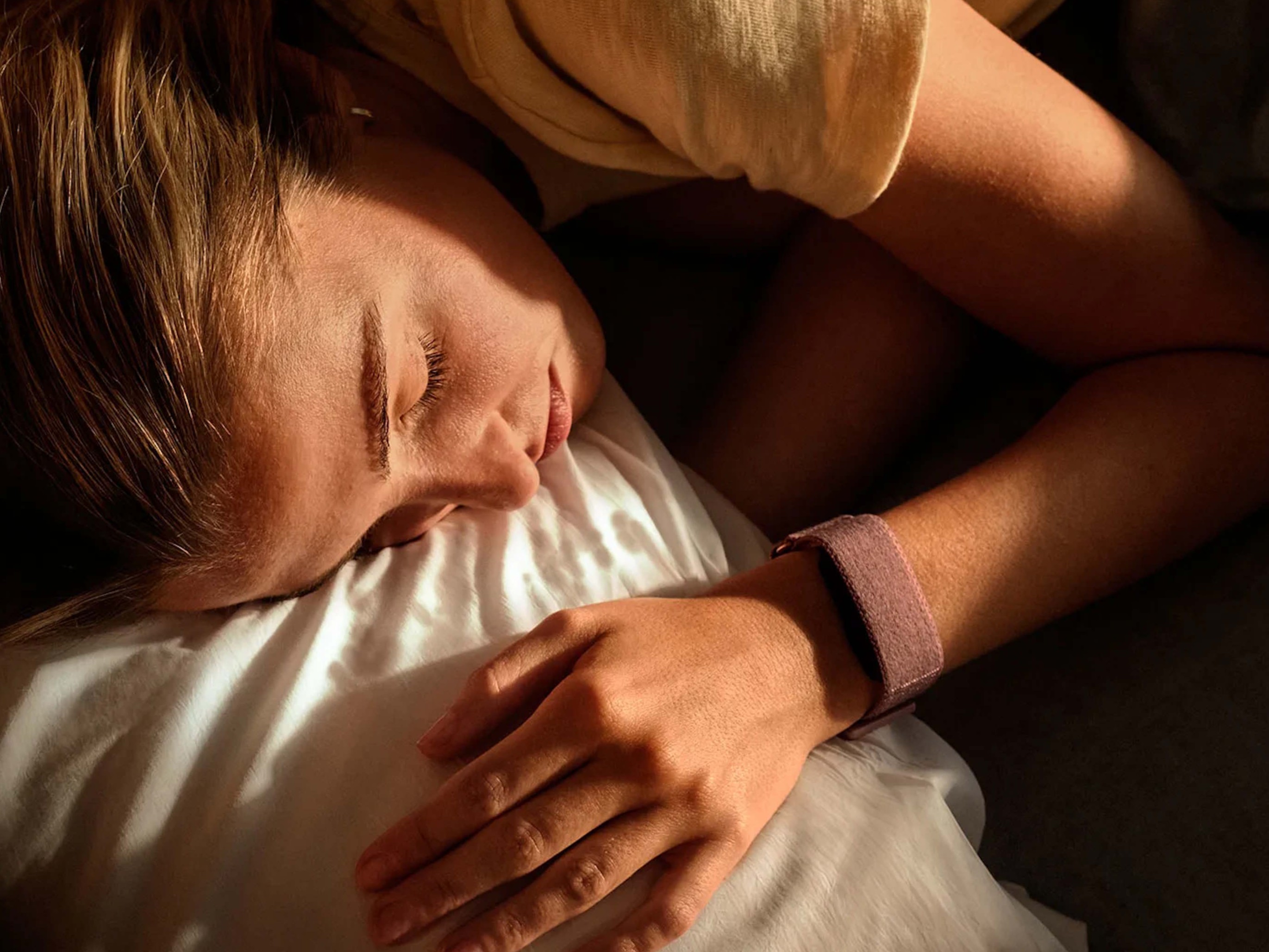
Garmin CIRQA Sleep Tracking Tested: Strong Deep Sleep Accuracy, But REM Detection Still Needs Work
The Garmin CIRQA, a display-free wearable designed to track health and fitness metrics, has been put through an early scientific-style test, and the results are both promising and revealing. While the tracker appears to perform well in several key areas, especially deep sleep detection, it also shows clear limitations that potential buyers should understand before relying on it for detailed sleep analysis.
Postdoctoral researcher and YouTuber Rob ter Horst recently tested the Garmin CIRQA, focusing on two major areas: heart rate accuracy and sleep tracking performance. His review suggests that Garmin’s new tracker can deliver solid results in everyday fitness scenarios, but it may struggle when conditions become more demanding.
During steady-paced running, the Garmin CIRQA performed well when compared with a Polar H10 chest strap, which is commonly used as a reference device for heart rate measurements. This is encouraging, as optical wrist-based sensors often face challenges in maintaining consistent accuracy during movement.
However, the results became more complicated during interval training. Many optical heart rate sensors tend to lag behind sudden changes in intensity, but in this case, the bigger issue was overestimation. At several points, the Garmin CIRQA recorded heart rate values that were noticeably higher than the Polar H10.
For casual users, this may not be a major problem. If you mainly use the tracker for general health monitoring, daily activity, and moderate workouts, the Garmin CIRQA’s heart rate performance may be more than adequate. But for athletes who rely on precise heart rate zones during intense interval sessions, these overestimated readings could make it harder to control training intensity accurately.
The most interesting part of the test involves sleep tracking. Wearables often claim to measure sleep quality, but accurately identifying sleep stages is extremely difficult. The Garmin CIRQA delivered one particularly impressive result: deep sleep detection matched the reference device 76.5 percent of the time.
According to Rob ter Horst, that is one of the strongest deep sleep results he has seen from a consumer wearable. This suggests that the Garmin CIRQA may be especially useful for users who want a better overview of their restorative sleep patterns.
Deep sleep is one of the most important stages of the sleep cycle. It is associated with physical recovery, immune function, and overall restoration. A tracker that can identify deep sleep reasonably well may help users understand how lifestyle choices, stress, training, and bedtime routines affect recovery.
REM sleep detection, however, appears to be a weaker point. The Garmin CIRQA reportedly struggled not only with calculating REM sleep duration, but in some cases also failed to detect REM phases altogether.
This matters because REM sleep plays an important role in memory, learning, emotional regulation, and brain recovery. If a wearable frequently misses REM sleep or misjudges its duration, the overall sleep report can become misleading. A user might believe they are getting poor REM sleep when the tracker is simply failing to detect it correctly.
That said, the test results should be interpreted with caution. Rob ter Horst clearly notes that the findings are based on a single test subject. Wearable accuracy can vary greatly from person to person depending on skin tone, wrist shape, movement, sensor placement, sleep habits, and other biological factors.
Another important limitation involves the reference device used for comparison. The test used a Hypnodyne ZMax, which primarily measures brain waves from the forehead. While this can provide valuable sleep data, REM sleep is especially difficult to identify using brain wave data alone. During REM sleep, brain activity can resemble light sleep or even wakefulness, making it harder to classify accurately without additional measurements.
In clinical sleep studies, REM sleep is usually identified with more than just forehead-based brain wave monitoring. Sleep laboratories often use sensors near the eyes to detect rapid eye movements, along with chin sensors to measure muscle relaxation. These signals are important because rapid eye movement and reduced muscle tone are key characteristics of REM sleep.
Because the reference device itself may have limitations in REM detection, it is possible that some of the Garmin CIRQA’s apparent errors could be influenced by the comparison method. In other words, the tracker may not be solely responsible for every mismatch.
Overall, the Garmin CIRQA appears to be a capable wearable with clear strengths and a few important weaknesses. Its strong deep sleep tracking result is impressive for a consumer device, and its heart rate accuracy during steady running seems reliable enough for many users. At the same time, its tendency to overestimate heart rate during high-intensity intervals and its inconsistent REM sleep detection mean it should not be treated as a medical-grade sleep or training tool.
For everyday users, the Garmin CIRQA could be a useful device for tracking recovery, sleep trends, resting metrics, and general fitness progress. For athletes and sleep enthusiasts who need highly precise data, it may be best used as a trend tracker rather than an absolute measurement tool.
The early takeaway is simple: the Garmin CIRQA shows real potential, especially in deep sleep tracking, but it is not perfect. Like most wearables, it can provide helpful insights into health and recovery, as long as users remember that the numbers are estimates, not clinical diagnoses.