China’s AI Compute Race Moves Into the Supernode Era
China’s artificial intelligence industry is entering a new stage as demand for powerful computing infrastructure continues to rise. Cloud companies, AI startups, and large model developers are increasingly turning their attention to supernodes, a new generation of high-performance AI computing systems designed to handle the intense workloads behind large language models and advanced AI applications.
The shift comes as training and running large AI models becomes more demanding. Modern AI systems require massive amounts of computing power, fast data transfer, and highly efficient hardware coordination. Traditional server clusters can still support many workloads, but they often face bottlenecks when AI models grow larger and inference demand increases at scale.
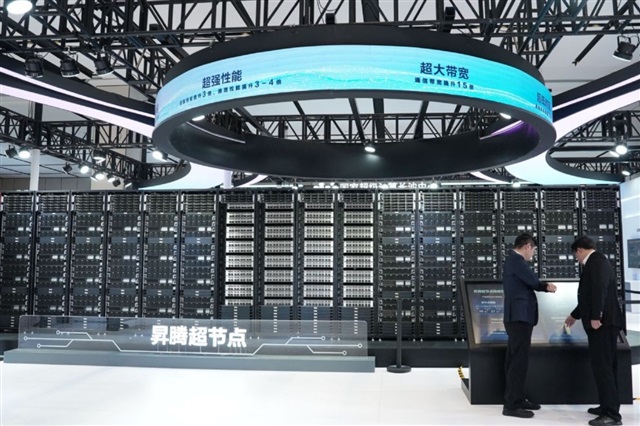
Supernodes are designed to solve that problem. Instead of treating servers as separate units, a supernode connects large numbers of AI processors, memory resources, and networking components into a tightly integrated system. This allows data to move faster, reduces delays, and improves overall performance during both model training and real-time AI inference.
For China, the move toward supernodes is also closely tied to the push for stronger domestic AI infrastructure. As local companies race to build more capable AI models, they need reliable computing platforms that can support long training runs, high-volume user requests, and enterprise-grade deployment. Domestic cloud providers are now focusing on building systems that can deliver this performance without depending heavily on foreign infrastructure.
The growth of supernodes could play a major role in China’s AI development strategy. Large model training requires enormous compute resources, but inference is becoming just as important. As AI tools are added to search engines, productivity software, customer service platforms, robotics, smartphones, and enterprise systems, the number of daily AI requests can climb rapidly. Supernodes offer a way to support that demand more efficiently.
This trend also reflects a broader change in the global AI market. The competition is no longer only about who can build the smartest model. It is also about who can build the strongest computing foundation. Countries and companies with advanced AI infrastructure will be better positioned to train larger models, reduce operating costs, and launch AI services at scale.
China’s supernode push shows that the AI compute race is moving beyond individual chips and standard data centers. The next phase will depend on integrated systems, faster interconnects, improved energy efficiency, and scalable domestic platforms capable of supporting the next wave of artificial intelligence.
As AI adoption accelerates, supernodes are likely to become a key part of China’s technology landscape. For cloud providers and AI developers, they represent more than just faster hardware. They are becoming the backbone of large-scale AI innovation, powering the training and inference workloads that will shape the future of intelligent applications.