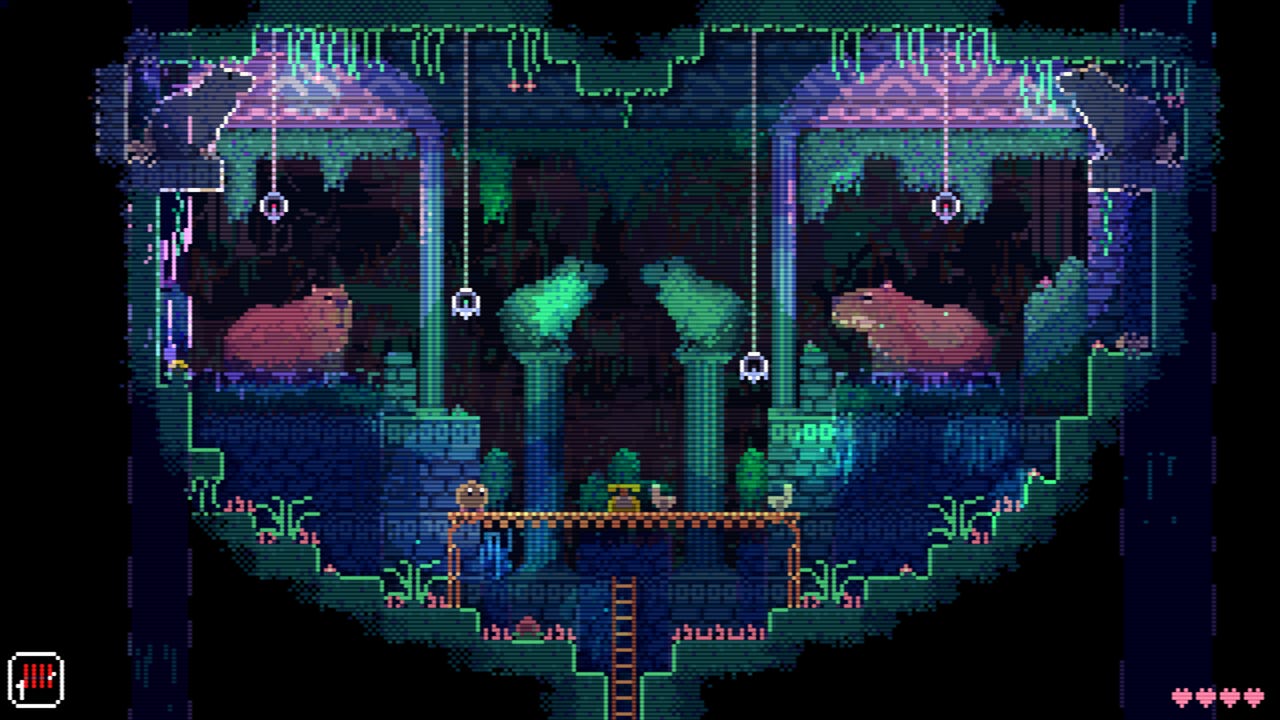
In the ever-evolving landscape of video games, secrets and hidden content have long been a cherished part of the gaming experience, enchanting gamers with the promise of the undiscovered. However, with the rise of data mining, these secrets are becoming harder to protect. Developers are tasked with finding new ways to safeguard the surprises within their games, and some developers are stepping up to the challenge in innovative ways.
Billy Basso, the developer behind the highly anticipated game Animal Well, has spent seven years creating a world filled with secrets that are meant to captivate players and evoke a sense of wonder reminiscent of early gaming days. Animal Well, which is set to release for Switch, PlayStation, and PC on May 9, aims to offer players a sense of continuous discovery, layer by layer.
To combat data miners, Basso has a unique strategy: certain sections of the game will be encrypted, and the key to unlock them will not be found within the code, but rather through gameplay itself. This approach aims to ensure that players must engage with the actual game to unveil its deepest mysteries. To strengthen this defense, Basso utilizes industry-standard AES encryption, betting on security robust enough that it could not be broken unless by quantum computing or an unforeseen vulnerability.
The distinctiveness of Animal Well lies not just in its ambition to hide secrets from those who pick through the game’s code but also in its commitment to delivering a playing experience where discovery is integral to the journey. Players will navigate a peculiar 2D world, uncovering hidden passageways and items that are just the tip of the iceberg of what the game holds.
Transitioning from Basso’s approach, we consider Echo Weaver, a game in development by indie studio Moonlight Kids. Echo Weaver draws inspiration from the likes of Outer Wilds and infuses the Metroidvania genre with a fresh perspective. Chris Sumsky, Echo Weaver’s game designer, envisions a game where players could, theoretically, finish the game in a matter of minutes if they have prior knowledge of its secrets. The gameplay is rooted in discovery and application of knowledge across multiple time loops in a mysterious sci-fi setting.
The game’s allure is in its embrace of knowledge as the key progression tool, rather than traditional item collection. Echo Weaver challenges players to master the game’s environment and uncover secrets that could significantly shorten the gameplay through strategic exploration and understanding of the game’s mechanics. This design lends itself to the potential for early accidental discoveries, which the developers consider an acceptable risk that adds to the game’s charm.
To stand out in the crowded Metroidvania space, Echo Weaver aims to differentiate itself through its unique design principles and immersive secrets. The developers hope to capture player interest through public demos, aiming to showcase the deeper and more intricate aspects of the game that might not be immediately apparent.
In summary, as gamers delve deeper into the worlds of Animal Well and Echo Weaver, they can expect a playing experience where secrets remain just that—secrets—until they are earned through the merit of play. These approaches show the emerging tactics by developers to preserve the magic of discovery in video games, despite the challenges posed by data mining. For players, this means more genuine moments of awe and the satisfying thrill of uncovering what was meant to stay hidden, at least for a while.### Insights into the Future of Gaming and PlayStation Leadership
The video game industry is constantly evolving, with developers exploring innovative methods and speedrunning to keep players engaged and challenged. Developers, such as Moonlight Kids, are taking bold strides by eying ambitious release dates like 2025, for new titles with scalable designs that adapt to their funding capabilities. This approach highlights the need for agile development practices in creating polished, sizeable games that can captivate audiences without overextending resources.
Understanding the dynamic nature of gaming, Jim Ryan, the outgoing head of PlayStation, offered sage advice to his successors in the industry. In his view, the essence of PlayStation’s success lies in never losing sight of the fact that they deal in entertainment. This industry wisdom serves as a beacon for future leaders, emphasizing the importance of staying true to the mission of providing entertainment to sustain success.
In the interim, Hiroki Totoki steps up as the CEO of PlayStation, expressing concern over how game studios’ individual efforts contribute to the overarching goals of growth, profit generation, and higher margins. Totoki’s insights underscore the need for coherence and alignment in the creative endeavors of gaming studios to achieve collective and strategic objectives.
### Gaming’s Expanding Influence: The Case of The New York Times
The gaming sector’s reach is extensive, shown by the intriguing development of media companies like The New York Times expanding into gaming. The Times’ Games app matching the customer time spent on its News app signals the increasing significance of this sector. Gaming experts, such as Matthew Ball, shed light on this trend, underlining the importance of gaming not just as a form of entertainment but also as a space competing for consumer time alongside traditional media.
### Game Development and Industry Ethics
Saber Interactive showcases the breadth of the game development process, juggling a staggering 40 projects simultaneously. This level of activity demonstrates the intensive nature of the industry and the demand for a wide variety of content. CEO Matt Karch, who led Saber Interactive’s buyout, praises The Embracer Group for its ethical treatment of employees and its contributions to the industry, setting a benchmark for corporate responsibility within the gaming world.
### Legal Challenges in Virtual Spaces
The legal landscape in gaming is also in flux, as demonstrated by the Roblox case. A lawsuit claims that Roblox was negligent and violated California’s unfair competition law because it failed to curb online casinos operating within its platform. Although Roblox adheres to community standards that prohibit gambling, the case moving forward reflects the ongoing debate over the responsibility of platforms in regulating user-generated content and activities. This issue is critical, given the increasing crossover between digital entertainment and real-world consequences.
As we look to the future of the gaming industry, these developments paint a picture of innovation, leadership challenges, expanding influence, ethical considerations, and legal complexities. Players, developers, and industry leaders alike should stay attuned to these trends to understand and shape the future of gaming. For those in the industry, embracing adaptability, alignment of studio efforts with larger business goals, acknowledging gaming’s role in broader media consumption, and maintaining ethical standards are vital steps for sustainable success. Users and creators must also navigate the evolving regulatory and legal landscape thoughtfully to ensure a fair and responsible gaming environment for all.