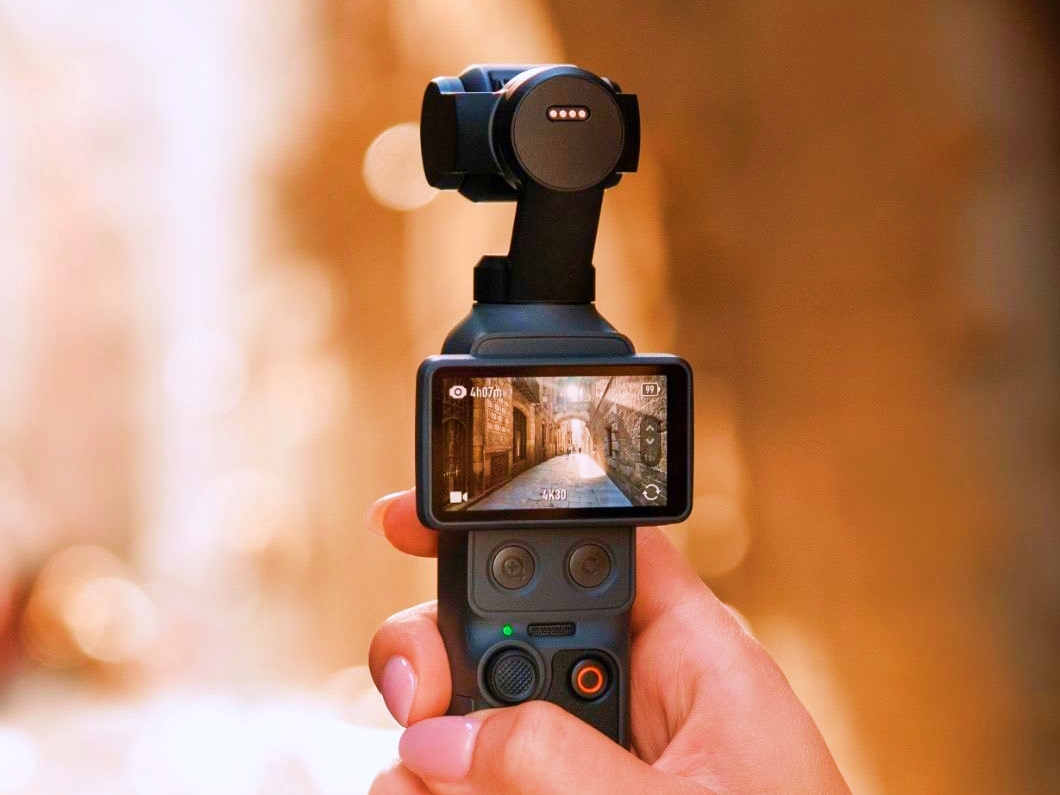
DJI is aiming to raise the bar for ultra-portable filmmaking again with the Osmo Pocket 4, and the biggest story isn’t the familiar pocket-friendly body design—it’s what’s been rebuilt inside. The new model debuts a 37MP 1-inch stacked CMOS sensor, a massive jump from the Pocket 3’s 9.4MP 1-inch sensor. That’s roughly four times the resolution, and it’s not just a spec-sheet flex. In real use, the higher pixel count gives creators more flexibility to crop and reframe, including a much more usable “lossless” 2x zoom-style punch-in with fewer of the soft, smeared artifacts you typically see with digital zoom.
On top of the resolution boost, the Osmo Pocket 4 is also designed to handle difficult lighting more confidently. DJI rates it at up to 14 stops of dynamic range in D-Log mode, up from the Pocket 3’s 12 stops in its log profile. In practical terms, that means the Pocket 4 can hold onto more detail when scenes get tricky—think bright skies behind a subject, harsh sunlight on faces, or night shots with strong highlights. Early impressions point to better highlight control and more recoverable shadow detail, which is exactly what creators want when they’re color grading or trying to save a shot that would otherwise be blown out.
The lens setup keeps the bright f/2.0 aperture, but DJI adds a new magnetic fill light to help when shooting in low light. For handheld vlogging, indoor filming, and evening street scenes, a small fill light can make a noticeable difference—especially when you want cleaner-looking faces and less noisy footage without blasting ISO too far.
Where the Osmo Pocket line used to feel more “video-first,” the Pocket 4 pushes harder into photography as a serious use case. To get the most out of that 37MP sensor for stills, DJI encourages using SuperPhoto mode. By default, it shoots in a 1:1 aspect ratio, but you can also capture 33MP stills in 16:9 if that fits your workflow better. Either way, it’s a meaningful step up for anyone who wants high-resolution images from a stabilized pocket camera—whether that’s for thumbnails, social posts, travel photography, or grabbing stills alongside video without switching devices.
DJI’s intent is also reflected in the controls. The new “Custom” button is set up by default to toggle between video and photo modes, a small change that signals a bigger message: this isn’t just a tiny gimbal camera for clips anymore—it’s positioned as a true hybrid video and photo camera. Combined with a higher ISO ceiling, improved color depth, and the advantages of a stacked sensor paired with an upgraded processing engine, the Osmo Pocket 4 looks ready to compete as a compact creator camera that doesn’t feel like a compromise.
For creators who loved the Pocket 3’s portability but wanted more room to crop, better log performance, and stronger results in challenging lighting, the DJI Osmo Pocket 4’s sensor upgrade could end up being the most important leap the series has made in years.