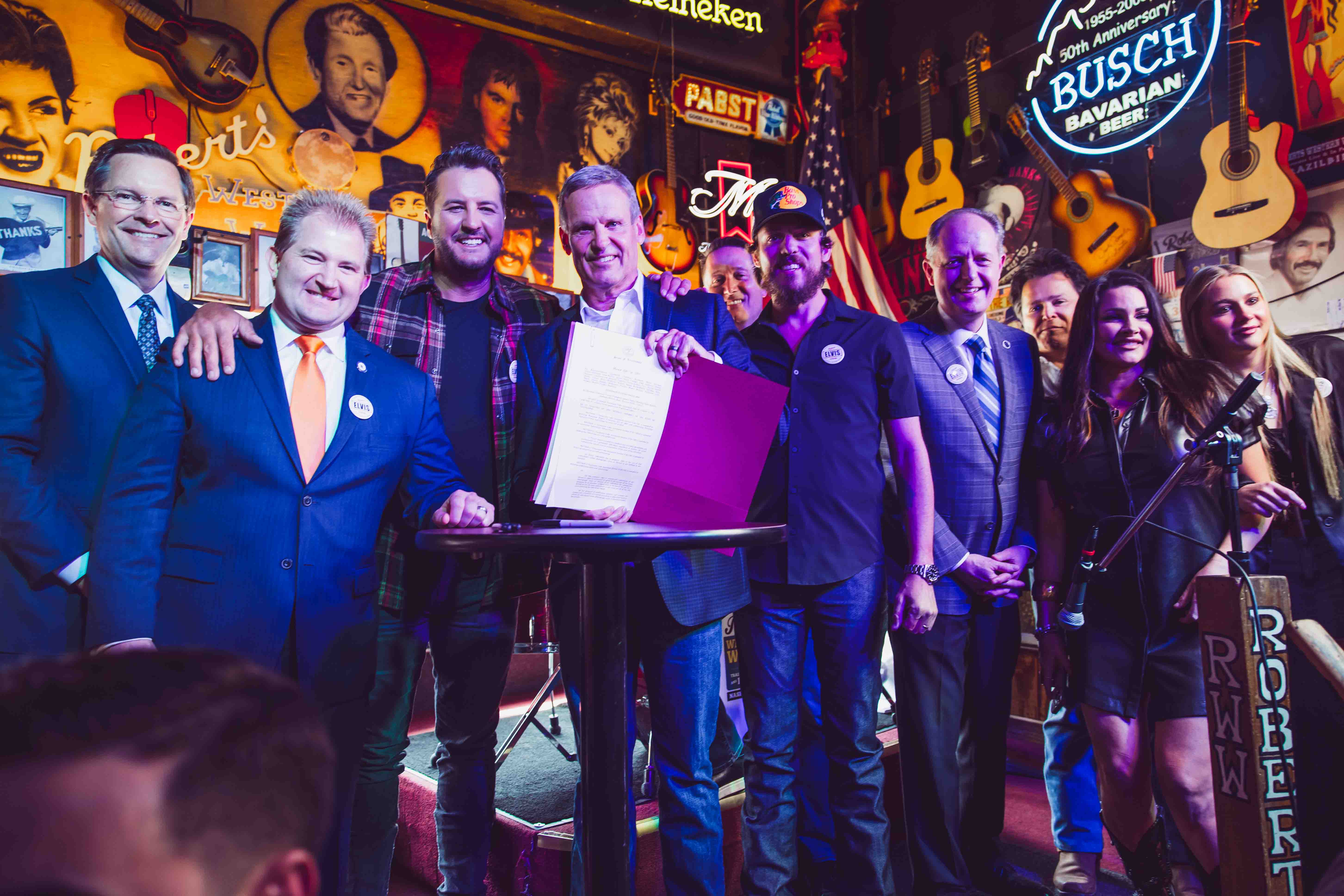
In a landmark victory for music industry professionals, Tennessee Governor Bill Lee recently enacted the Ensuring Likeness Voice and Image Security (ELVIS) Act, a groundbreaking law designed to safeguard creators’ personal rights in the era of rapidly emerging artificial intelligence (AI) technologies.
Tennessee, with its deep artistic roots stretching from the iconic musical strains of Beale Street to the vibrant melodies of Broadway, Bristol and beyond, has always valued its cultural heritage. The state’s music industry is not only a testament to its history but also a major economic driver, supporting over 61,617 jobs and generating $5.8 billion for the state’s GDP while rounding out over 4,500 local music venues.
AI’s ascent brings with it unprecedented challenges, especially within artistic communities. Pioneering technologies that recreate an individual’s voice have facilitated human impersonations and unauthorized fake works, jeopardizing artists’ identities and creative integrity. In addressing these concerns, the ELVIS Act expands Tennessee’s Protection of Personal Rights law, which previously shielded an individual’s name, image, and likeness but did not consider the advancing capabilities of AI in generating voice replications.
Senate Majority Leader Jack Johnson and House Majority Leader William Lamberth have both expressed their dedication to modernizing legal protection and maintaining public trust amid industry growth and technological innovation. These legislative efforts aim to ensure that artists’ unique voices and creative outputs remain safeguarded from AI exploitation.
Industry groups have widely championed the swift legislative response to the AI threat, reflecting a united front in the music community’s stand against unauthorized use of synthetic media and voice cloning. Among the supporters are prominent organizations such as the Recording Industry of America (RIAA), Academy of Country Music, and the Nashville Musicians Association. Their collective applause echoes a sense of relief and approval for the steps being taken to preserve artistic authenticity and individuality.
The ELVIS Act exemplifies a conscious effort to strike a balance between embracing technological advances and upholding the rights of creators. It places a safeguard around the hearts and voices of those who shape Tennessee’s musical legacy, steering the discourse on AI towards responsible and respectful utilization regarding personal creative rights.
Artists, songwriters, and creators of music can now revel in a new sense of security, knowing that their voices will not be replicated without consent, preserving both their legacy and relationship with fans. As the ELVIS Act sets a precedent, it may inspire further actions both within the United States and globally—ensuring cultures and economies tied to creativity continue to thrive unhampered by the shadow of unauthorized digital imitation.