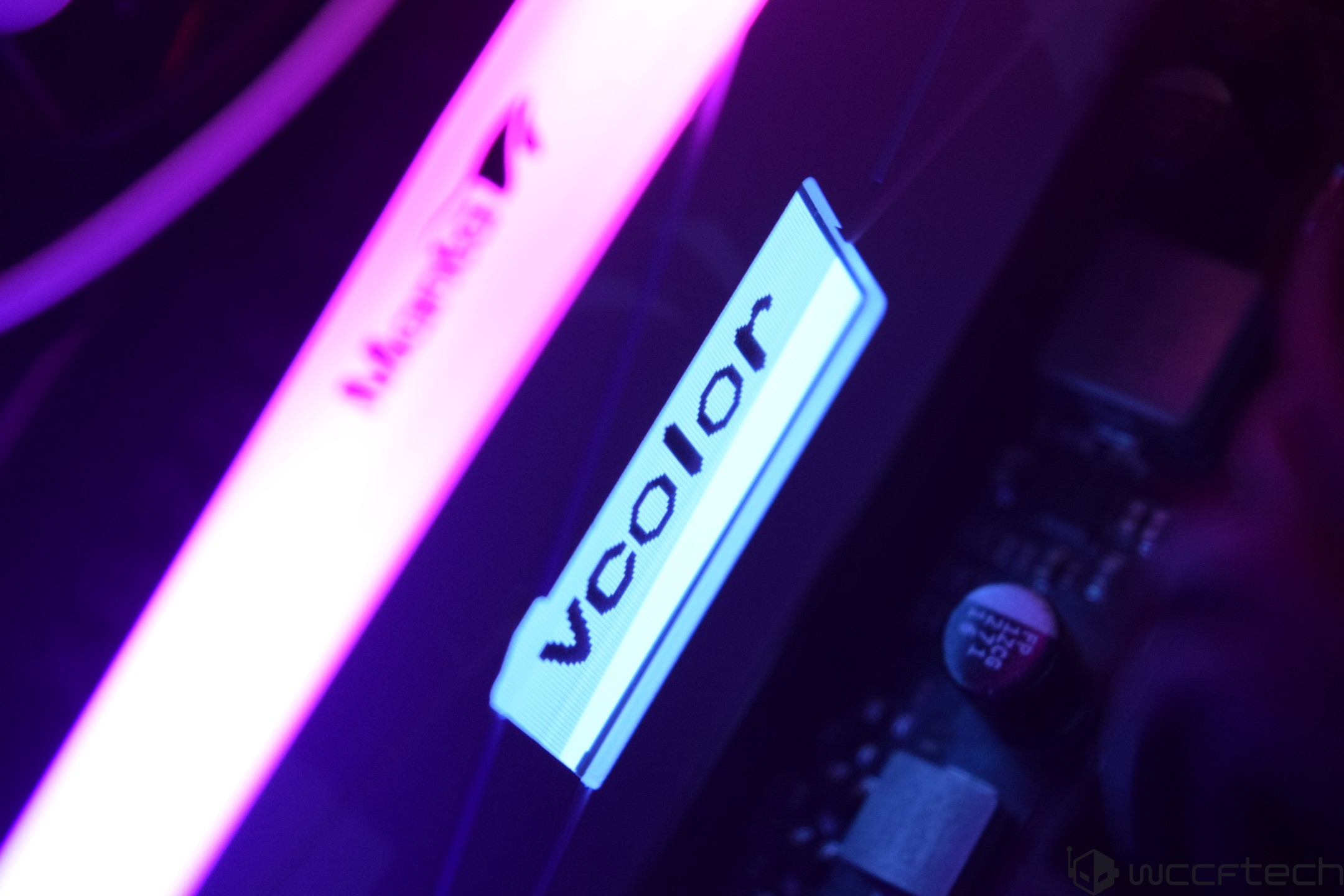
V-Color Manta XFinity+ OLED DDR5-8000 (64GB) Review: Style, Speed, and a First-of-its-Kind Display
DDR5 has gone mainstream, and memory makers are racing to stand out. Some chase raw speed, others design flair—but V-Color is doing both. The Manta XFinity+ OLED is the first DDR5 memory kit with a built-in OLED display, blending premium performance with a genuinely useful, eye-catching feature for modern gaming PCs.
If you’ve been waiting for a memory upgrade that goes beyond RGB and actually elevates both aesthetics and functionality, this 64GB DDR5-8000 kit makes a compelling case.
Who this kit is for
This kit is built for serious enthusiasts who understand memory tuning and platform nuances. Hitting 8000 MT/s requires the right motherboard, up-to-date BIOS, a strong IMC (integrated memory controller), and attention to the vendor’s QVL. If you prefer plug-and-play stability at moderate speeds, you may want a more accessible kit. If you like pushing boundaries—and want your build to look incredible doing it—this belongs on your shortlist.
Key specifications
– Series: Manta OLED XFinity+
– Form factor: 288-pin UDIMM with on-die ECC
– Capacity: 32GB x 2 (64GB total)
– Frequency: 8000 MT/s (PC5-64000)
– Timings: CL40-56-56-128
– Voltage: 1.35V
– Profiles: Intel XMP, Intel 200S Boost, AMD EXPO
– Cooling: Aluminum heatsink with ARGB diffuser
– Display: Integrated OLED panel for live readouts
What makes it special: the OLED advantage
The integrated OLED panel takes memory module design to new territory. It’s not just for show—V-Color uses it to deliver real-time system telemetry you actually care about. Expect dynamic visuals of:
– Active memory profile (XMP / Intel 200S Boost / EXPO)
– Total memory capacity
– Live memory speed
– Primary timings
– DRAM voltage
– DRAM temperature
Smartly, the OLED is mounted on a single module. In most builds, only the outermost DIMM is visible, so doubling up would add heat and cost without improving visibility. The result is a cleaner presentation and a more efficient thermal design.
Design and build
Manta XFinity+ is a premium kit through and through. The heavy aluminum heatspreaders provide excellent thermal mass, which is especially welcome at high frequencies. The top diffuser casts even, vibrant ARGB lighting and syncs with popular motherboard RGB ecosystems. Available in both black and white, the clean, angular styling and the one-of-a-kind OLED panel make this a centerpiece component in any showcase build.
V-Color also offers optional ARGB “filler” modules for empty DIMM slots, giving a uniform four-DIMM look even when you’re only running two sticks.
Installation and compatibility
At 8000 MT/s, platform selection matters. V-Color includes XMP and EXPO profiles for straightforward setup, but you’ll still want to:
– Update to the latest motherboard BIOS
– Verify the kit on your board’s QVL
– Ensure robust power delivery and airflow
– Be prepared for minor manual tuning depending on CPU IMC quality
Test bench and experience
Tested with an Intel Core Ultra 9 285K on an MSI MEG Z890 Unify-X, the kit showed exactly what high-frequency DDR5 can do on a platform built for speed. Z890 motherboards are particularly strong with high-speed UDIMMs, and this pairing allowed the Manta XFinity+ OLED to stretch its legs.
Performance impressions
– Bandwidth: At 8000 MT/s, throughput is excellent, and content creation workloads that love fast memory see real gains.
– Latency: CL40 at 1.35V is competitive for this frequency class, balancing speed and thermals well.
– Gaming: Titles sensitive to memory speed benefit, especially at high refresh and competitive settings. Gains vary by engine, but minimums are typically where faster memory helps most.
– Stability and thermals: The chunky heatsinks do their job, and the OLED’s additional heat didn’t pose an issue in a well-ventilated case.
Everyday perks
Beyond raw performance, the OLED adds a “quality of life” layer for enthusiasts. Seeing live DRAM temps, timings, and speed at a glance helps with troubleshooting, fine-tuning, and simply enjoying the craft of PC building. It’s a feature that feels practical, not gimmicky.
Pros
– First DDR5 kit with a functional OLED display
– 64GB capacity at a blistering 8000 MT/s
– Attractive, heavy-duty heatsinks with refined ARGB lighting
– XMP and EXPO profiles for streamlined setup across platforms
– On-die ECC for added reliability
Considerations
– Designed for experienced users; 8000 MT/s demands the right board, CPU IMC, and BIOS
– Premium pricing
– OLED on one DIMM by design—perfectly sensible, but worth noting
Final verdict
V-Color’s Manta XFinity+ OLED DDR5-8000 isn’t just another fast memory kit; it’s a statement piece for high-end gaming and creator rigs. You get top-tier speed, a generous 64GB capacity, and a distinctive OLED display that’s both informative and stunning. If you’re building a showcase PC or chasing every last frame and second saved, this kit delivers performance with personality.
If you’re comfortable with high-speed memory tuning and want your system to stand out in a crowded field, the Manta XFinity+ OLED is one of the most compelling DDR5 options you can buy.DDR5 memory keeps pushing boundaries, and this roundup shows just how far kits have come—from stock JEDEC sticks at 4800 MT/s to record-chasing modules cresting 10,200 MT/s. We pulled together standout specs across popular overclocking and real-world tests like SuperPI and WinRAR to help you choose the right kit for gaming, content creation, or overclocking.
What the data shows at a glance
– The bleeding edge is now 10,200 MT/s at up to 1.55V, led by 48 GB dual‑DIMM kits. These profiles are for expert tuners with serious cooling.
– The real‑world sweet spot for most builds remains 6000–6400 MT/s with tight timings at 1.25–1.35V, delivering excellent gaming and productivity performance with plug‑and‑play XMP/EXPO.
– 7200–8000 MT/s kits are attainable on strong Intel memory controllers, while 6000 MT/s remains the ideal target for AMD Ryzen 7000 with 1:1 fabric.
– JEDEC 4800–5600 MT/s at 1.1V prioritizes stability and efficiency over peak performance—great for compact or silent builds.
How these kits behave in popular benchmarks
– SuperPI: This benchmark loves low latency and strong memory controllers. Kits at 7200–8000 MT/s with tightened primary timings excel. Interestingly, a well‑tuned 6000 MT/s CL32–CL36 kit often punches above its weight by balancing frequency with timing efficiency.
– WinRAR: Throughput and efficiency matter. High frequency plus sensible timings wins, but the gap between 6000 CL32–36 and 7200 CL34–36 can be smaller than you expect in everyday archiving. Stability and voltage also play a role during long, sustained workloads.
Choosing the right DDR5 kit for your platform
– For Intel 12th–14th Gen
– Goal: 6400–7200 MT/s with CL32–36 at 1.30–1.40V for daily reliability.
– Enthusiasts with golden IMCs can explore 7600–8000 MT/s, but expect voltage bumps and active DIMM cooling.
– For AMD Ryzen 7000 series
– Goal: 6000 MT/s with tight timings (CL30–36) to sync memory clock and fabric (1:1), minimizing latency.
– Look for α‑branded kits that are tuned for AMD, such as DELTAα and VULCANα at 1.25V for cooler operation.
When 48 GB makes sense
– Dual 24 GB DIMMs offer extra headroom for creators and multitaskers without jumping to 64 GB. The impressive part is how many 48 GB kits sustain 7200–8200 MT/s. For daily rigs, a 48 GB 6000–6400 MT/s profile at 1.35V hits a great balance of capacity, speed, and compatibility.
Voltage, cooling, and stability tips
– 1.1V JEDEC is the most efficient and the easiest on your memory controller.
– 1.25–1.35V XMP/EXPO profiles are safe for daily use on quality boards with current BIOS.
– 1.45–1.55V is enthusiast territory. Use directed airflow on the modules and ensure robust motherboard VRM cooling.
– Update your BIOS, enable XMP/EXPO, and allow a full memory training cycle after first boot. If errors persist, relax secondary timings slightly or step down one memory ratio.
Quick recommendations by use case
– Best overall for gaming and streaming: 32 GB 6000 MT/s, CL32–36 at 1.30–1.35V
– High‑refresh competitive gaming on Intel: 32 GB 7200 MT/s, CL34–36 at 1.40V, with good cooling
– Content creation multitasker: 48 GB 6000–6400 MT/s, CL32–36 at 1.35V
– Prestige overclocking and benchmarking: 48 GB at 8000–10,200 MT/s with adequate voltage and airflow
– Silent, efficient workstation: 32 GB 5200–5600 MT/s JEDEC at 1.1V
Key takeaways
– For most PC builders, 6000–6400 MT/s with tight timings delivers the best blend of speed, latency, and stability.
– SuperPI favors latency; WinRAR rewards balanced frequency and timings.
– Extreme 8000–10,200 MT/s kits are stunning showcases for overclockers but demand meticulous tuning and cooling.
– Whether you want RGB flair or stealthy heatspreaders, there’s a tuned profile for nearly every platform and priority.
If you’re upgrading today, start with a 6000 MT/s CL32–36 kit for a plug‑and‑play performance uplift, then tune from there. Enthusiasts can chase 7200+ MT/s on Intel or tighten sub‑timings at 6000 MT/s on AMD for snappy, stable gains in both games and creative workloads.DDR5 memory has transformed what gamers and creators can expect from their PCs. While memory speed wasn’t always a game-changer with older standards, DDR5 flips the script by pushing frequencies far beyond DDR4 and tightening timings on premium kits. Jumping from a base 4800 MT/s DDR5 profile to 6000 MT/s and beyond can noticeably improve frame rates, boost 1% lows, and make systems feel snappier overall.
That context makes V-Color’s Manta XFinity+ OLED DDR5 kit especially interesting. It pairs high-end speed with an eye-catching OLED display built right into the heatspreader. The small screen isn’t just a gimmick—it clearly shows real-time stats like speed, temperature, and the active memory profile. It’s a tasteful addition that enhances a build’s look without being distracting, and it signals where desktop memory design is headed next.
Performance-wise, the Manta XFinity+ OLED is no slouch. Rated at 8000 MT/s and available in capacities up to 64 GB, it delivers a massive 66.6% uplift over the 4800 MT/s JEDEC baseline that launched the DDR5 era. That kind of headroom is ideal for modern high-refresh gaming and heavy multitasking. Even better, today’s platforms from both major CPU makers are increasingly capable of running these faster speeds so more users can tap into the benefits.
The broader DDR5 landscape is stronger than ever, with options ranging from efficiency-focused 6000 MT/s kits to extreme enthusiast modules pushing toward five-digit data rates. Popular picks around 6000 MT/s include well-balanced CL36 kits at 1.30–1.35 V, such as models from G.Skill and Crucial, and efficient 1.25 V options like select T-Force DELTAα and VULCANα kits. Step up to 6400–7200 MT/s and you’ll find tighter timings and higher voltages on premium lines like G.Skill Trident Z5, T-Force Delta RGB, and V-Color Manta XSky. At the very top, specialty kits from brands like T-Force, KLEVV, and V-Color push 7600–8000 MT/s and beyond, often with binned ICs and robust cooling for stability.
For gamers, the sweet spot often starts around 6000 MT/s with CL36 to CL38 timings, striking a great balance of performance, compatibility, and price. If you’re building a top-tier rig and your CPU’s memory controller can handle it, moving into the 7200–8000 MT/s range can further smooth out frame pacing and lift CPU-bound performance. Just remember that higher speeds usually require more tuning, higher voltage, and strong motherboard support.
The Manta XFinity+ OLED stands out not just for its speed but for its design. The heatspreader is substantial, thermals are well-managed, and the ARGB implementation is clean. The integrated OLED elevates the look and adds at-a-glance utility you can actually use. Functionality is currently basic, but it sets the stage for deeper integration and smarter diagnostics in future memory releases.
Value-wise, the kit is priced at $399.99 in the US, which is only about $20 more than the non-OLED version. Given the added style, information display, and standout design, that’s a reasonable premium. There’s also an optional filler kit for aesthetic symmetry in four-DIMM builds, though that comes at extra cost.
If you’re upgrading now, here’s how to choose the right DDR5 kit for your build:
– Frequency and timings: Aim for at least 6000 MT/s; lower CAS latency (CL) at a given speed is better.
– Voltage and thermals: 1.25–1.35 V is common for tuned kits; look for solid heatspreaders for sustained performance.
– Capacity: 32 GB is the new baseline for gaming and content creation; 64 GB is ideal for streaming, large projects, and future-proofing.
– Platform support: Check your motherboard’s QVL and BIOS maturity; modern Intel and AMD platforms are increasingly friendly to 6000 MT/s and above.
– Features and aesthetics: RGB remains popular; an OLED display like on the Manta XFinity+ OLED adds practical flair.
Bottom line: V-Color’s Manta XFinity+ OLED DDR5 kit brings together speed, stability, and standout design. With 8000 MT/s performance, a premium build, and a crisp integrated display, it’s a compelling choice for enthusiasts who want both high frame rates and a build that turns heads.