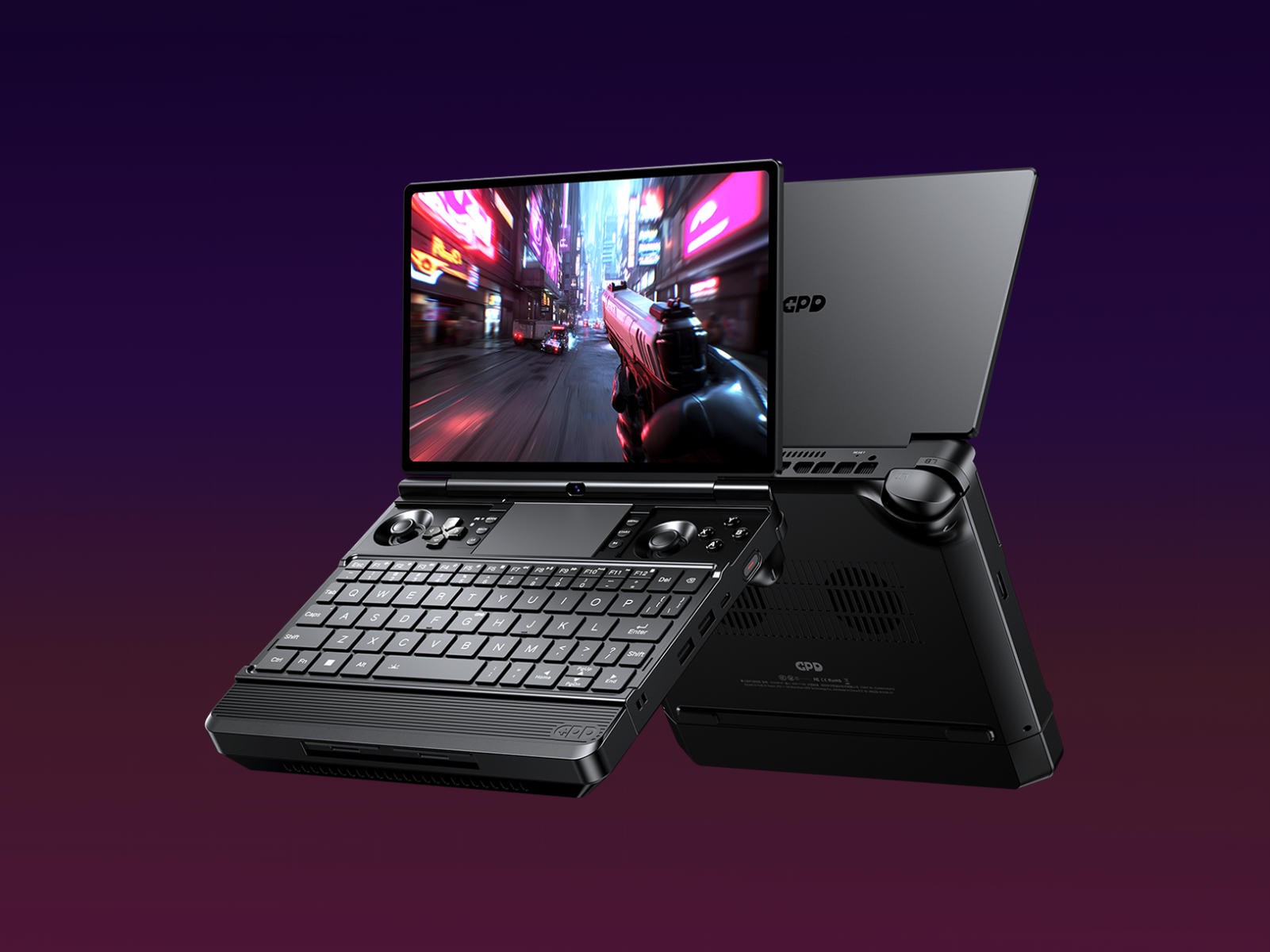
GPD Win Max 3 Set for August Launch With 165Hz OLED Display, AMD Strix Halo Power, and $1,699 Starting Price
The GPD Win Max 3 is getting closer to launch, and it is shaping up to be one of the most powerful compact handheld gaming PCs of 2026. Expected to arrive for global buyers at the end of August 2026, the new device will reportedly start at $1,699 and bring major upgrades over the Win Max 2, including an AMD Strix Halo processor, a high-refresh OLED screen, and memory options that go far beyond what most handheld gaming systems offer.
GPD first teased the Win Max 3 in October 2025, but concrete details only began appearing months later. Now, the picture is becoming clearer: this is not just a simple refresh. The Win Max 3 appears to be a more premium, performance-focused successor designed for gaming, productivity, emulation, and portable PC use.
One of the biggest changes is the display. The Win Max 3 moves from the 10.1-inch screen used in the previous model to a smaller 9.06-inch panel. While that may sound like a downgrade at first, the switch to OLED makes the new screen much more exciting. The display is expected to offer a 165Hz refresh rate, giving users smoother visuals for fast-paced games and general navigation.
Brightness is also a strong point. The OLED panel is said to reach 650 nits in standard SDR brightness, while high brightness mode can push peak brightness up to 1,050 nits. That should make the Win Max 3 easier to use in brighter environments while also improving contrast and color quality compared to traditional LCD handheld displays.
Performance should be another major selling point. The entry-level configuration is rumored to include an AMD Ryzen AI Max+ 388 processor, 32GB of RAM, and a 512GB SSD. Higher-end versions are expected to push things much further, with configurations offering up to 128GB of RAM and 4TB of storage. That puts the Win Max 3 in a very different category from many mainstream handheld gaming PCs, especially for users who want a portable machine that can also handle serious multitasking or creative workloads.
The device’s design is also changing. Without its battery or cooling modules attached, the Win Max 3 is reportedly around 20 mm narrower and 13 mm shorter than the Win Max 2. However, once those modules are installed, the device grows to 180 mm in length, making it around 20 mm longer than its predecessor. This modular approach suggests GPD is trying to balance portability with stronger cooling and longer battery life.
Weight is expected to come in at 1.24 kg with the 97 Wh battery attached. That makes it heavier than many smaller handheld gaming devices, but the Win Max series has always leaned closer to a compact gaming laptop than a pocket-sized console. With its built-in keyboard-style form factor and powerful internals, the Win Max 3 is likely aimed at users who want a portable PC that can do more than just play games.
The rumored $1,699 starting price places the Win Max 3 firmly in premium territory. While full pricing for all configurations has not yet been confirmed, the top-end models with 128GB of RAM and 4TB of storage will likely cost significantly more. Even so, the combination of AMD Strix Halo hardware, a 165Hz OLED screen, large battery capacity, and high-end memory options could make it appealing to enthusiasts looking for a powerful all-in-one portable gaming PC.
If the reported specifications hold true, the GPD Win Max 3 could become one of the most ambitious handheld PCs released in 2026. With global orders expected near the end of August, buyers interested in premium handheld gaming hardware may not have to wait much longer to see the full pricing, final configurations, and official availability details.