Google Signals a Bigger Push Into Gemini Robotics Ahead of Google I/O
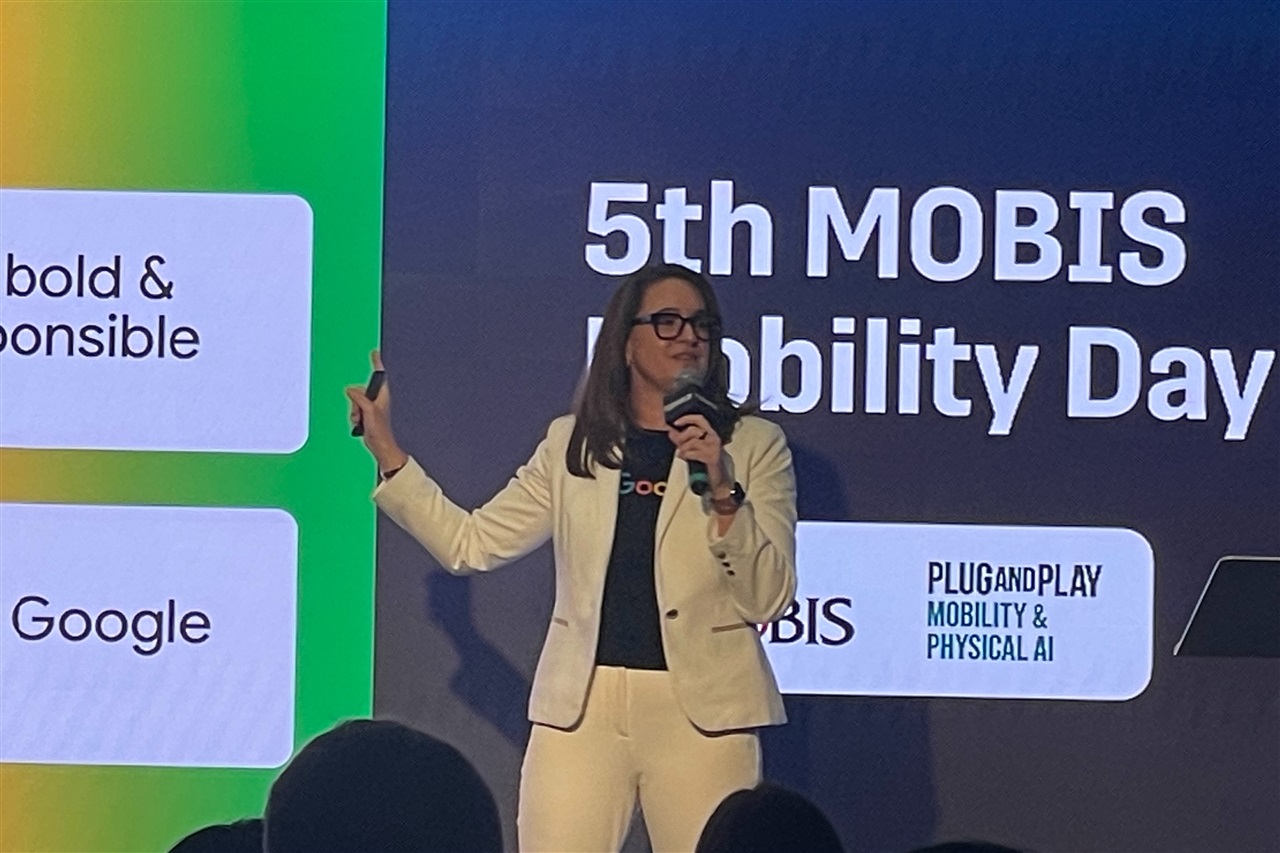
Google appears ready to move artificial intelligence beyond screens, text prompts, and digital assistants. During the 5th Mobis Mobility Day in Sunnyvale, Kristin White, a transportation industry executive and field strategist at Google, shared a forward-looking vision for what the company sees as the next major step in AI: systems that can understand the physical world and take action within it.
The message was clear: the future of AI is not limited to generating answers, writing content, or producing images. Google is increasingly focused on “physically capable AI,” a category of intelligent systems designed to interact with real-world environments. This direction is closely tied to Gemini Robotics, Google’s effort to bring advanced AI reasoning into machines that can move, assist, and operate in practical settings.
The timing of the keynote is notable, arriving just one day before Google I/O, the company’s major annual developer event. That has fueled expectations that robotics, mobility, and real-world AI applications could become a more visible part of Google’s upcoming AI strategy.
Gemini Robotics represents an important evolution of the Gemini AI platform. While current AI tools are often used for productivity, search, software development, and creative work, robotics requires a different level of understanding. A robot powered by advanced AI must be able to interpret its surroundings, respond to changing conditions, and complete tasks safely and reliably.
This kind of technology could have major implications for transportation and mobility. Smarter AI systems may eventually support autonomous vehicles, warehouse automation, delivery systems, smart manufacturing, and advanced driver-assistance technologies. In these environments, AI must do more than process information. It must make decisions based on real-world movement, space, timing, and safety.
White’s appearance at a mobility-focused event highlights how closely the future of robotics may be connected to transportation. The automotive industry is already undergoing a massive transformation, with electric vehicles, software-defined cars, autonomous driving research, and connected mobility platforms reshaping how people and goods move. Google’s work in AI could play a key role in that shift.
For Google, the move toward physical AI also reflects a broader race across the technology industry. Companies are no longer competing only to build the smartest chatbot. The next frontier is AI that can understand physical spaces, control robotic systems, and support human activity in the real world.
If Google uses I/O to expand on Gemini Robotics, it could mark a major step in bringing AI closer to everyday physical tasks. Instead of simply helping users plan, write, search, or code, future AI systems may help machines navigate, organize, transport, assemble, and assist.
The biggest challenge will be trust. Robotics requires extreme reliability, especially in mobility and transportation. AI mistakes in a text response can be corrected, but errors in a physical environment can carry serious consequences. That means Google’s robotics ambitions will likely depend not only on powerful AI models, but also on safety systems, real-world testing, hardware partnerships, and careful deployment.
Still, the direction is clear. Google is preparing for an AI future where intelligence is not confined to apps and cloud services. With Gemini Robotics, the company is positioning itself for a world where AI can see, reason, move, and act.
As Google I/O approaches, interest is growing around how much the company will reveal about its robotics plans. If the keynote in Sunnyvale is any indication, Google sees physically capable AI as one of the most important next chapters in artificial intelligence.


