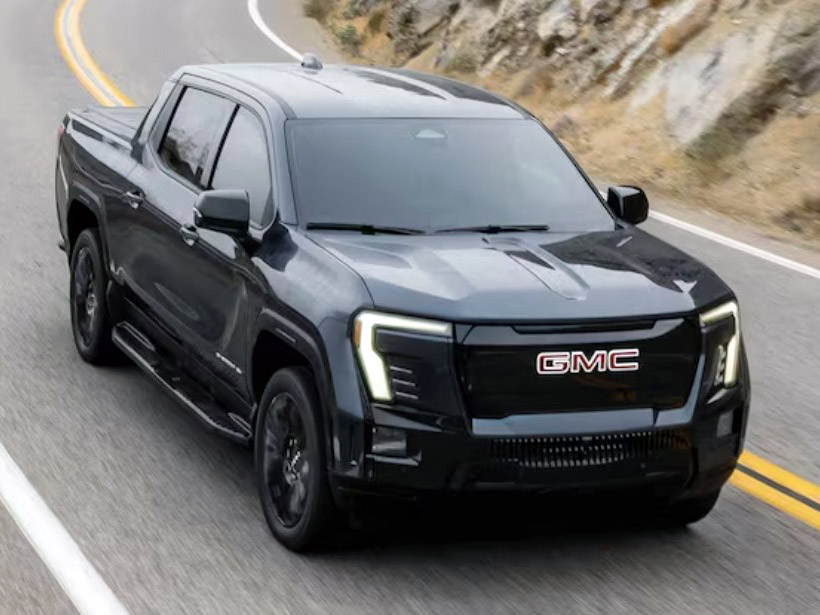
GM wants to make 400 miles of range the new normal for its electric pickups—and do it at a price everyday truck buyers can afford. After years of fielding premium, long-range trims at the top of its lineup, the automaker is preparing to bring that capability mainstream with a new lithium-manganese-rich (LMR) battery it co-developed with LG.
The battery has been in the works for a decade and is slated for mass production in 2027, setting the stage for more affordable, 400-mile electric trucks starting in 2028. Industry peers are already taking notice: the technology earned the 2025 Battery Innovation of the Year award at a major Detroit battery expo for its combination of high energy density and lower cost.
Here’s why that matters. Today, buyers usually face a trade-off between cost and capability. LFP batteries are safe and affordable but have middling energy density, which limits range or requires larger packs. Nickel-rich chemistries deliver long range and strong performance, yet rely on expensive and more volatile materials such as nickel and cobalt. GM and LG’s LMR solution aims to split the difference. By leaning on abundant manganese, the pack costs less than nickel-heavy options while offering significantly better energy density than LFP—roughly a third higher, according to the companies. That opens the door to trucks that can reliably reach 400 miles per charge without premium pricing, and the chemistry can be charged to 100% regularly without major longevity penalties.
Kurt Kelty, vice president of batteries and electrification, calls LMR “the culmination of 10 years of research” and a platform designed to deliver “premium performance at a reasonable price.” He says GM will continue to optimize its EV lineup by deploying three chemistries in parallel: high-nickel for maximum performance, LFP for durability and cost, and LMR for the best balance of both.
The broader EV industry is arriving at a similar conclusion. Manganese-forward designs have been publicly praised as a sweet spot between cost and performance, and other battery makers are rolling out manganese-enhanced packs with notably higher energy density. But U.S. automakers face a unique constraint: tariffs and export restrictions limit access to Chinese battery supply. That’s where GM’s localization strategy is already paying dividends. By designing and producing its own LMR batteries in North America, the company is positioned to bring this chemistry to market at scale without relying on imports that may be subject to sudden policy shifts.
GM has also been quietly fortifying another vital link in the EV chain: magnets. High-performance motors often depend on rare-earth magnets, and new restrictions have tightened access to materials and components linked to Chinese supply. Anticipating that risk, GM began building a domestic rare-earth magnet supply chain back in 2021, signing long-term offtake agreements and supporting U.S.-based manufacturing. Two magnet facilities are set to come online by the end of this year, with GM as the anchor customer. A portion of output will serve defense needs after a $400 million government investment in one supplier, but the bulk is expected to support GM’s EV ramp, further insulating the automaker from supply shocks.
For truck buyers, the implications are big. A 400-mile electric pickup at a lower price point changes how people use their vehicles. It reduces range anxiety even when towing or hauling, shrinks the need for frequent fast charging on road trips, and makes the total cost of ownership more compelling against gas and diesel. For fleets, manganese-rich batteries capable of regular 100% charging simplify duty cycles and maximize daily range without worry about accelerated degradation. And by building batteries and critical components at home, GM can better control costs, qualify more models for incentives, and scale production faster.
The timeline is clear: mass production of the LMR battery starts in 2027, with 400-mile, more affordable electric trucks headed to showrooms in 2028. If GM executes on that plan, this could mark a turning point for electric pickups—moving long-range capability from niche luxury trims to the core of the lineup, while strengthening North American manufacturing from the cell to the magnet and everything in between.