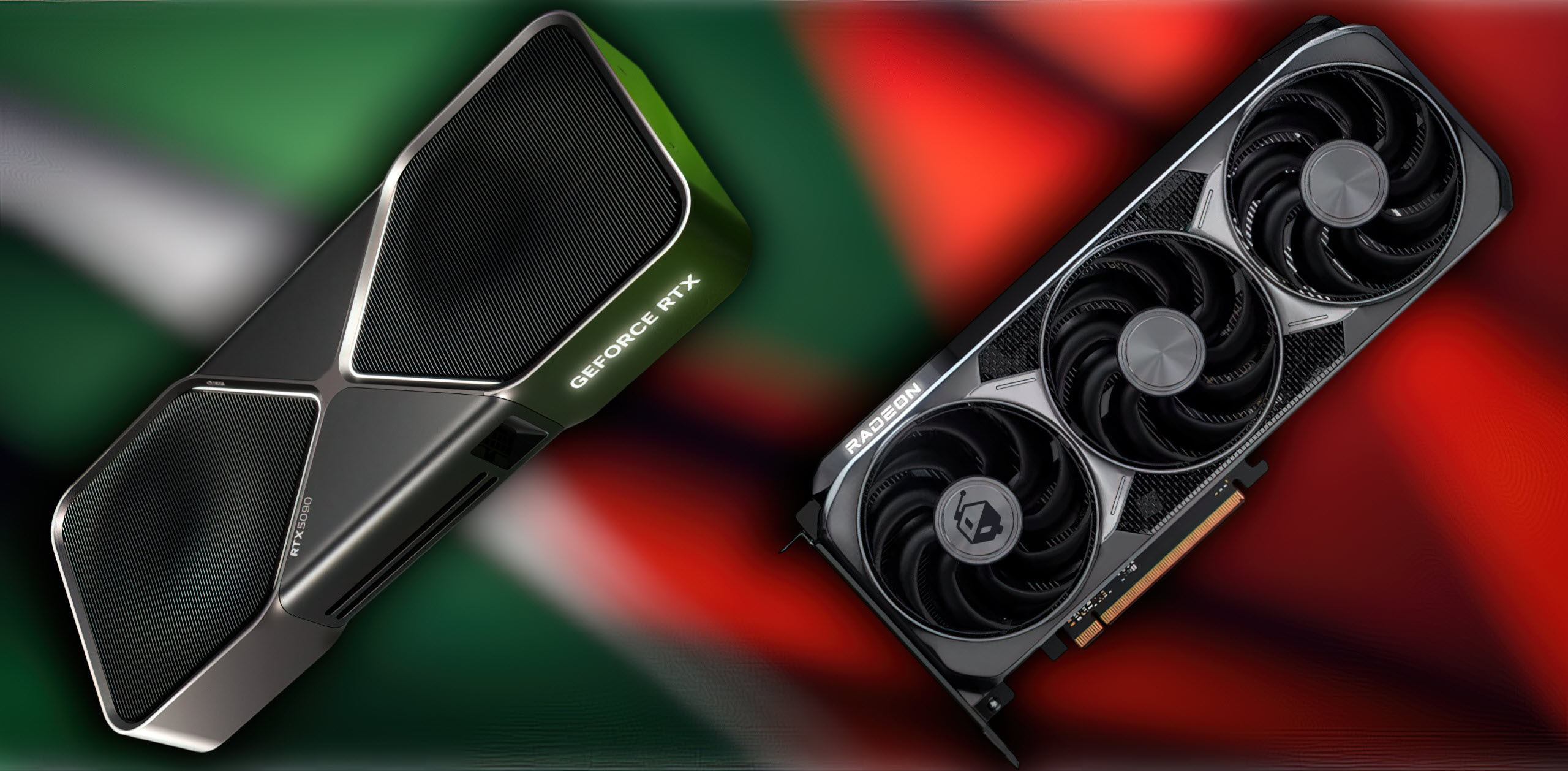
A new wave of GPU price increases is hitting gamers worldwide, and the culprit isn’t just demand for shiny new graphics cards. Tight DRAM availability and rising memory costs are pushing up prices across the board, impacting current-generation NVIDIA GeForce, AMD Radeon, and Intel Arc models in nearly every major market.
After months of post-launch turbulence, many of the latest GPUs finally became easier to find at more reasonable prices. But that relief didn’t last. As the AI boom continues to soak up memory supply, the ripple effect is being felt everywhere hardware relies on large pools of fast memory, including graphics cards built around GDDR6 and GDDR7 VRAM. With memory supply constrained, GPU vendors and board partners are adjusting availability based on demand and VRAM configurations, and buyers are left paying more—especially for higher-memory variants.
Tracking data from Q1 2026, based on lowest available pricing across 10 countries and comparing November 2025 to February 2026, shows just how widespread the situation has become. Budget and mid-range NVIDIA options such as the RTX 5050, RTX 5060, RTX 5060 Ti 8GB, and RTX 5070 12GB have generally climbed by roughly 8.7% to 13.6% on average, depending on the model. However, the memory-heavy GeForce RTX 5060 Ti 16GB stands out with an average increase of about 21.5%, highlighting how higher VRAM SKUs are being hit harder than their lower-memory counterparts.
At the top end, the steepest jumps are coming from NVIDIA’s most sought-after GPUs. The RTX 5070 Ti, RTX 5080, and RTX 5090 are leading the surge, with sharp gains recorded across multiple regions over just a few months—exactly the kind of trend that can quickly reshape what shoppers consider “reasonable” pricing for high-performance gaming and creator builds.
AMD’s RDNA 4 lineup, also known as the Radeon RX 9000 series, is going up too, though most increases are staying below 15% overall. Among them, the Radeon RX 9070 appears to be the least affected, showing only about a 7% rise, suggesting AMD’s pricing pressure is present but not spiking as aggressively as the biggest NVIDIA movers.
Intel’s Battlemage discrete lineup is smaller, with two key models in circulation. The Arc B570 shows relatively mild movement overall (around a 3.7% increase on average), while the Arc B580 is seeing more noticeable upward pressure, with an average price increase close to 10.7%.
Zooming in by region, some countries are seeing especially painful changes. Recent months show the sharpest hikes appearing in markets such as Germany, the UK, India, and the United States, though the data also highlights that pricing shifts aren’t uniform—some GPUs even dipped in certain countries, suggesting local supply, currency shifts, and retailer competition can still make a meaningful difference depending on where you shop.
Here’s the bigger takeaway for anyone planning a GPU upgrade in 2026: VRAM capacity is increasingly tied to price volatility. As memory supply remains tight and AI-related demand continues competing for DRAM, higher-VRAM graphics cards are more likely to see outsized increases. If you’re shopping now, it’s worth comparing regional pricing carefully, watching for sudden jumps on 16GB-class models and above, and factoring in that “stable” pricing can reverse quickly in the current market.