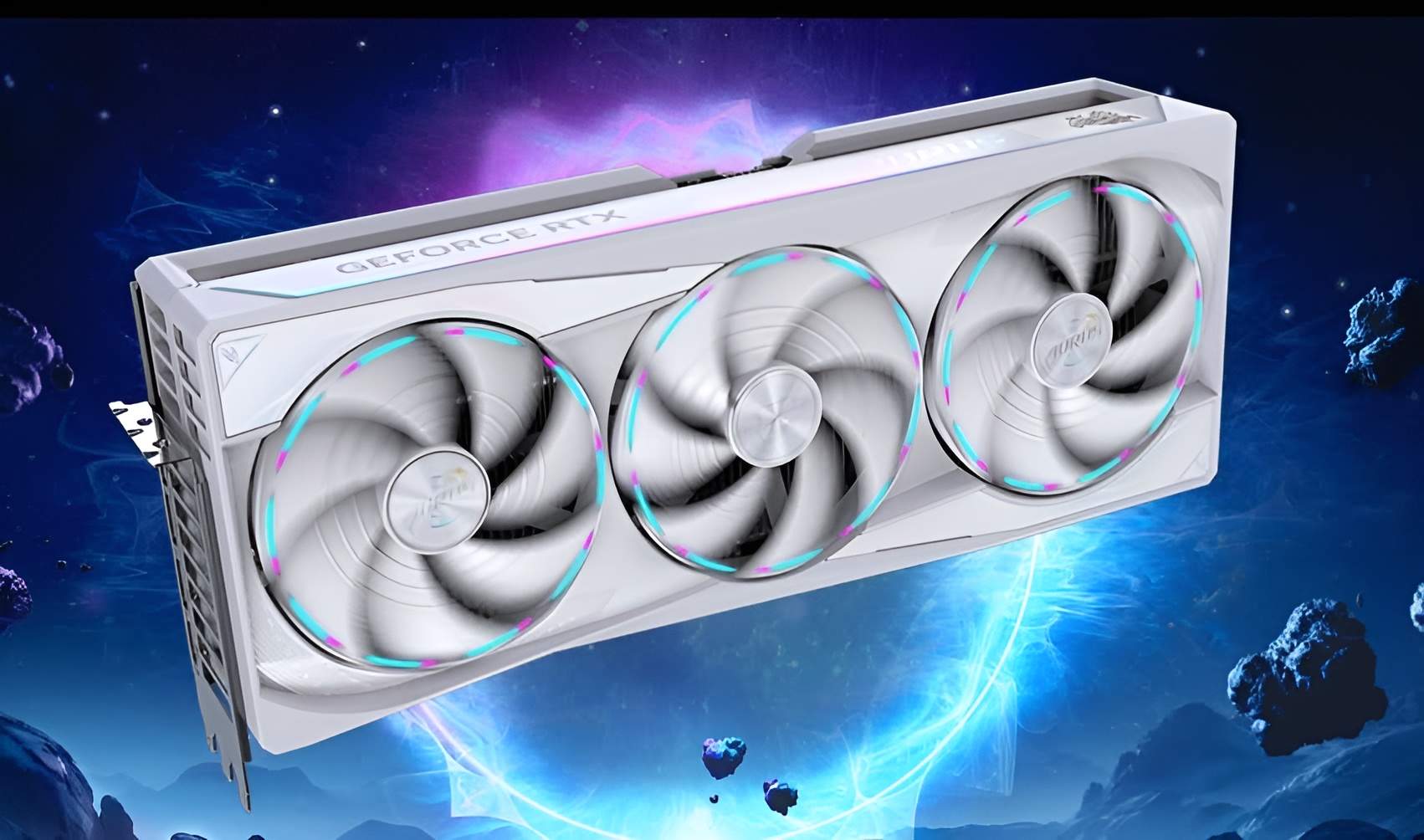
Reports have surfaced about a troubling issue with the GeForce RTX 5080, specifically the Gigabyte AORUS MASTER ICE variant, where users are experiencing unexpected “thermal gel” leakage. This problem is not a direct fault of NVIDIA but rather Gigabyte, the company’s AIB (add-in board) partner. Users have reported that within just a month of use, the thermal gel has liquefied and begun seeping towards the PCIe riser, indicating a substantial malfunction.
This situation is particularly disconcerting given the high price point of the AORUS MASTER variant. The thermal gel used by Gigabyte is intended to be a superior substitute for traditional thermal pads, marketed as “server-grade” and specifically designed to remain non-fluid. Clearly, the gel should not behave this way, especially not after a mere month of use.
Compounding the concern is the fact that the user experiencing this leakage had mounted the GPU vertically, which might have exacerbated the problem. Spending $1,500 or more on such high-end hardware only to encounter manufacturing defects is, understandably, disheartening for consumers.
In response to this issue, Gigabyte’s distributor has quickly acknowledged the problem and is currently in discussions with Gigabyte to find a solution since no official policy exists for addressing “thermal gel leakage.” Although the gel is not inherently conductive, its leakage poses a risk of obstructing connections, particularly if it reaches the PCIe riser, potentially leading to significant hardware issues.
It’s crucial for Gigabyte to address and resolve this defect promptly to reassure customers and maintain trust in their brand. Such malfunctions should be immediately rectified to avoid potential damage to other components and to prevent further inconvenience to users.