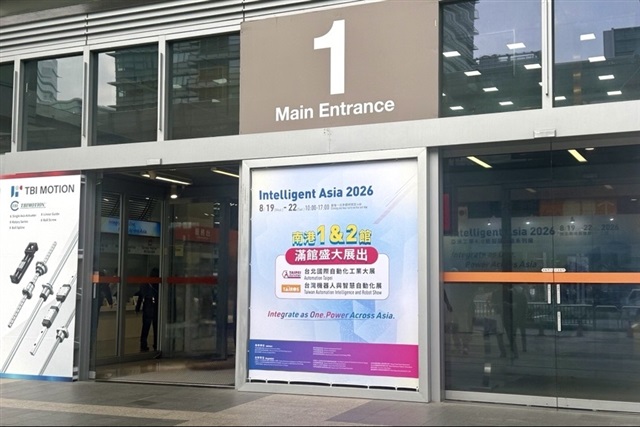
German Suppliers Put Aerospace Manufacturing Bottlenecks in the Spotlight at Automation Taipei 2026
Aircraft and spacecraft often make headlines for their thrust, payload capacity, speed, range, and mission performance. Yet behind every successful flight is a complex manufacturing chain where even small delays, tolerance issues, or quality-control gaps can create major challenges. At Automation Taipei 2026, the German Industry Solutions Session held on August 20 shifted attention to these less visible but highly critical parts of aerospace production.
The session highlighted how German industrial suppliers are focusing on the hidden bottlenecks that affect aerospace manufacturing efficiency. These challenges may not be as dramatic as rocket launches or next-generation aircraft designs, but they are essential to building safer, lighter, more reliable, and more cost-effective aerospace systems.
Aerospace production demands extreme precision. Components must meet strict standards, materials are often difficult to process, and every part must be traceable throughout the supply chain. This creates pressure on manufacturers to improve automation, reduce errors, and maintain consistent quality across every stage of production.
German solution providers used the event to emphasize technologies that can help manufacturers overcome these obstacles. Advanced automation systems, smart production equipment, robotic handling, precision measurement tools, and digital manufacturing platforms are becoming increasingly important for aerospace companies looking to shorten production cycles while maintaining strict safety requirements.
One of the key themes was the need to identify inefficiencies before they become costly problems. In aerospace manufacturing, bottlenecks can appear in machining, inspection, assembly, logistics, or data management. A single delay in one stage can slow down the entire production line. By using connected systems and intelligent monitoring, manufacturers can gain better visibility into their operations and respond faster when issues arise.
Quality assurance was another major focus. Aerospace parts must perform under demanding conditions, which means inspection and validation cannot be treated as secondary steps. Automated inspection technologies and real-time data analysis can help manufacturers detect defects earlier, reduce scrap, and improve repeatability. This is especially valuable when producing high-value components where material waste and rework can be expensive.
The discussion also reflected the growing importance of digital transformation in aerospace manufacturing. As factories become more connected, companies can use production data to optimize workflows, improve maintenance planning, and support better decision-making. Digital tools can also strengthen traceability, allowing manufacturers to track materials, processes, and quality records more effectively.
For Taiwan’s advanced manufacturing sector, the presence of German suppliers at Automation Taipei 2026 underscored the potential for stronger collaboration. Taiwan has a well-established industrial base, while German companies are widely recognized for engineering expertise, automation technology, and precision manufacturing solutions. Together, these strengths could support the development of more efficient aerospace supply chains.
The aerospace industry is under pressure to deliver more advanced products while managing rising costs, complex materials, and strict regulatory demands. As a result, manufacturers are increasingly looking beyond headline performance metrics and focusing on the production systems that make innovation possible.
The German Industry Solutions Session made one point clear: the future of aerospace will not only be shaped by more powerful engines or longer-range aircraft. It will also depend on smarter factories, more reliable automation, better inspection systems, and the ability to solve the hidden manufacturing bottlenecks that determine whether ambitious aerospace projects can be delivered on time and at scale.