Google is taking significant steps to enhance its mapping services by introducing innovative generative AI via the Gemini AI system. This technological breakthrough is being integrated into popular applications like Google Maps, Earth, and Waze, promising to transform the way users interact with geospatial data and navigate through their environments.
The Google Maps Platform, relied upon by over 10 million websites and apps, is now equipped with a groundbreaking feature known as “grounding with Google Maps.” This allows developers to access real-time location data to create AI-driven experiences. By leveraging Maps’ extensive database, which includes information on 250 million places, users can now receive more precise answers from large language models.
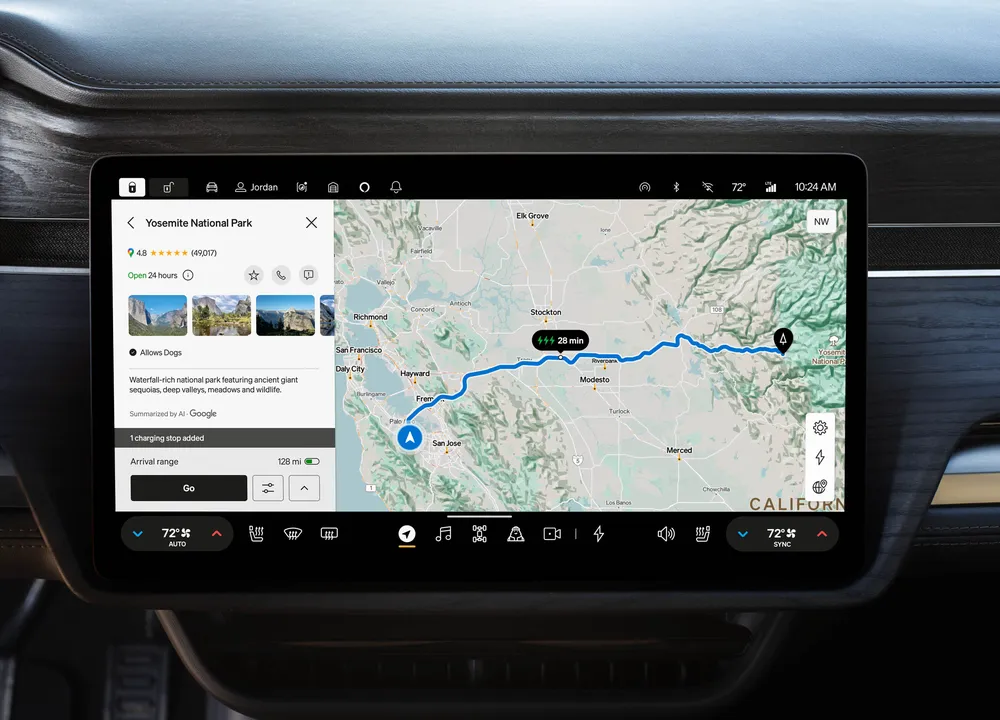
Automaker Rivian is jumping on board with this technological leap, planning to introduce Gemini-powered Places API features to their in-car infotainment systems starting next month. This integration will offer drivers AI-generated summaries of nearby attractions such as restaurants, shops, and grocery stores, thereby enhancing the in-car experience.
In collaboration with Google Research and X, Google Earth is incorporating Gemini to develop advanced analytical tools specifically designed for urban planning. This integration enables the analysis of complex spatial questions and the generation of custom visuals in minutes rather than days. This feature is particularly useful for transportation planners tasked with identifying optimal locations for new electric vehicle charging stations based on demand.
For U.S. users of Google Maps on Android and iOS, the inclusion of Gemini AI facilitates a smarter search experience with contextual results. This enhancement, as described by Chris Phillips, VP and General Manager of Geo at Google, utilizes cross-referencing between Maps’ data and user reviews to bolster accuracy.
Google Maps also introduces exciting features such as improved route exploration with landmark recommendations, information on parking availability upon reaching the destination, and enhanced walking navigation details. Moreover, Google’s immersive view has been expanded to cover over 150 cities worldwide, with improvements to lane information expected next month.
Waze, too, benefits from AI advancements, adding natural language processing to streamline incident reporting. This allows users to report road conditions verbally rather than through manual icon selection. Later this year, Waze will introduce school zone alerts for both iOS and Android users, enhancing road safety awareness.
With these innovative AI-driven capabilities, Google is poised to redefine the way users interact with maps and navigate their surroundings, offering more intuitive and intelligent guidance across its platforms.