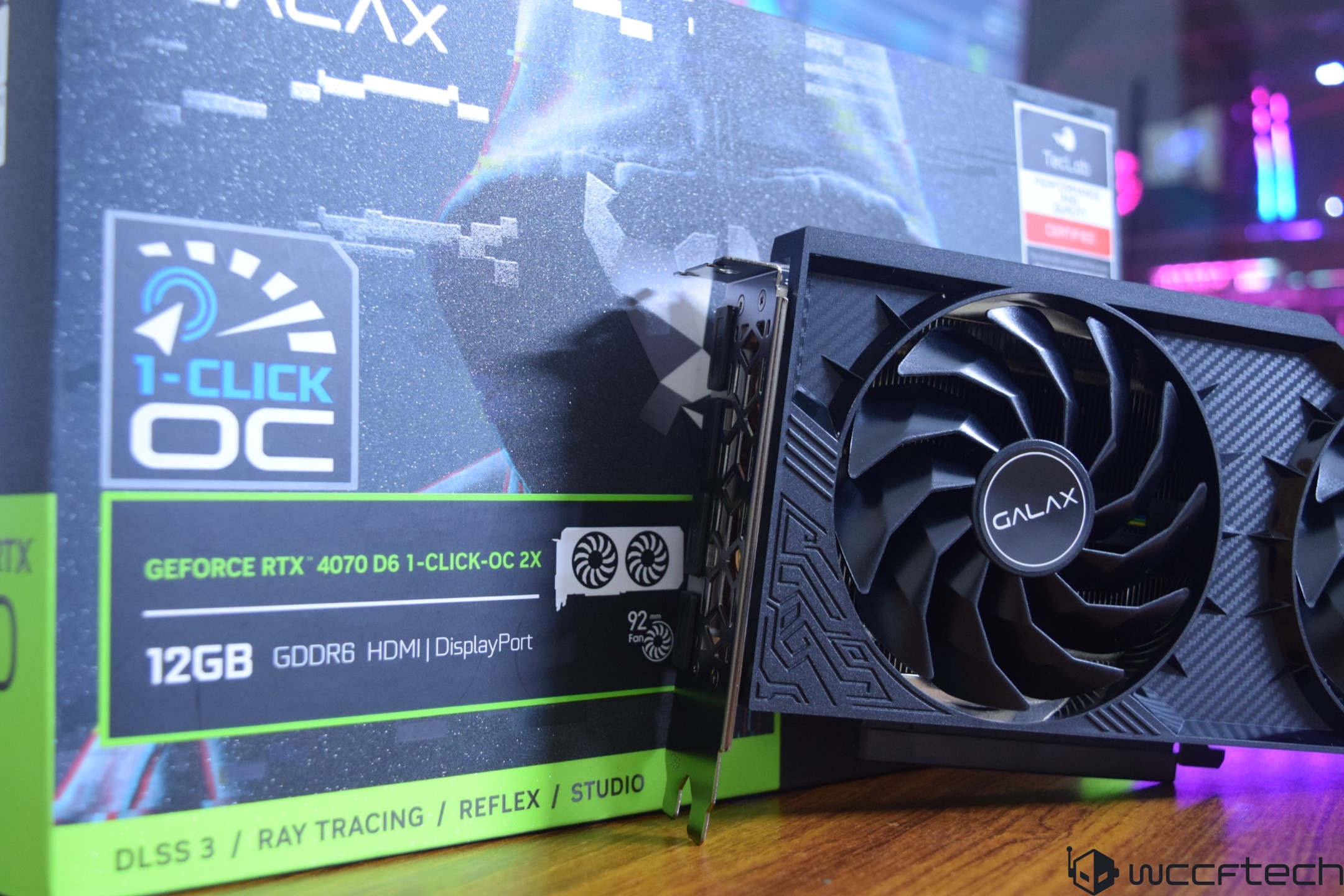
NVIDIA’s introduction of its Ada Lovelace GPUs last year certainly set the stage for a revolution in graphics technology. While the lineup has evolved and expanded with the recent “SUPER” series, one card remains a standout: the GeForce RTX 4070. Despite the launch of its enhanced “SUPER” variant, the RTX 4070 continues to capture the attention of GPU enthusiasts, primarily due to its attractive price point around $500.
NVIDIA has consistently reported strong demand for the GeForce RTX 4070. However, the card faced a significant hurdle with production and supply issues, notably due to a shortage of GDDR6X memory chips. This high-performance memory is a critical component across NVIDIA’s high-end products, starting with the RTX 4070. Given the card’s popularity, NVIDIA made a strategic decision to employ GDDR6 memory instead of the limited GDDR6X.
This switch has led NVIDIA partners to release their GDDR6 versions of the GeForce RTX 4070. These new variants are now hitting the market, prompting us to test one and uncover any substantial differences between the GDDR6 and GDDR6X models.
The GeForce RTX 40 series has impressive credentials, driven by innovative features that define NVIDIA’s cutting-edge GPU architecture:
– Enhanced Streaming Multiprocessor (SM)
– Advanced Turing Tensor Cores
– Real-time Ray Tracing Acceleration
– Improved Shading Enhancements
– New Deep Learning Capabilities for Graphics and Inference
– High-performance GDDR6X Memory Subsystem
– HDMI 2.1 Display Engine & next-gen NVENC/NVDEC
These core technologies are just the tip of the iceberg. The Ada Lovelace GPU architecture promises to push the boundaries of traditional and nontraditional GPU operations, ensuring groundbreaking performance in gaming and other demanding visual applications. As the demand for high-performance graphics cards continues to rise, especially with RTX 4070’s new GDDR6 variant, NVIDIA appears well-positioned to satisfy both mainstream and high-end market segments.