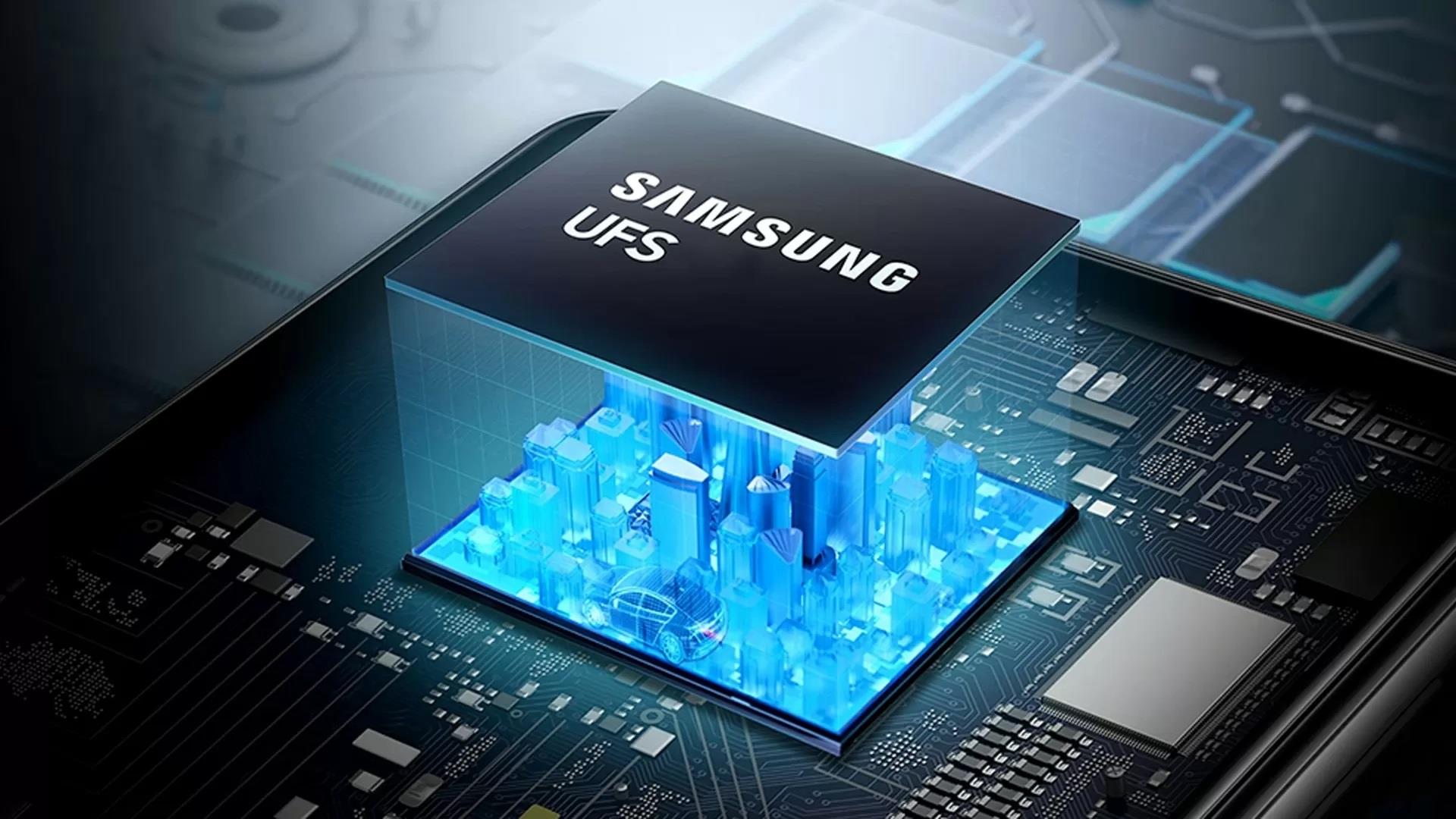
Samsung Galaxy’s flagship models are renowned for their cutting-edge technology, and the anticipation for the next breakthrough in storage for their premium devices is no exception. The Galaxy S25 Ultra, the successor to the already advanced Galaxy S24 Ultra, is rumored to be equipped with UFS (Universal Flash Storage) 4.1, marching ahead of its predecessor’s UFS 4.0 integration. This development suggests a promising leap forward, particularly in the arena of on-device AI (Artificial Intelligence) capabilities where faster storage can translate to more efficient processing.
The advantage of UFS 4.1 over its 4.0 version, while not numerically quantified in available rumors, would likely center on optimized performance to better handle the demands of AI processes. With AI functionalities becoming increasingly complex and embedded within smartphone ecosystems, the need for more rapid data access and management is critical. These advancements in memory not only allow for a seamless user experience with multitasking and high-resolution recording but also ensure that AI features operate without lag or interruption, supporting tasks ranging from language translation to image recognition.
Speculations suggest that the base model of the preceding Galaxy S24 with 128GB storage was equipped with the slower UFS 3.1 technology, implying a strategy to maintain product affordability. It wouldn’t come as a surprise if a similar stratagem is adopted for the Galaxy S25 and its Plus variant, balancing cost and performance across different models while reserving the very best, such as UFS 4.1, for the top-tier Ultra model.
Expectedly, the Galaxy S25 Ultra could also see an increase in RAM, with rumors hinting at models boasting up to 16GB, providing additional support for the demanding needs of on-device AI and other sophisticated applications.
The integration of Google’s second-generation Gemini Nano technology, combined with Samsung’s proprietary AI, will likely enhance the Galaxy S25 series’ intelligence and efficiency. Previous statistics have shown immense profit gains for Samsung, partially attributed to the success of its Galaxy S24 range. This financial triumph underscores the potential consumer demand for AI-driven features, a trend that Samsung might leverage to further solidify its position in the market.
Informed consumers and tech enthusiasts are also curious to see how the Galaxy S25 Ultra’s performance will stack up against its contemporaries, such as the iPhone 16 Pro Max which is touted to continue using NVMe storage. The competition in the smartphone market only escalates with these ongoing technological advancements, ensuring that users can look forward to increasingly innovative and capable devices in the near future.
As we draw closer to the eventual release of the Galaxy S25 Ultra, anticipation builds not only for the promised improvements in storage technology but for a holistic enhancement in the device’s AI performance and user experience. While these enhancements are still speculative, they’re a testament to Samsung’s continuous efforts to push the boundaries of smartphone technology.